
Coyotes Grieve Like Humans—And Scientists Say It Could Transform How We Treat Loss
Coyotes mate for life with 100% faithfulness and display profound grief when their partner dies—new brain research reveals striking similarities to human mourning that could unlock better mental health treatments.
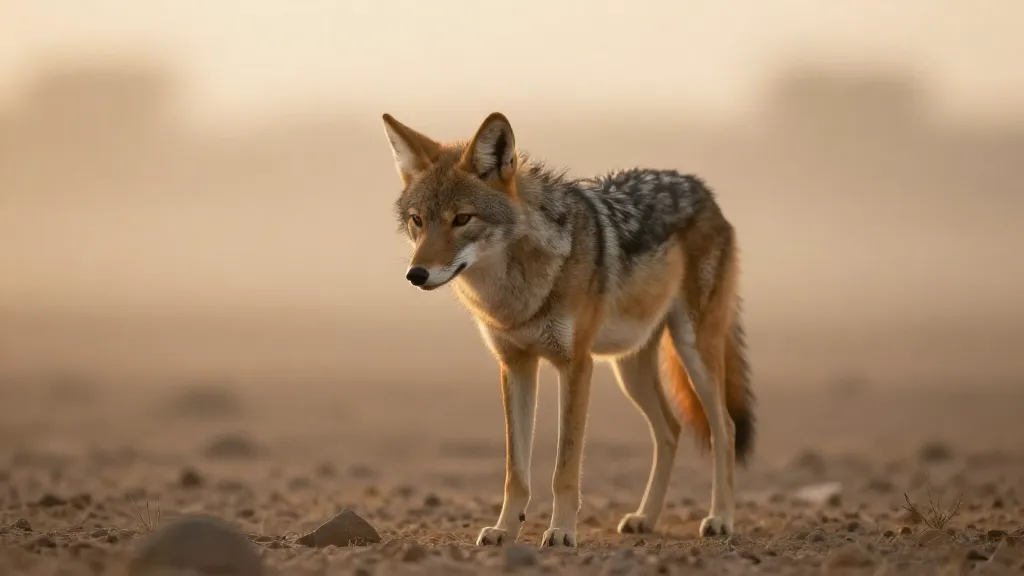
If you’ve ever lost someone close to you, you know that grief isn’t something you simply “get over”—it’s a profound, sometimes devastating reorganization of your entire world. What you might not know is that coyotes experience something remarkably similar. These misunderstood canines, long vilified as mere pests, are now revealing themselves to be creatures of unexpected emotional depth—and in doing so, they’re offering scientists a rare window into understanding human grief itself.
The Most Faithful Creatures on Earth
When we think of animals that mate for life, we often picture swans gliding across a lake or wolves howling in the wilderness. But here’s what makes coyotes truly exceptional: they don’t just stay together—they’re completely faithful.
About 3 to 5% of mammals are monogamous, selecting a single mate for life. Yet even among those committed species, infidelity happens. Wolves, for instance, are known to cheat. Coyotes, it turns out, are different.
A landmark 2012 study led by Stan Gehrt, a wildlife ecology professor at Ohio State University, examined genetic data from nearly 100 coyote offspring across the Chicago area. The finding was startling: 100% genetic monogamy. No cheating. No hidden litters with outside partners. A decade of additional unpublished data has only reinforced this remarkable conclusion.
“That means that a coyote, when they finally select their mate, that’s potentially the only animal they’re going to live with for the rest of their life,” Gehrt explains. “So that’s a really big decision.”
This commitment comes with real advantages. Because both parents invest in raising pups, coyote litters can be larger. The pair also works together to establish and defend territory—a partnership that strengthens their survival odds in an increasingly urban world.
When Love Ends: The Science of Coyote Grief
But lifelong monogamy means lifelong vulnerability to loss. And that’s where the story takes a poignant turn.
Coyotes display unmistakable signs of grief when their partner dies. Researchers have documented persistent, mournful howling, lethargy, diminished appetite, and a visible loss of spirit—bereaved coyotes may hang their heads low or repeatedly return to the place where their mate was last seen. One female coyote, temporarily separated from her mate during a tracking collar replacement, stayed so distressed that her partner howled nonstop until she was returned.
“There was clearly a lot of emotional stuff going on with that animal,” Gehrt recalls.
What to watch for in bereaved coyotes
- Persistent, prolonged howling
- Decreased appetite and lethargy
- Lowered head posture and diminished spirit
- Returning to locations where the lost mate was last seen
- Behavioral changes similar to depression
Inside the Grieving Brain
The real breakthrough is happening at the cellular level. Neuroscientist Sara Freeman at Utah State University has spent the past six years studying what happens inside a coyote’s brain after losing a mate. Her team analyzed brain tissue from six deceased coyotes, including three widows, and mapped changes in receptors for a hormone called corticotropin releasing factor (CRF).
CRF is a stress hormone found in both human and coyote brains. When activated by grief or other stressors, it triggers the body’s stress response system, ultimately releasing cortisol—the “stress hormone” that fuels our fight-or-flight response.
Freeman’s findings revealed something striking: widowed coyotes showed increased CRF receptors in the olfactory tract (the brain region that processes smell) and the hippocampus (responsible for learning and memory). This neurochemical shift may help grieving coyotes process sensory information—perhaps allowing them to detect their lost mate’s scent in the environment or recognize potential new partners.
“We have this opportunity to really understand what happens during loss and how that might translate to improved outcomes for people who have extended grief,” Freeman says.
A Bridge to Human Healing
The implications for human mental health could be profound. Because our brains share fundamental biology with coyotes, research on coyote grief might eventually guide the development of new medications or non-pharmaceutical approaches to grief and trauma. Freeman points to existing evidence that physical activity—yoga, running, walking, martial arts—already improves grief outcomes in humans.
Freeman cautions that her current study is preliminary. The sample size was small, all subjects were female, and each had been widowed for different lengths of time (three days, four months, and 14 months). But the research opens a door that most animal studies have kept closed: instead of focusing only on how pair bonds form, scientists can now investigate what happens when they break.
Changing Hearts, Saving Lives
Beyond the laboratory, Freeman’s work is quietly revolutionizing how people see coyotes. For years, these animals have been trapped, shot, and poisoned—often in brutal wildlife killing contests. They’re blamed for pet disappearances and branded as pests. But when people learn that a coyote’s mate will experience genuine psychological distress after their partner is killed, something shifts.
Stan Gehrt has witnessed this transformation firsthand during his public talks about urban coyotes. “Nothing really convinced people or didn’t really change their attitude that much until we started talking about this stuff, which is the monogamy,” he says. “And it’s weird, but you can just see the people in the audience, their faces change.”
This matters more than sentiment alone. Coyotes play crucial ecological roles—they eat fruit and disperse seeds, potentially helping ecosystems adapt to climate change. When one coyote in a bonded pair is killed, the consequences cascade: territories destabilize, new coyotes move in, conflict erupts between them, and these “problem coyotes” increasingly encroach on human spaces.
Coexistence, it turns out, isn’t just kinder—it’s smarter.
The Mirror We Didn’t Expect
What makes this research so compelling is its fundamental message: grief is not uniquely human. The pain of losing a lifelong partner, the neurochemical upheaval that follows, the slow process of reorganizing a life built around another being—these experiences span species. In studying how coyotes navigate loss, we’re not just learning about them. We’re learning about ourselves.
The next time you hear a coyote’s mournful howl echoing through the night, you might hear it differently. It could be the sound of a creature mourning its only mate, experiencing a loss that echoes through its brain in ways we’re only beginning to understand—and in ways that might one day help us heal our own wounded hearts.