
Hagfish's Instant Slime Defense Caught on Camera: How a Tiny Fish Defeats Sharks
Deep-sea cameras finally captured hagfish deploying their legendary anti-predator slime in real time—flooding a shark's mouth so fast the predator gags and releases instantly. Nature's most extreme defense mechanism revealed.
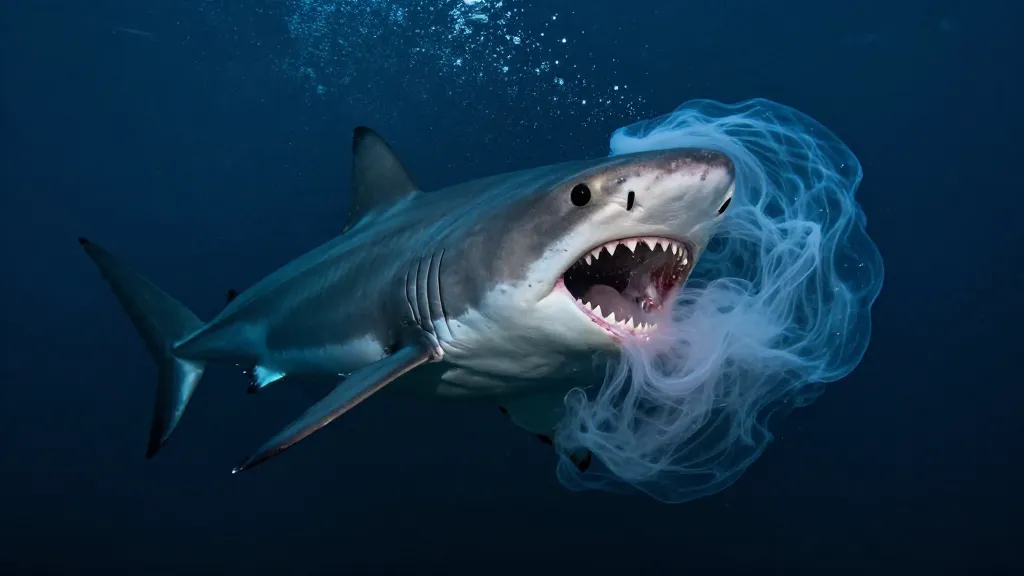
When a shark’s jaws clamp down on a hagfish, something extraordinary happens in the span of mere fractions of a second. The tiny deep-sea fish releases a cloud of slime so thick and so fast that it floods the predator’s mouth, clogs its gills, and forces the shark to gag and release its grip. For the first time, deep-sea cameras have captured this legendary defense mechanism in action—and it’s every bit as extreme as marine biologists suspected.
Nature’s Most Extreme Anti-Predator Weapon
The hagfish has earned a fearsome reputation in the deep ocean, not because of teeth or speed, but because of something far more unusual: mucus. This ancient fish, which has existed virtually unchanged for hundreds of millions of years, doesn’t fight back when attacked. Instead, it weaponizes slime.
The mechanics are brutally simple. When a predator—typically a shark—bites down, the hagfish’s body responds with explosive speed. In what researchers describe as a fraction of a second, the fish releases a dense cloud of slime directly into the attacker’s mouth and gills. The slime is so effective at clogging the shark’s respiratory system that the predator has no choice but to release its prey and back away, gasping.
What to Watch For
- Speed of release: The slime deploys in fractions of a second—faster than most predators can complete a bite
- Gill clogging: The slime’s thickness forces water flow disruption, triggering a gag reflex
- Immediate effect: Sharks release the hagfish almost instantly upon contact with the slime
- Deep-sea habitat: This defense evolved in the crushing darkness where escape options are limited
Caught on Camera: First-Ever Real-Time Footage
For decades, scientists understood that hagfish possessed this remarkable ability, but observing it in the wild proved nearly impossible. The hagfish lives on the deep seafloor, in conditions hostile to most camera equipment. The darkness, the pressure, and the rarity of predator-prey encounters made documentation elusive.
That changed when deep-sea monitoring equipment finally captured the defense mechanism in action. The footage shows exactly what researchers predicted: a shark approaches, makes contact, and within a heartbeat, the hagfish deploys its slime defense. The shark’s reaction is unmistakable—it gags, writhes, and releases the fish. The entire sequence unfolds almost too quickly to follow with the naked eye.
Evolution’s Answer to the Predator Problem
The hagfish’s slime defense represents one of nature’s most elegant solutions to a seemingly impossible problem. A fish this small cannot outrun a shark or fight back with teeth and muscle. It cannot hide in a reef or dart into crevices. Instead, evolution equipped it with chemistry.
This strategy has worked for millions of years. The hagfish thrives in deep waters where predators are scarce but dangerous. When a threat does arrive, the slime turns the tables instantly. What begins as a meal becomes an unpleasant experience the shark will likely remember—and avoid repeating.
Why This Matters
The hagfish’s defense mechanism fascinates scientists not just as a curiosity, but as a window into how evolution solves extreme survival problems. In environments where traditional defenses fail, nature gets creative. The hagfish proves that sometimes the most powerful weapon isn’t sharp or strong—it’s sticky, fast, and utterly unexpected.
The deep-sea footage serves as a reminder that the ocean still holds mysteries. Even behaviors we thought we understood take on new dimensions when captured in real time. And in the case of the hagfish, one of nature’s most remarkable survival strategies is finally visible to the world.