
480,000-Year-Old Elephant Bone Tool Rewrites History of Early Human Ingenuity
Archaeologists uncover Europe's oldest known elephant bone tool, revealing sophisticated craftsmanship by early human relatives half a million years ago. This rare discovery challenges our understanding of ancient problem-solving abilities.
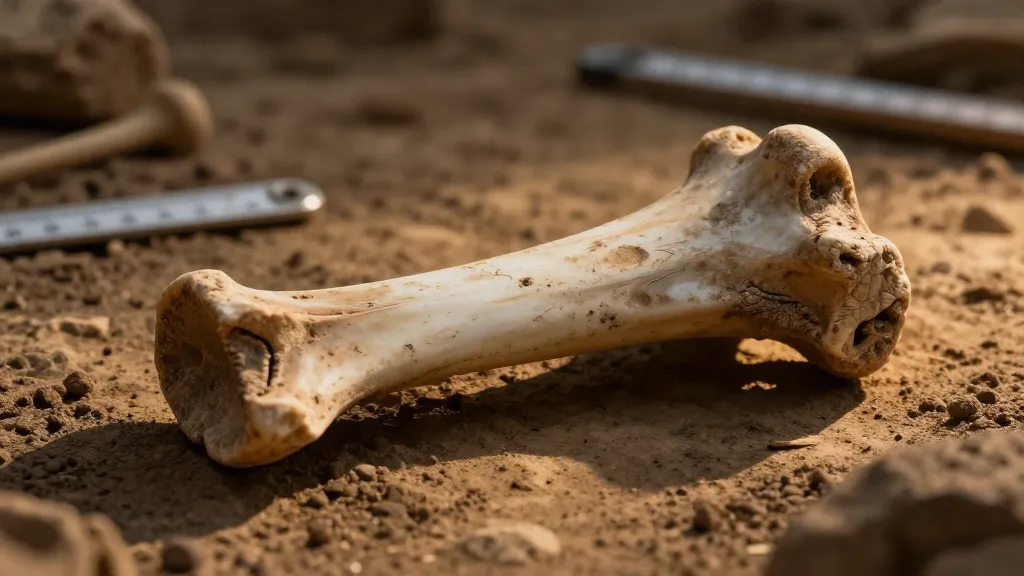
Deep in the archaeological layers of ancient Europe lies evidence that our early human relatives were far more ingenious than we ever imagined. A remarkable discovery has unearthed a 480,000-year-old bone tool crafted from elephant remains—the oldest known artifact of its kind ever found on the continent. This extraordinary find is rewriting our understanding of prehistoric innovation and revealing the sophisticated problem-solving abilities of our distant ancestors.
A Rare Window Into Ancient Ingenuity
The discovery represents what researchers are calling a “very rare” find that offers an unprecedented glimpse into the daily lives and capabilities of early human relatives who roamed Europe half a million years ago. Unlike the more commonly discovered stone tools from this era, bone implements require entirely different skills and knowledge to create effectively.
Working with elephant bone presented unique challenges that demanded both physical strength and technical expertise. The material itself is dense and difficult to shape, requiring specialized techniques that suggest these early toolmakers possessed far more sophisticated understanding of materials and craftsmanship than previously recognized.
What Makes This Discovery Groundbreaking
Archaeological evidence suggests this ancient tool functioned as an ax sharpener, indicating a level of forward-thinking and tool maintenance that speaks to advanced cognitive abilities. The implications extend far beyond a single artifact:
- Material Innovation: Early humans demonstrated the ability to work with challenging organic materials beyond simple stone
- Tool Maintenance Culture: The existence of sharpening tools suggests systematic care and preservation of other implements
- Resource Optimization: Converting massive elephant remains into practical tools shows efficient use of available materials
- Technical Sophistication: The craftsmanship required indicates advanced manual dexterity and planning abilities
Challenging Our Assumptions About Prehistoric Capabilities
This discovery forces archaeologists to reconsider long-held assumptions about the technological capabilities of early human relatives. The fact that these ancient toolmakers could successfully work elephant bone into functional implements suggests they possessed knowledge of material properties, tool design principles, and manufacturing techniques that rival much later innovations.
The age of the artifact—480,000 years—places it in a crucial period of human development when our understanding of technological advancement remains limited. Each discovery from this era provides vital clues about the cognitive evolution that would eventually lead to modern human capabilities.
The Broader Context of Ancient Tool Innovation
While stone tools dominate the archaeological record from this period, organic materials like bone often decompose over hundreds of thousands of years. This makes the survival of the elephant bone tool particularly significant, as it likely represents just one example of what may have been a much broader tradition of bone working among early European populations.
The discovery also highlights the relationship between early humans and the megafauna that shared their environment. Rather than simply hunting these massive creatures for meat, evidence suggests they were also valued as sources of raw materials for sophisticated tool production.
What This Means for Human Evolution Research
Reports suggest this find will prompt researchers to look more carefully for similar artifacts that might have been overlooked or misidentified in existing collections. The discovery demonstrates that early human relatives were actively solving complex problems and developing innovative solutions using whatever materials their environment provided.
The sophistication required to create functional tools from elephant bone indicates that the cognitive abilities of our ancient relatives may have been more advanced than current models suggest. This has profound implications for our understanding of when and how key human traits like complex reasoning, long-term planning, and technical innovation first emerged.
As archaeologists continue to uncover evidence of ancient ingenuity, each discovery adds another piece to the puzzle of human development, revealing that the path to modern capabilities began much earlier—and proceeded much more sophisticatedly—than we once believed possible.