
67,800-Year-Old Handprints in Indonesian Caves Are the Oldest Art Ever Discovered
Ancient handprints found in Indonesian caves have been dated to 67,800 years ago, making them the oldest known rock art and rewriting the timeline of human artistic expression.
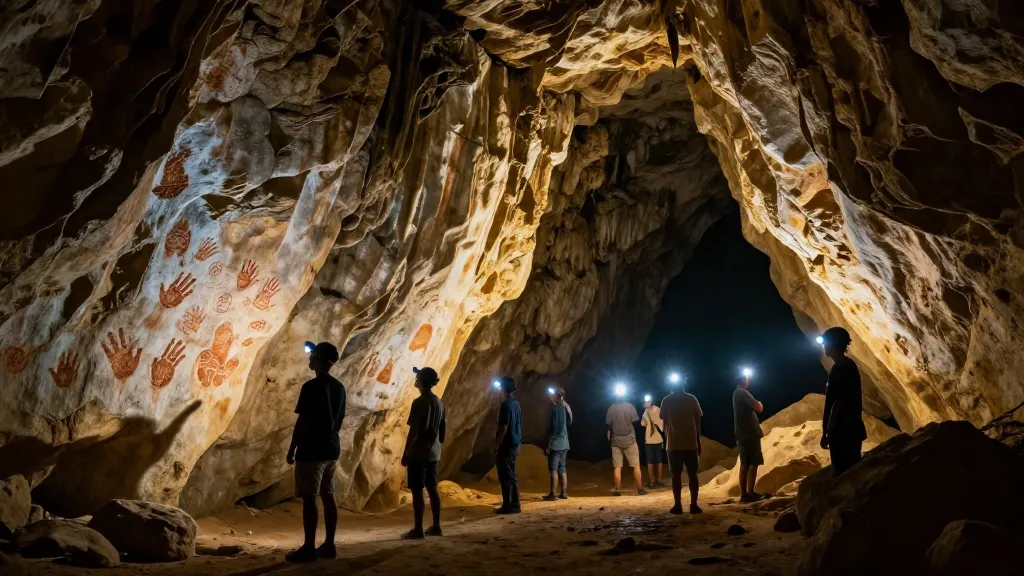
Deep in the limestone caves of Sulawesi, Indonesia, ancient hands reached out across time to leave us a message. These aren’t just any handprints—they’re the oldest known rock art ever discovered, dating back an astounding 67,800 years and fundamentally changing our understanding of when humans first began creating art.
The tan-colored handprints were created using a sophisticated technique where pigment was blown over hands pressed against cave walls, creating haunting silhouettes that have survived nearly 70 millennia. This discovery pushes back the timeline of human artistic expression by thousands of years, suggesting our ancestors were creating meaningful art much earlier than previously believed.
A Revolutionary Discovery on Sulawesi Island
The handprints were found on Sulawesi, an Indonesian island that’s increasingly becoming recognized as a crucial site for understanding early human creativity and migration patterns. The cave walls tell a story of ancient humans who not only survived in this tropical environment but thrived enough to engage in artistic expression.
Reports suggest these aren’t crude or primitive markings—the pigment-blowing technique demonstrates a level of sophistication and intentionality that speaks to the cognitive abilities of our ancient ancestors. The preservation of these handprints through tens of thousands of years is remarkable in itself, offering us a direct connection to the minds and hands that created them.
What Makes These Handprints So Significant
The discovery carries profound implications for our understanding of human development and artistic expression:
- Timeline revision: These handprints predate previously known rock art by millennia
- Geographic significance: Highlights Southeast Asia’s role in early human artistic development
- Technical sophistication: The pigment-blowing method shows advanced planning and execution
- Cultural implications: Suggests complex symbolic thinking existed much earlier than assumed
Rewriting Human Artistic History
Before this discovery, the oldest known rock art was significantly younger, leaving gaps in our understanding of when humans first began creating symbolic representations. These Indonesian handprints fill that gap dramatically, suggesting that the drive to create art—to leave a mark, to communicate across time—is more fundamental to human nature than we previously understood.
The handprints also raise intriguing questions about the people who made them. What motivated these ancient humans to create art? Were these marks ceremonial, practical, or simply an expression of creativity? While we may never know their exact intentions, the very existence of these handprints tells us that the urge to create and communicate through visual means is deeply embedded in human consciousness.
Indonesia’s Growing Archaeological Importance
This discovery adds to Indonesia’s growing reputation as a treasure trove of archaeological significance. The country’s unique position along ancient migration routes and its diverse landscapes have preserved evidence of human activity spanning tens of thousands of years.
Observers note that Southeast Asia, and Indonesia in particular, may hold many more secrets about early human development and artistic expression. As dating techniques become more sophisticated and archaeological exploration continues, we may discover that this region played a far more central role in human cultural development than previously recognized.
The 67,800-year-old handprints remind us that the human story is far richer and more complex than we often imagine. These ancient artists, working by flickering firelight in limestone caves, created something that would outlast empires, survive ice ages, and ultimately connect us across an almost incomprehensible span of time. In their simple yet profound gesture of placing hand to stone and blowing pigment, they achieved a kind of immortality—and in doing so, they’ve changed our understanding of what it means to be human.