
DNA Analysis Overturns 10+ Years of Debate About Mysterious Roman-Era Woman Found in England
Scientists used cutting-edge DNA technology to finally solve the mystery of the Beachy Head Woman, completely rewriting her origin story after more than a decade of scientific debate. The results challenge everything archaeologists thought they knew about this Roman-era skeleton.
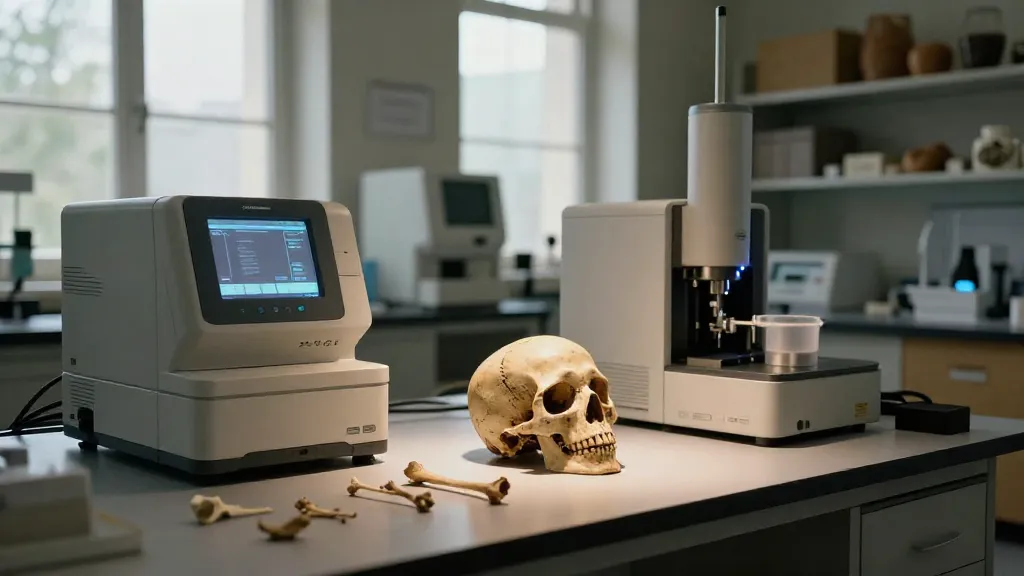
After more than a decade of heated scientific debate, the mystery surrounding one of England’s most enigmatic Roman-era discoveries has finally been solved—and the answer has completely upended everything archaeologists thought they knew. The Beachy Head Woman, a skeleton that sparked global fascination and scholarly arguments about ancient migration patterns, has revealed her true origins through cutting-edge DNA analysis that reads like something from a detective novel.
The Mystery That Captivated Scientists Worldwide
When archaeologists first examined the Beachy Head Woman’s remains, her physical features suggested a story that seemed to fit perfectly with what historians knew about the diverse Roman Empire. For over ten years, the prevailing scientific consensus pointed to sub-Saharan African or Mediterranean ancestry—a finding that would have provided compelling evidence of the cosmopolitan nature of Roman Britain.
The discovery initially made headlines around the world, with researchers citing her as proof of the Roman Empire’s far-reaching influence and the movement of people across vast distances during antiquity. Her story became a cornerstone in discussions about ancient diversity and migration patterns throughout the empire.
When DNA Tells a Different Story
Recent advances in ancient DNA extraction and analysis have now completely rewritten this narrative. Using sophisticated genetic sequencing techniques that weren’t available when the skeleton was first studied, scientists have uncovered ancestry patterns that challenge the decade-long assumptions about her origins.
The new DNA analysis represents a breakthrough in archaeological methodology, demonstrating how rapidly evolving genetic technologies can overturn even well-established scientific conclusions. The findings highlight the limitations of relying solely on physical anthropological assessments when determining ancient ancestry.
What This Means for Roman-Era Research
The revelation about the Beachy Head Woman’s true genetic heritage has significant implications that extend far beyond a single skeleton:
- Methodology reassessment: The case demonstrates the need to revisit other Roman-era remains using modern DNA techniques
- Migration pattern reconsideration: Established theories about population movement during the Roman period may require updating
- Interdisciplinary validation: The importance of combining traditional archaeology with cutting-edge genetic analysis becomes clear
The Broader Impact on Archaeological Science
This discovery serves as a powerful reminder that archaeological science is constantly evolving. What seemed like settled science just a few years ago can be completely transformed by technological advances and new analytical methods.
The Beachy Head Woman case also illustrates how initial interpretations, even when made by respected experts using the best available methods of their time, can be fundamentally altered by improved techniques. This doesn’t diminish the quality of earlier work, but rather showcases the dynamic nature of scientific discovery.
Looking Forward: What’s Next?
While the specific details of the Beachy Head Woman’s newly revealed ancestry await full publication in peer-reviewed journals, her case has already begun influencing how researchers approach similar discoveries. The success of this DNA analysis suggests that many other Roman-era remains across Britain and Europe could benefit from similar reexamination.
The story of the Beachy Head Woman ultimately demonstrates that in archaeology, as in all sciences, the most exciting discoveries often come not from finding new evidence, but from finding new ways to read the evidence we already have. After more than a decade of debate, modern science has finally given this ancient woman the chance to tell her real story—and it’s turned out to be quite different from what anyone expected.