
Neanderthals Spent Centuries Collecting Animal Skulls in Mysterious Cave Ritual
Archaeological evidence reveals Neanderthals repeatedly returned to a cave for over centuries to collect horned animal skulls, suggesting complex cultural behavior that scientists still can't explain.
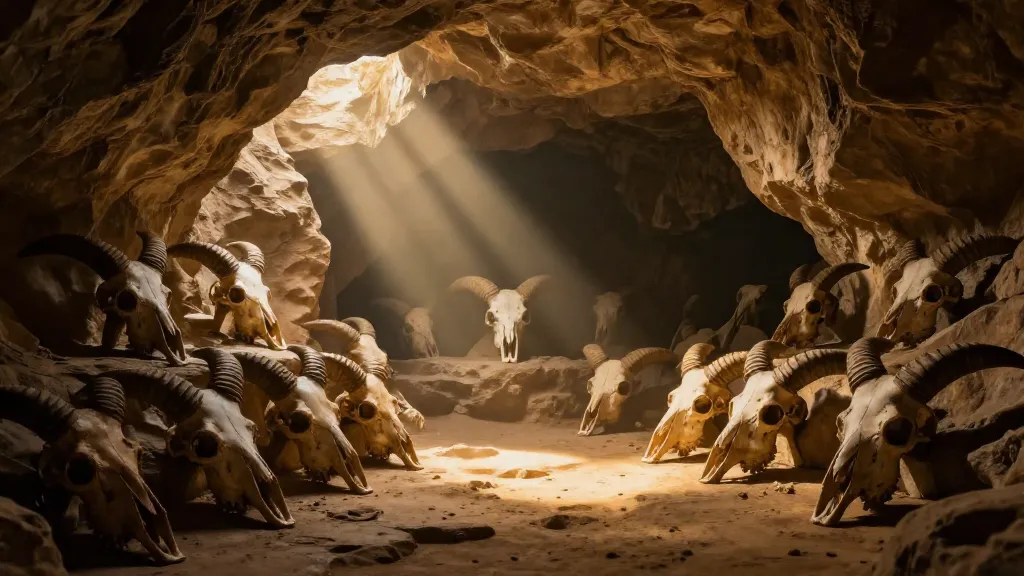
Deep in a cave more than 43,000 years ago, Neanderthals were carrying out a practice so mysterious that modern scientists still can’t crack the code. Generation after generation, these ancient relatives of ours returned to the same underground chamber with a singular purpose: collecting the horned skulls of animals and carefully storing them away from the light of day.
This wasn’t a one-time event or the work of a single individual. Archaeological evidence reveals that Neanderthals maintained this ritual for centuries, passing the tradition down through their communities in what appears to be one of the most compelling examples of complex cultural behavior ever discovered in our extinct cousins.
A Cave Full of Questions
The discovery challenges everything we thought we knew about Neanderthal society. While these ancient humans have long been recognized as capable toolmakers and hunters, this sustained skull-collecting practice suggests something far more sophisticated was happening in their communities.
The fact that this behavior spanned multiple generations indicates that Neanderthals possessed the cognitive abilities necessary for cultural transmission—the ability to pass knowledge, traditions, and practices from one generation to the next. This is a hallmark of complex social behavior that scientists previously weren’t certain Neanderthals possessed to this degree.
What Makes This Discovery So Significant
Reports suggest that the Neanderthals specifically targeted horned animal skulls for their collection, showing a deliberate selection process rather than random gathering. This selectivity points to several intriguing possibilities:
- Symbolic thinking: The choice to collect only horned skulls may indicate these objects held special meaning
- Ritual behavior: The repeated returns to the same cave suggest ceremonial or spiritual practices
- Social organization: Maintaining a tradition across centuries requires community structure and communication
- Cultural continuity: The practice demonstrates sophisticated knowledge transfer between generations
Observers note that the cave setting itself adds another layer of mystery. Why this particular location? What made it special enough for Neanderthals to return again and again across the centuries?
Rewriting Neanderthal History
This discovery forces archaeologists to reconsider long-held assumptions about Neanderthal intelligence and social complexity. The sustained nature of this practice—spanning not just years but centuries—suggests these ancient humans possessed far more sophisticated cultural capabilities than previously understood.
The implications extend beyond just this single cave. If Neanderthals were engaging in complex ritual behaviors and maintaining cultural traditions across generations, what other practices might they have developed? How extensive were their belief systems and social structures?
The Mystery Continues
Despite the significance of the find, the fundamental question remains unanswered: why were Neanderthals collecting these skulls? Archaeologists continue to study the evidence, but the true purpose behind this centuries-long practice may be lost to time.
What’s certain is that this discovery adds another piece to the puzzle of Neanderthal society, painting a picture of our ancient relatives as far more complex and culturally sophisticated than we ever imagined. As researchers continue to analyze the evidence, one thing becomes clear: there’s still so much we don’t know about the rich inner lives of these remarkable humans who shared our world tens of thousands of years ago.
The horned skulls in that ancient cave stand as silent witnesses to a tradition we may never fully understand—but one that undeniably reveals the depth and complexity of Neanderthal culture.