
Earth's Days Are Getting Longer at Unprecedented Rate Due to Climate Change
Rising ocean levels from climate change are slowing Earth's rotation at a pace not seen in millions of years, literally making your days longer. Scientists say this unprecedented rate of change is a measurable consequence of mass redistribution on our planet's surface.
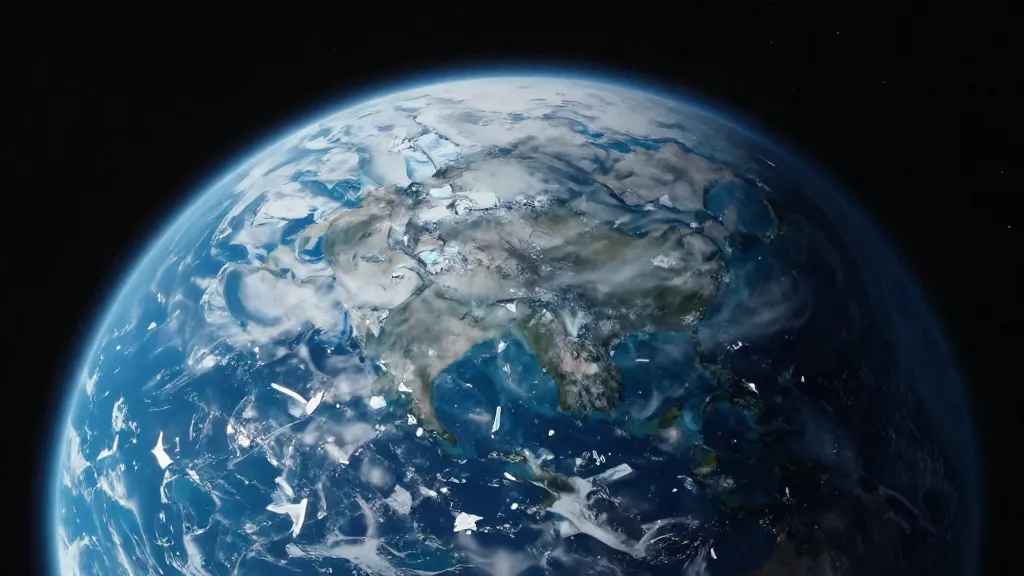
Your day is literally getting longer—and it’s happening faster than at any point in millions of years. While the change is measured in milliseconds, the implications are staggering: climate change isn’t just altering our weather patterns and ecosystems, it’s fundamentally changing how our planet spins through space.
The Physics Behind Our Slowing Planet
Rising ocean levels from climate change are creating a measurable shift in how mass is distributed across Earth’s surface. As water redistributes from ice caps and glaciers into the oceans, it’s creating a subtle but detectable drag on our planet’s rotation. Think of it like a figure skater extending their arms—the redistribution of mass naturally slows the spin.
Recent research has identified this phenomenon as occurring at an “almost unprecedented rate of increase” in the length of an average day. Scientists are describing this as a quantifiable consequence of Earth’s rising oceans, making it one of the most tangible ways climate change is literally reshaping our world in real time.
A Rate of Change Not Seen in Geological History
What makes this discovery particularly striking is the timeline. The current pace of rotational slowdown hasn’t been observed in millions of years of Earth’s history. This puts our current climate crisis into a geological perspective that’s both humbling and alarming.
What Scientists Are Monitoring
Researchers are tracking several key indicators to measure this phenomenon:
- Precise measurements of day length using atomic clocks
- Ocean level changes and mass distribution patterns
- Historical geological data for comparison
- Rotational velocity calculations over time
The Broader Implications
While the day-lengthening effect might seem abstract, it represents something profound: human activity is now operating at a scale that affects planetary mechanics. This isn’t just about warmer temperatures or changing weather patterns—we’re witnessing climate change impact the very rotation of our world.
Beyond the Numbers
The fact that rising oceans can measurably slow Earth’s spin demonstrates the interconnected nature of our planet’s systems. What happens in our atmosphere and hydrosphere doesn’t stay contained—it ripples through to affect even the most fundamental aspects of how Earth moves through space.
This discovery adds another layer to our understanding of climate change’s far-reaching consequences. It’s a reminder that the effects of our warming planet extend beyond what we can see and feel in our daily lives, reaching into the realm of planetary physics itself.
The next time you feel like there aren’t enough hours in the day, remember: technically, there are more hours than there used to be. Climate change is giving us longer days, whether we want them or not.