
Millions Stolen in Daring Christmas Heist: Thieves Drill Into German Bank Vault
Thieves exploited the quiet Christmas shutdown to drill through a concrete vault wall at a German Sparkasse bank, stealing an estimated 10+ million euros from thousands of safe deposit boxes. Police discovered the brazen heist only when a fire alarm triggered on December 29.
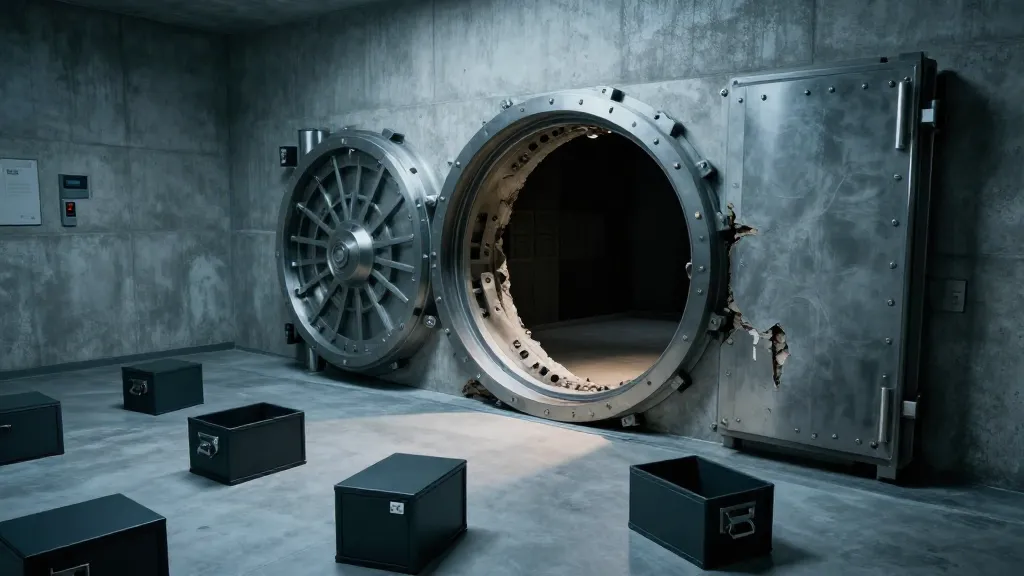
It was supposed to be the safest place for your valuables. But during the quiet days between Christmas and New Year’s, when most of Germany was closed and celebrating with family, thieves executed one of Europe’s most audacious bank heists in recent memory. They drilled through a thick concrete vault wall, ransacked thousands of safe deposit boxes, and vanished with an estimated 10+ million euros—all while the bank sat empty and unguarded.
The heist wasn’t discovered until a fire alarm went off on the morning of December 29. By then, it was too late.
The Perfect Crime Window
Germany’s Christmas shutdown is unlike most other countries. Starting from the evening of December 24, shops and banks across the nation close en masse. This isn’t a skeleton-crew situation—it’s a near-complete halt. Streets empty. Offices lock down. Security presence shrinks to a minimum.
For most of the year, this creates a sense of safety and community. But for criminals with patience and precision, it creates something else: opportunity.
The thieves targeted a Sparkasse bank branch in Gelsenkirchen, a city in western Germany. Using industrial-grade drilling equipment, they methodically worked their way through the vault’s concrete wall—a barrier designed to withstand forced entry. Once inside, they had access to thousands of safe deposit boxes belonging to ordinary customers who believed their life savings, family heirlooms, and irreplaceable documents were secure.
How the Heist Unfolded
According to police reports, the operation unfolded over several days:
What to watch for in heist investigations:
- Witness sightings and vehicle descriptions
- Timeline reconstruction through security footage
- Recovery of stolen vehicles used in the crime
- Forensic evidence left at the scene
On Saturday night, witnesses reported seeing several men carrying large bags through the stairwell of an adjacent parking garage. The thieves were methodical, moving deliberately, suggesting they knew exactly what they were doing and weren’t rushing.
By early Monday morning, December 29, the operation was complete. Witnesses spotted a black Audi RS 6 leaving the parking garage with masked men inside. Police later discovered the vehicle’s license plate belonged to a car stolen in Hanover—more than 200 kilometers away—indicating the thieves had planned their escape route carefully.
It wasn’t until a fire alarm triggered in the early hours of Monday that anyone realized what had happened. By then, the perpetrators were long gone.
The Human Cost
The theft isn’t just a number on a police report. Behind that “10+ million euros” estimate are thousands of real people whose sense of security has been shattered.
On Tuesday, dozens of angry customers gathered outside the Gelsenkirchen branch, loudly chanting “Let us in!” Many had been locked out, desperate for information about their belongings.
One man told local broadcaster Welt that he hadn’t slept since learning of the heist. He’d been using his safe deposit box for 25 years, storing his retirement savings inside. Another customer revealed he kept cash and jewelry for his entire family in his box.
“I couldn’t sleep last night. We’re getting no information,” the first customer said, his frustration evident. These aren’t wealthy investors or corporations with insurance to fall back on—they’re ordinary people who trusted a centuries-old institution to protect what mattered most to them.
Why This Could Happen Again
Security experts are raising serious questions about how this heist succeeded so completely. The vulnerabilities are sobering:
A thick concrete vault wall can be drilled through with the right equipment and enough time. The Christmas shutdown meant minimal staff presence and reduced security monitoring. The adjacent parking garage provided cover and a quick exit route. The use of a stolen vehicle meant the getaway car couldn’t be easily traced back to the perpetrators.
Most critically: the heist wasn’t discovered for hours, giving the criminals a massive head start. By the time authorities realized what had happened, the trail was already cold.
The Investigation Ahead
Police have launched a major investigation, but leads are limited. They’re relying on witness accounts of the men and vehicles involved, hoping to identify the perpetrators before they attempt another heist elsewhere.
The Sparkasse bank has remained tight-lipped, with spokespeople declining to comment on the incident or the bank’s security measures. That silence only fuels customer frustration and raises uncomfortable questions about whether the bank’s security protocols were adequate in the first place.
As the investigation continues, one thing is clear: this heist has exposed vulnerabilities in how European banks protect customer valuables during extended closures. Whether that leads to meaningful security improvements—or becomes a blueprint for future thieves—remains to be seen.