
Denmark Just Ended 400 Years of Mail Delivery—Here's What Comes Next
Denmark's postal service delivers its final letter this week, making it the first country to officially end physical mail delivery. The shift reveals how far digital communication has come—and who gets left behind.
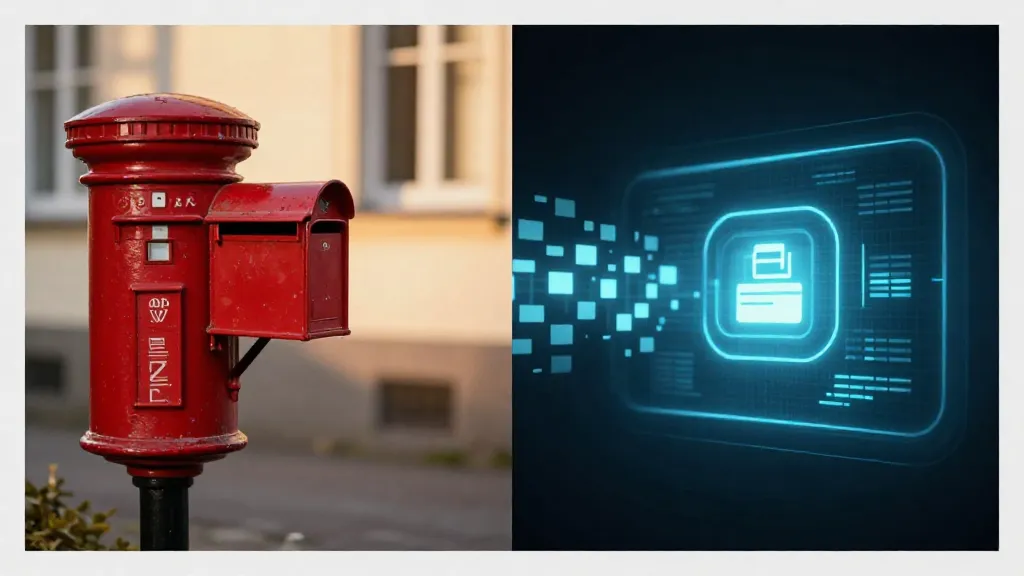
It’s a moment that seemed impossible just decades ago: Denmark’s postal service is delivering its final letter this week, marking the end of a 400-year tradition. On Tuesday, PostNord will hand over the last piece of physical mail, making Denmark the first country in the world to officially declare that traditional letter delivery is no longer essential or economically viable. The grandeur of Copenhagen’s Central Post Building—a 1912 architectural marvel now converted into a luxury hotel—now serves as a monument to an era that’s rapidly fading into history.
The Numbers Tell the Story
The decline has been staggering. Denmark’s postal service delivered more than 90% fewer letters in 2024 than it did in 2000. The shift isn’t unique to Denmark; the US Postal Service has experienced its own dramatic drop, delivering 50% less mail in 2024 compared to 2006. What makes Denmark different is the boldness of declaring the postal service officially obsolete rather than slowly letting it fade.
The reason is simple: Danes have gone digital. “Almost every Dane is fully digital,” Andreas Brethvad, PostNord Denmark’s public affairs director, told CNN. “Most communication now arrives in our electronic mailboxes, and the reality today is that e-commerce and the parcel market far outweigh traditional mail.”
What Comes Next
Starting immediately, Danes who need to send physical mail will have to drop it off at kiosks in shops, where a private courier company called DAO will handle delivery to domestic and international addresses. PostNord will continue delivering parcels—because online shopping shows no signs of slowing down—but the era of mailboxes on street corners is over.
The numbers speak to how thoroughly Denmark embraced this transition: when PostNord sold off its 1,500 mailboxes in December to raise money for charity, hundreds of thousands of Danes tried to purchase them as nostalgic keepsakes, paying between $236 and $315 per box.
The Digital Divide Nobody Talks About
Here’s where Denmark’s historic milestone gets uncomfortable. While the country celebrates its leap into a fully digital future, experts warn that the transition leaves behind a vulnerable population that many prefer not to discuss.
What to watch for:
- Older people and rural communities struggling to adapt to digital-only services
- Countries with less digital infrastructure facing similar pressure
- The rise of “digital-only” payment systems that exclude those without smartphones or internet access
- Growing inequality between tech-forward nations and those left behind
Almost 2.6 billion people remain entirely offline globally, according to the UN-affiliated Universal Postal Union. Millions more lack what the organization calls “meaningful connectivity” due to inadequate devices, poor coverage, or limited digital skills. Women, rural communities, and people living in poverty face the steepest barriers.
Even in Denmark, advocacy groups are raising alarms. Marlene Rishoej Cordes, a spokesperson for the DaneAge Association, which represents older people, pointed out a cruel irony: DAO’s home mail collection service exists, but it requires digital payment—meaning those without smartphones or online banking access can’t use it. “It’s very easy for us to access our mail on the phone or a website,” she told CNN, “but we forgot to give the same possibilities to those who are not digital.”
Letters in the Age of Emojis
The letter itself has been transforming for centuries. Medieval monks used vellum, scholars once studied the art of writing different letter styles for different occasions, and Jane Austen penned epistles that are now worth hundreds of thousands of dollars at auction. Now, the letter is becoming something rarer and more precious—a symbol of permanence in an age of ephemeral digital messages.
Digital communication has evolved its own language to compensate for what’s lost in the transition. Emojis, GIFs, and colored text attempt to convey the emotional nuance that handwriting once carried effortlessly. Nicole Ellison, a professor at the University of Michigan who studies computer-mediated communication, notes that humans are adaptable: “We’re humans. And at the end of the day, we will do our best to use whatever channel we have to communicate the rich universe of emotions.”
Still, something intangible is being lost. One Danish user on X captured the melancholy perfectly: “Look closely at the picture here,” they wrote alongside a photo of a mailbox. “Now in 5 years I will be able to explain to a 5-year-old what a mailbox was in the old days.”
Is Denmark Leading or Abandoning?
Denmark’s move will likely inspire other nations to follow. Observers in countries like the Netherlands report that mailboxes have already vanished from many towns. But the speed of this transition raises an urgent question: In our rush to celebrate digital progress, are we leaving behind the very people who need our help most?
The answer will define whether Denmark’s bold experiment becomes a model for digital innovation or a cautionary tale about the cost of moving too fast.