
Teachers Say AI Will Transform Education More Than the Internet—But They're Worried About One Thing
A new NPR poll reveals teachers believe AI will revolutionize education beyond what the internet achieved, yet most fear it's undermining students' critical thinking abilities.
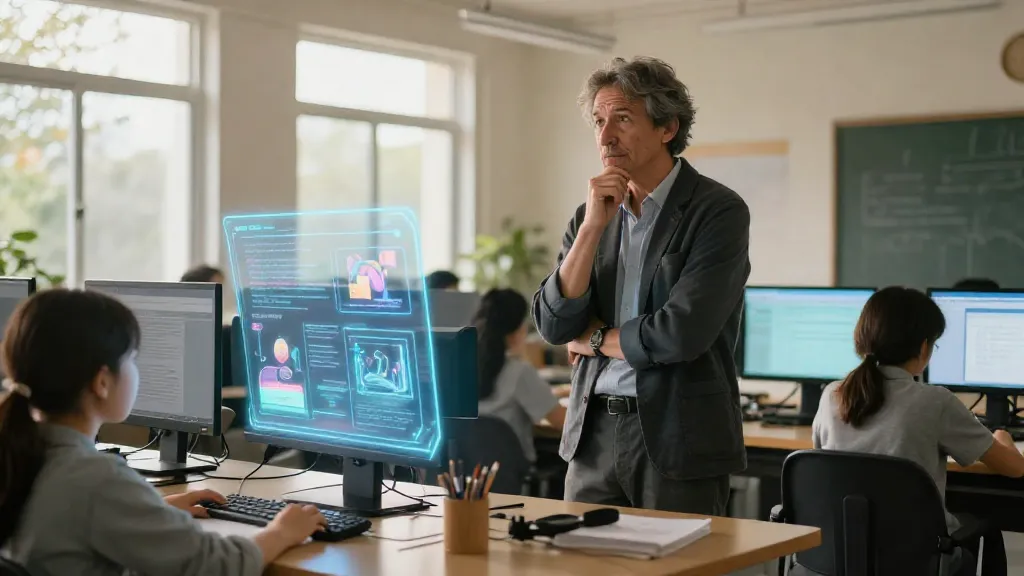
Teachers are experiencing something unprecedented in their classrooms—a technology shift they believe will surpass even the revolutionary impact of the internet. But as artificial intelligence transforms how education works, these frontline educators are sounding an alarm about what students might be losing in the process.
A Transformation Greater Than the Internet Revolution
According to a new NPR/Ipsos poll, the majority of K-12 teachers believe AI will fundamentally reshape education in ways that eclipse the transformative power of the internet or personal computers. This perspective carries significant weight, considering these educators witnessed firsthand how digital technology revolutionized learning over the past two decades.
The comparison to the internet’s impact is particularly striking. The web transformed education by providing instant access to information, enabling distance learning, and creating new ways for students to research and collaborate. Teachers are now suggesting that AI represents an even more profound shift in how learning happens.
Teachers Embrace AI for Efficiency
Many educators are already integrating AI tools into their daily work, primarily to streamline time-consuming tasks. Reports suggest teachers are using artificial intelligence to help with lesson planning, grading, and administrative duties that traditionally consumed hours of their time outside the classroom.
This practical adoption reflects a broader trend of professionals across industries discovering how AI can handle routine work, freeing up time for more meaningful interactions with students. The technology appears to be addressing one of education’s persistent challenges: the overwhelming workload that leaves teachers with limited time for personalized instruction.
The Critical Thinking Concern
Despite recognizing AI’s transformative potential, a majority of teachers in the poll expressed serious concerns about the technology’s impact on student development. Their primary worry centers on a fundamental educational goal: teaching students to think critically and independently.
What Teachers Are Watching For:
- Students becoming overly dependent on AI for problem-solving
- Reduced effort in developing analytical skills
- Weakened ability to evaluate information independently
- Decreased persistence when facing challenging tasks
Educators worry that when students can instantly generate essays, solve math problems, or answer complex questions through AI, they may miss crucial opportunities to develop their own reasoning abilities. This concern reflects a deeper question about what learning means in an age of intelligent machines.
The Double-Edged Nature of Educational Technology
The poll results highlight the complex relationship teachers have with educational technology. While they recognize AI’s unprecedented potential to enhance learning and reduce their administrative burden, they’re also grappling with fundamental questions about student development and academic integrity.
This tension isn’t entirely new—similar debates emerged when calculators, computers, and internet search engines became common in classrooms. However, teachers suggest AI represents a qualitatively different challenge because of its ability to generate human-like responses and complete complex cognitive tasks.
Navigating an Uncertain Future
The educational community finds itself at a crossroads, trying to harness AI’s benefits while preserving the essential human elements of learning. Teachers’ perspectives matter enormously in this conversation because they observe daily how students interact with technology and develop critical skills.
As schools and districts develop AI policies, educators’ frontline experience provides crucial insights into both the opportunities and risks ahead. Their warning about critical thinking skills deserves serious attention, even as the technology continues to evolve rapidly.
The challenge now is finding ways to integrate AI that enhance rather than replace the fundamental cognitive development that education aims to foster. Teachers’ voices in this ongoing conversation will likely prove essential as society navigates this transformative moment in learning.