
China Launches 'Justice Mission 2025': Largest Military Drills Around Taiwan Since Pelosi Visit
China's Eastern Theater Command announces sweeping military exercises surrounding Taiwan with live-fire drills, naval blockade simulations, and explicit warnings against foreign intervention—marking the sixth major show of force since 2022.
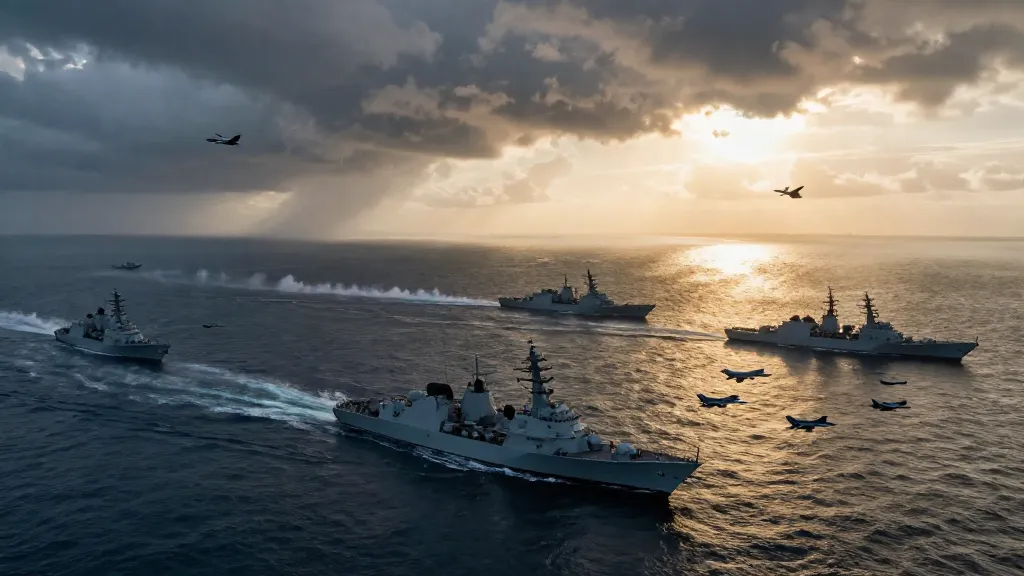
China’s military has launched its most ambitious show of force around Taiwan in years, and this time it’s sending a new message: don’t expect other countries to come to Taiwan’s aid. The Eastern Theater Command announced “Justice Mission 2025” on Sunday, deploying forces across all military branches for live-fire drills, naval blockade simulations, and coordinated strike operations that will test Beijing’s ability to isolate the island from foreign support.
A New Escalation: The Foreign Intervention Factor
What sets this exercise apart from previous Chinese military drills isn’t just its scale—it’s the explicit messaging. For the first time, the Eastern Theater Command has publicly mentioned deterrence against foreign military intervention, according to Reuters. This marks a strategic shift in how Beijing frames its military pressure on Taiwan, moving beyond warnings aimed at the island itself to direct messaging toward potential allies, particularly the United States and Japan.
Eastern Theater Command Spokesperson Shi Yi announced the drills via Weibo, describing them as “a stern warning against ‘Taiwan Independence’ separatist forces” and “a legitimate and necessary action” to protect China’s sovereignty. But observers note the real audience may be Washington and Tokyo, signaling that Beijing is prepared to challenge the security architecture that has long protected Taiwan.
What the Drills Include
The “Justice Mission 2025” exercise is comprehensive in scope. Forces from the army, navy, air force, and rocket force will conduct:
- Joint patrols across zones surrounding Taiwan
- Blockade maneuvers to practice sealing off the island
- Live-fire drills in five designated zones (restricted for 10 hours beginning at 8:30 a.m. on Tuesday)
- Combined naval and air strike operations
- Simulated deterrence operations against foreign intervention
The exercise covers expansive areas around the island, with the stated goal of gaining “complete control” of Taiwan’s surrounding waters and airspace.
The Timing Matters: Japan’s Recent Comments
The drills arrive on the heels of comments from Japanese Prime Minister Takaichi Sanae in November, who suggested that a Chinese naval blockade of Taiwan could trigger Japanese military action. Japan’s willingness to publicly consider intervention represents a potential shift in regional dynamics—and China’s new emphasis on deterring foreign involvement appears to be a direct response.
This is the sixth large-scale military exercise China has conducted since former U.S. House Speaker Nancy Pelosi visited Taiwan in August 2022, marking an accelerating pace of military demonstrations.
Taiwan’s Response: Condemnation and Vigilance
Taiwan’s Presidential Office Spokesperson Karen Kuo issued a swift condemnation, calling the exercise “irresponsible and provocative” and saying it undermines stability in the Taiwan Strait and the broader Indo-Pacific region. She accused Beijing of “disregarding international norms and using military intimidation to threaten neighboring countries.”
Taiwan’s military and national security agencies have reportedly maintained complete situational awareness and made thorough preparations, according to Kuo’s statement. Taiwan Coast Guard vessels have deployed to monitor the Chinese exercises as they unfold.
The Broader Strategic Picture
Observers suggest that China’s messaging around “Justice Mission 2025” reflects two key strategic concerns: the deepening U.S.-Japan coordination on Taiwan’s security, and the need to demonstrate to Beijing’s own military and political leadership that it possesses the capability to enforce a blockade if political circumstances change.
By explicitly mentioning deterrence against foreign intervention for the first time, China is signaling that any future military action against Taiwan would not be a limited operation—it would be designed to prevent the United States and Japan from mounting an effective response.
The question now is whether Japan and the United States will treat this messaging as a serious strategic warning or as part of an ongoing pattern of military posturing that falls short of actual conflict. Either way, the Taiwan Strait has entered a new phase of tension.