
Denmark in 'Crisis Mode' as Trump Doubles Down on Greenland Takeover After Venezuela Strike
Following a dramatic U.S. military operation in Venezuela, President Trump has reignited his push to seize Greenland, prompting Denmark to declare itself in crisis mode and warning allies that Arctic territorial ambitions now pose the biggest threat to NATO cohesion.
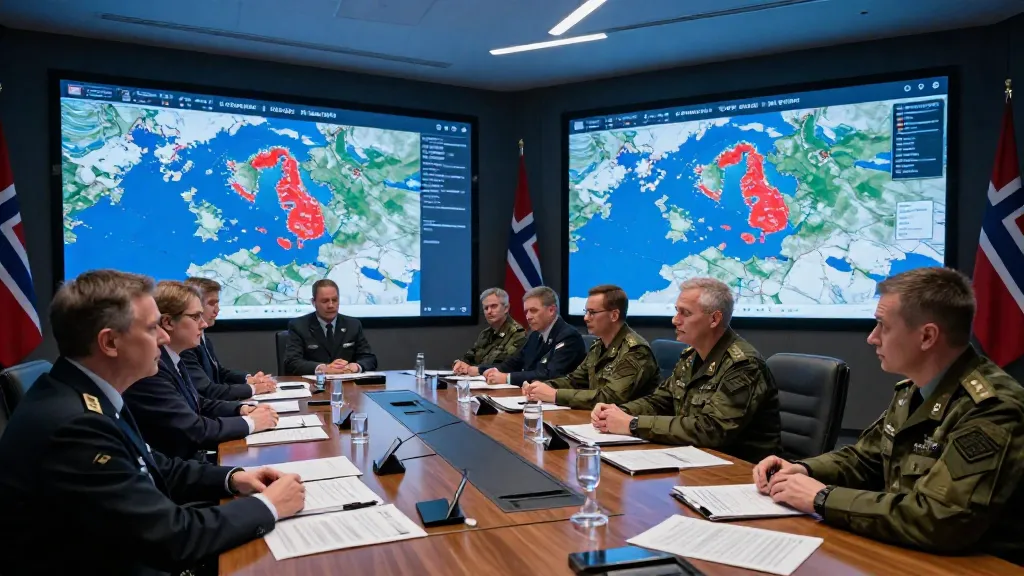
You know that moment when a geopolitical situation escalates so fast that even seasoned analysts struggle to keep up? Denmark just entered one. After the U.S. military’s stunning operation in Venezuela over the weekend, President Trump has doubled down on his long-standing ambition to take control of Greenland—and Copenhagen is now in full crisis mode. What started as a provocative talking point has evolved into what some observers are calling the single biggest threat to transatlantic unity since the Cold War.
The Venezuela Trigger
The timing is hard to ignore. On Saturday, the U.S. conducted a major military strike in Venezuela, capturing President Nicolás Maduro and his wife, Cilia Flores, in what analysts described as a shock intervention. Within hours, Trump was on Air Force One making his position crystal clear.
“We need Greenland from the standpoint of national security,” Trump said Sunday, “and Denmark is not going to be able to do it, I can tell you.”
This wasn’t a casual remark. It was a direct statement of intent, delivered at a moment when the world was still processing the Venezuela operation. The message seemed unmistakable: the U.S. is prepared to act unilaterally on territorial objectives.
Denmark’s Urgent Response
Danish Prime Minister Mette Frederiksen didn’t mince words. In a Sunday Facebook post, she addressed Trump directly:
“I have to say this very directly to the United States: It makes absolutely no sense to talk about the need for the United States to take over Greenland.”
Frederiksen emphasized that Greenland, as part of the Kingdom of Denmark, is already a NATO member and therefore covered by the alliance’s collective security guarantee. She pointed out that a U.S.-Denmark defense agreement already grants America “wide access to Greenland,” making further territorial claims redundant.
“I would therefore strongly urge the United States to stop the threats against a historically close ally,” she added.
Greenlandic Prime Minister Jens-Frederik Nielsen was even more direct, calling Trump’s remarks “very rude and disrespectful.”
What to Watch For
- Trump’s appointment of Louisiana Gov. Jeff Landry as special envoy to Greenland last month—a move both Denmark and Greenland condemned
- Whether Trump explicitly rules out military or economic coercion to acquire Greenland
- Statements from other NATO allies about how this affects alliance cohesion
- Public opinion polling in Greenland (which has historically shown overwhelming opposition to U.S. control)
- Denmark’s defense spending and Arctic military investments as a counter-measure
The Greenland Obsession
Trump’s interest in Greenland isn’t new. The vast, mineral-rich Arctic territory has long fascinated him as a strategic asset—a place rich in rare earth elements, positioned between Europe and North America, and sparsely populated. He’s previously refused to rule out using military or economic force to acquire it.
What’s changed is the context. The Venezuela operation demonstrated that Trump’s administration is willing to execute bold, unilateral military actions on the world stage. That precedent makes his Greenland rhetoric feel less like posturing and more like a statement of future intent.
A NATO Crisis in the Making
Mujtaba Rahman, managing director for Europe at political risk consultancy Eurasia Group, has sounded the alarm in stark terms. He describes Denmark as being in “full crisis mode” and argues that a potential U.S. intervention in Greenland now represents “the biggest source of risk to the transatlantic alliance and intra-NATO and intra-EU cohesion, arguably far greater than those presented by Russia’s invasion of Ukraine.”
This assessment is striking. It suggests that allies view Trump’s territorial ambitions as more destabilizing than an ongoing foreign military invasion of a sovereign European nation. The fear isn’t just about Greenland itself—it’s about what it signals: that traditional rules governing NATO solidarity and international law may no longer apply.
The Strategic Calculation
From Washington’s perspective, the argument centers on national security. Arctic resources, polar routes, and strategic positioning all matter in a world where great-power competition is intensifying. From Denmark’s perspective, however, the move is incomprehensible. Denmark has invested heavily in Arctic defense, recently committing to purchase 16 additional F-35 fighter jets. It’s strengthened ties with Greenland through health care and infrastructure investments. And it’s already granted the U.S. significant military access.
Yet none of that appears sufficient to deter Trump from his stated objective.
The Broader Implications
What’s happening with Greenland isn’t just a bilateral dispute—it’s a test case for how the Trump administration views allied relationships and international norms. If the U.S. can credibly threaten to take territory from a NATO ally without facing serious consequences, what does that mean for the alliance’s future?
Greenlanders themselves have made their position clear: opinion polls consistently show they overwhelmingly oppose U.S. control and strongly support independence from Denmark. In other words, neither the U.S. acquisition nor Danish sovereignty reflects the will of Greenland’s actual population.
As this situation unfolds, Denmark is bracing for what comes next. The combination of Trump’s explicit statements, the appointment of a pro-annexation special envoy, and the demonstrated willingness to execute unilateral military operations has moved Greenland from a quirky talking point into a genuine geopolitical flashpoint.
The transatlantic alliance is entering uncharted territory—and no one’s quite sure how this ends.