
China's Secret 'Manhattan Project' Just Built a Working EUV Chip Machine—Years Ahead of Western Estimates
Reuters reveals China has completed a prototype extreme ultraviolet lithography machine in Shenzhen, potentially achieving semiconductor independence years sooner than analysts predicted. Built by former ASML engineers working under fake identities, the breakthrough marks a major shift in the global tech Cold War.
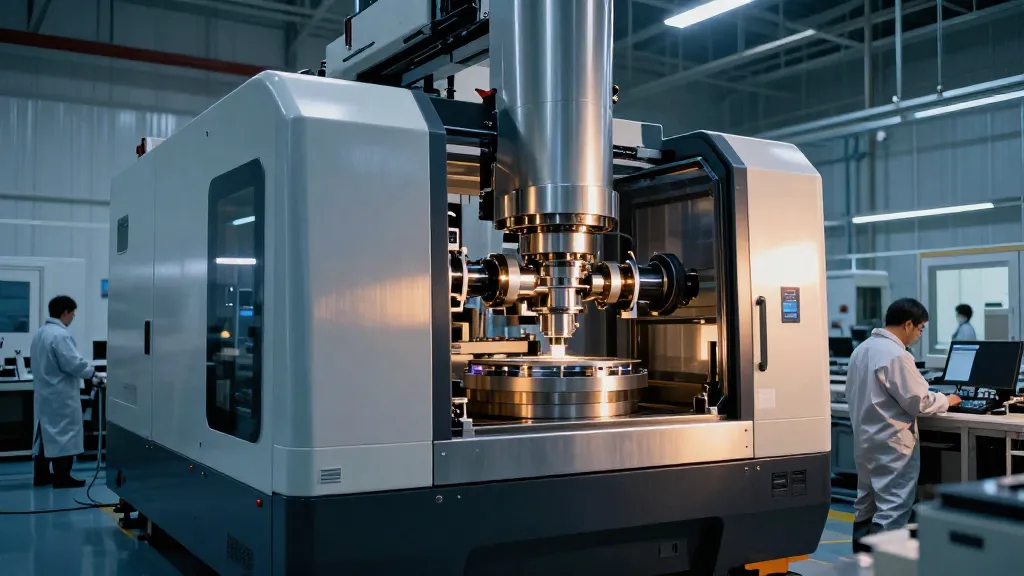
You know that feeling when a rival suddenly reveals they’ve been building something you thought was years away from being possible? That’s the geopolitical equivalent of what just happened in the semiconductor world. Reuters has uncovered evidence that China has completed a working prototype of an extreme ultraviolet lithography machine—the holy grail of chipmaking technology—right under Western intelligence’s nose. Built in a high-security Shenzhen lab by former Dutch engineers working under fake identities, this prototype represents a potential earthquake in the global tech Cold War. And it’s happening years faster than U.S. export controls were supposed to allow.
The Machine That Changes Everything
EUV lithography machines are the most advanced manufacturing tools on the planet. They use beams of extreme ultraviolet light to etch circuits thousands of times thinner than a human hair onto silicon wafers. The smaller the circuits, the more powerful and efficient the chip. It’s the technology that powers everything from cutting-edge AI systems to military weapons—and until now, only one company in the world could make them: Dutch semiconductor giant ASML.
That monopoly was supposed to be untouchable. The U.S. has spent years pressuring the Netherlands to block ASML from selling these $250 million machines to China. In 2022, the Biden administration expanded export controls to cut off China’s access to advanced chipmaking equipment entirely. The goal was clear: keep China at least a generation behind in semiconductor capabilities.
But China just made that strategy obsolete.
According to Reuters sources, the Shenzhen prototype is operational and successfully generating extreme ultraviolet light. It’s crude compared to ASML’s machines—so large it fills nearly an entire factory floor—and it hasn’t yet produced working chips. Yet its very existence is a shock to the system. When ASML’s CEO said in April that China would need “many, many years” to develop EUV technology, he apparently didn’t know that his former employees had already delivered it.
How China Built Its Semiconductor Manhattan Project
The parallel to the Manhattan Project isn’t accidental. Chinese leaders are treating semiconductor independence as a matter of national survival, with the project running under the direction of Xi Jinping confidant Ding Xuexiang and coordinated by Huawei across thousands of engineers at state research institutes.
The recruitment strategy is what makes this story particularly unsettling for the West:
- Former ASML engineers were given signing bonuses of $420,000 to $700,000, plus home-purchase subsidies
- Recruits were issued identification cards under false names to maintain secrecy
- Workers recognized colleagues from ASML working under aliases, instructed to use fake names at work
- Some naturalized citizens of other countries were given Chinese passports and allowed to maintain dual citizenship
- Prime targets were recently retired Chinese-born engineers who possessed sensitive knowledge but faced fewer professional constraints
One veteran engineer was shocked to find his generous signing bonus came with an ID card bearing a false name. Inside the secure facility, he discovered other former ASML colleagues also working under assumed identities. The message was unmistakable: what happens in this lab stays in this lab.
The most significant recruit appears to be Lin Nan, ASML’s former head of light source technology. After joining China’s Shanghai Institute of Optics, his team filed eight patents on EUV light sources in just 18 months.
The Western Response Problem
Here’s where the export controls hit a wall: they were designed to prevent the sale of equipment, but they couldn’t prevent knowledge transfer. ASML won an $845 million judgment in 2019 against a former Chinese engineer accused of stealing trade secrets—but the defendant filed for bankruptcy and continues to operate in Beijing with Chinese government support.
European privacy laws make it difficult for ASML to track former employees. Non-disclosure agreements are hard to enforce across borders. And the secondary market for older ASML machines has provided China with critical components to reverse-engineer. Dutch intelligence warned in April that China has been running “extensive espionage programmes” to obtain advanced technology and knowledge, including recruiting Western scientists and high-tech employees.
The Netherlands is now developing policies requiring “knowledge institutions” to screen personnel to prevent access to sensitive technology. But that’s closing the barn door after the horse has bolted.
What to Watch For
- Timeline reality check: The Chinese government targets 2028 for producing working chips on the prototype, but sources suggest 2030 is more realistic—still years ahead of Western estimates
- Optical systems bottleneck: China’s main challenge is replicating precision optical systems from suppliers like Germany’s Carl Zeiss AG
- The talent drain continues: Recruitment of Western chip engineers accelerated in 2019 and shows no signs of slowing
- ASML’s next move: Whether the company can enforce trade secret protections across borders or if legal action becomes moot
What This Means for the Global Tech Order
The existence of China’s EUV prototype doesn’t mean the country has achieved semiconductor independence tomorrow. The machine still needs refinement. It hasn’t produced working chips. The optical systems are crude. There are major technical hurdles ahead.
But it does mean something profound: the timeline has compressed. Western analysts thought China was a decade away from matching EUV capabilities. They’re now potentially five to seven years away, maybe less. That changes the calculus for every tech company, every government, and every supply chain that depends on semiconductor dominance.
The Shenzhen lab represents a different kind of Cold War—one where the battlefield is talent, knowledge, and the willingness to operate in the shadows. China identified what it needed, recruited the people who knew how to build it, gave them fake identities to maintain operational security, and delivered a working prototype while the West was still confident in its export controls.
ASML will likely pursue legal action. The U.S. will probably tighten restrictions further. The Netherlands will screen more personnel. But the fundamental problem remains: you can’t unlearn what you know, and you can’t stop people from choosing to work on projects they believe in—especially when the signing bonus is substantial and the cause is framed as national survival.
The semiconductor Cold War just got a lot hotter.