
Breakthrough Non-Surgical Procedure Cuts Knee Pain in Half for a Full Year
A minimally invasive procedure called genicular artery embolization (GAE) reduced knee osteoarthritis pain by 50% over 12 months in a clinical trial, offering millions of sufferers an alternative to surgery.
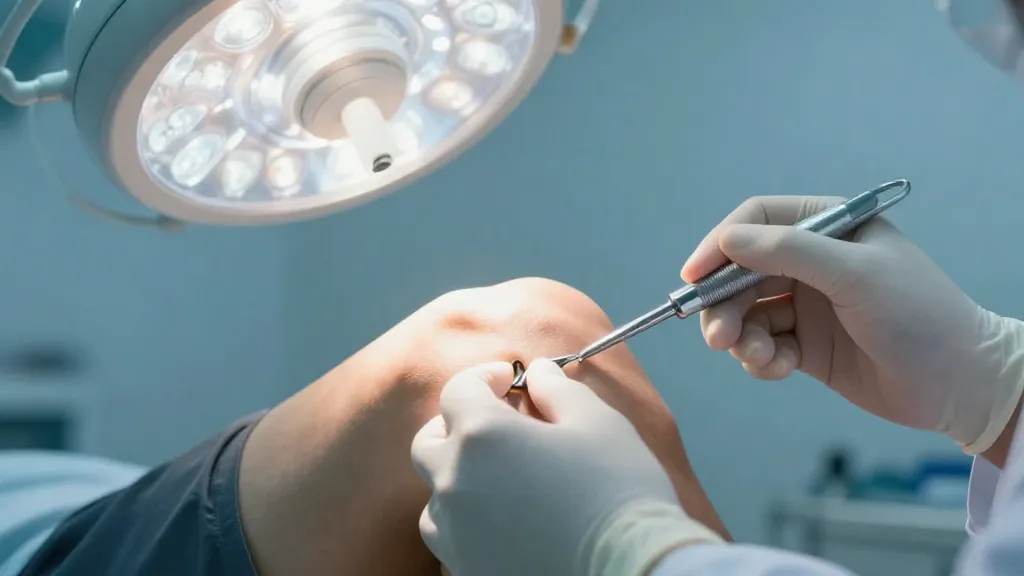
Imagine waking up without the sharp, grinding pain in your knees. No more limping through the day, no more putting off stairs, no more accepting that knee surgery is your only real option. For millions of people living with severe knee osteoarthritis, that scenario has felt impossible—until now. A research team in Germany has demonstrated that a minimally invasive procedure can cut knee pain in half and keep it that way for a full year, offering a genuine alternative to the operating room.
The Problem: Millions Stuck Between Pain and Surgery
Osteoarthritis of the knee is one of the most common forms of arthritis, affecting hundreds of millions of people worldwide. It happens when the protective cartilage around the bones gradually wears away, leaving bone rubbing against bone. The result is pain that ranges from annoying to debilitating.
For people with severe cases, the traditional path has been limited: manage the pain with medication and physical therapy, or eventually turn to knee replacement surgery. But surgery carries risks, requires months of recovery, and isn’t ideal for everyone. That’s left a huge population of sufferers trapped between chronic discomfort and a major medical procedure.
Enter GAE: A New Approach
The breakthrough comes from researchers at Charité - Universitätsmedizin Berlin in Germany, who have developed a treatment called genicular artery embolization (GAE). It’s a minimally invasive procedure that targets the root of the problem in a completely different way than surgery.
Instead of replacing the joint, GAE works by addressing the abnormal blood vessels and pain-sensing nerves associated with osteoarthritis. The procedure is designed to reduce inflammation and pain signaling without cutting into the knee or removing tissue.
The Results: 50% Pain Reduction for 12 Months
In a clinical trial, participants who underwent GAE experienced a remarkable outcome: a 50% reduction in knee pain that lasted throughout the entire 12-month study period. For people accustomed to constant, limiting pain, cutting it in half represents a genuine life change.
What makes this particularly significant is the durability. This wasn’t a temporary fix or a placebo effect that faded after a few weeks. The relief persisted, suggesting the procedure addresses something fundamental about how osteoarthritis pain develops.
Why This Matters
A Real Alternative to Surgery
For many patients, GAE could mean avoiding knee replacement entirely, or at least delaying it significantly. Surgery carries infection risks, anesthesia complications, and a lengthy rehabilitation period. A minimally invasive procedure with lasting results changes the calculation entirely.
Practical Benefits
What to watch for in how this treatment might reshape care:
- Faster recovery: Minimally invasive procedures typically mean less time in the hospital and quicker return to normal activities
- Lower complication risk: Fewer surgical risks means fewer reasons to hesitate
- Scalability: A procedure that’s easier and safer could be offered more widely than joint replacement surgery
- Cost implications: Potentially more accessible treatment for broader populations
The Scope of the Problem
With hundreds of millions of people worldwide living with knee osteoarthritis, even a single effective alternative could transform how we approach joint pain. This isn’t a niche treatment for a rare condition—it’s a potential solution for one of the most common chronic pain problems on the planet.
What Happens Next
While the trial results are encouraging, observers note that more research and broader clinical validation will be important as this procedure moves toward wider adoption. The German team’s work has opened a door, but the medical community will want to see how GAE performs across different patient populations and in different healthcare settings.
For now, this represents exactly what medical breakthroughs should be: a practical, evidence-based approach that offers real people a real choice they didn’t have before. In the world of chronic pain management, that’s genuinely transformative.