
Century of Hair Samples Proves Leaded Gas Ban Actually Worked
A hundred years of hair analysis provides definitive proof that removing lead from gasoline was one of public health's greatest victories. Your great-grandparents had lead in their blood—and science just proved we fixed it.
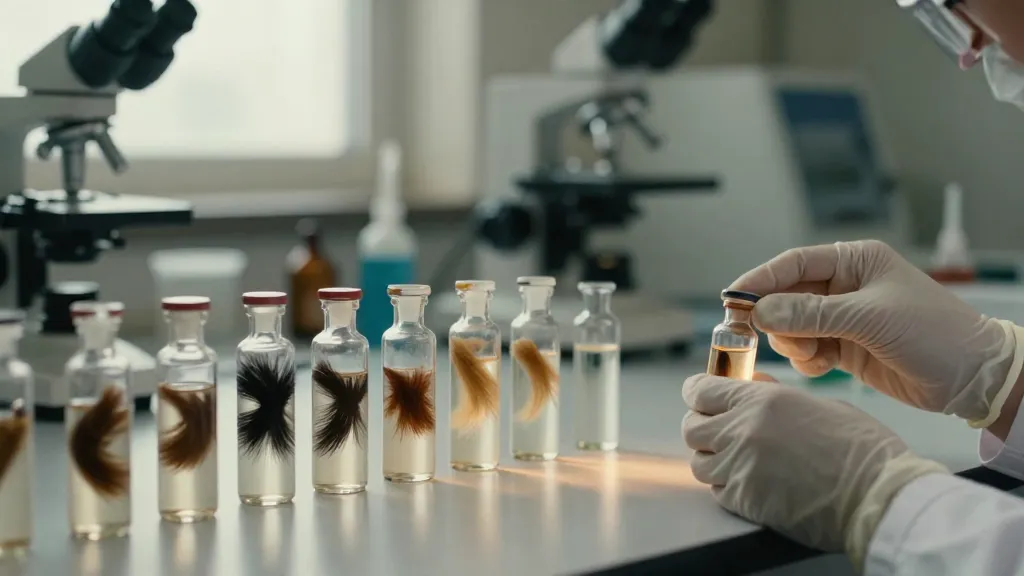
Your great-grandparents carried poison in their blood, and they had no idea. For decades, every car exhaust pipe spewed lead particles into the air, where they settled into soil, water, and human bodies. But here’s the remarkable part: we actually fixed it—and now we have a century’s worth of hair samples to prove it.
A groundbreaking study has analyzed hair samples spanning 100 years, providing what researchers call “irrefutable evidence” that removing lead from gasoline ranks among public health’s greatest victories. The data tells a story written in keratin: a dramatic decline in human lead exposure that coincides perfectly with environmental regulations.
The Hidden Poison in Every Tank
Before the 1970s, tetraethyl lead was added to virtually every gallon of gasoline sold in America. This “anti-knock” compound prevented engine pinging, but it also transformed every car into a lead-dispersing machine. With each mile driven, microscopic lead particles billowed from exhaust pipes, creating an invisible cloud of neurotoxin that blanketed entire communities.
The consequences were staggering. Lead exposure, even in small amounts, causes irreversible damage to the developing brain, leading to reduced IQ, behavioral problems, and learning disabilities. Children were particularly vulnerable, absorbing lead through their lungs, skin, and contaminated soil they played in.
Hair Tells the Story Science Needed
Hair analysis has emerged as a powerful tool for tracking historical exposure to toxic substances. Unlike blood tests that show recent exposure, hair preserves a months-long record of what circulated through someone’s bloodstream. For this study, researchers examined hair samples collected over the past century, creating an unprecedented timeline of human lead exposure.
The results were striking. Hair samples from the early-to-mid 20th century showed consistently high lead levels across all demographics. Then, beginning in the 1970s when leaded gasoline began to be phased out, lead concentrations in hair samples plummeted.
The Regulatory Victory That Actually Worked
The Environmental Protection Agency began restricting lead in gasoline in 1973, with a complete phase-out achieved by 1996. Critics at the time argued the regulations would cripple the auto industry and devastate the economy. Instead, the hair sample data reveals something extraordinary: the policy worked exactly as intended.
What the Data Shows:
- Dramatic decline in lead levels beginning in the 1970s
- Consistent reduction across all age groups and demographics
- Near-elimination of lead exposure by the 1990s
- Strong correlation between regulatory timeline and exposure reduction
The study’s lead researcher emphasized the importance of remembering these lessons: “We should not forget the lessons of history. And the lesson is those regulations have been very important.”
Why This Matters Today
This research provides more than historical validation—it offers a roadmap for addressing current environmental challenges. The leaded gasoline story demonstrates that well-designed regulations can achieve dramatic public health improvements without the economic catastrophe that opponents often predict.
The hair sample evidence also serves as a powerful reminder of how quickly environmental toxins can accumulate in human bodies, and conversely, how rapidly exposure can decline when the source is eliminated. This has profound implications for ongoing debates about air pollution, chemical safety, and climate change policy.
The Generation That Grew Up Poisoned
Perhaps most sobering is what this data reveals about entire generations who grew up during the leaded gas era. Baby Boomers and older Gen Xers likely carried significant lead burdens throughout their childhoods—exposure that may have had lasting cognitive and behavioral effects that researchers are only now beginning to understand.
The hair samples don’t just document a public health crisis; they chronicle a massive, unintended experiment on human development that lasted for decades. The fact that we successfully ended this experiment offers both vindication for environmental regulation and hope for addressing today’s pollution challenges.
Today’s children breathe air that their grandparents could never have imagined—air largely free from the lead contamination that once seemed as inevitable as sunrise. The century of hair samples proves that sometimes, against all odds and industry opposition, we actually get it right.