
Night Owls Face Higher Heart Disease Risk Than Morning People, New Research Shows
Emerging research reveals that people who stay up late have measurably worse cardiovascular health than early risers, challenging the idea that sleep timing is just a personal preference.
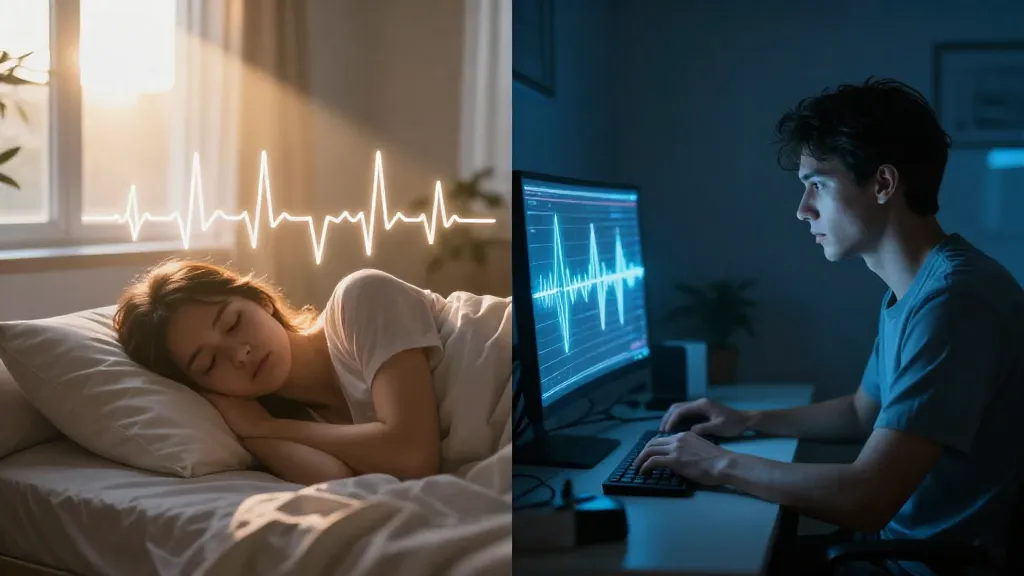
If you’re someone who naturally gravitates toward late nights and struggles to wake up early, you might want to pay closer attention to what emerging science is revealing about your heart health. New research suggests that being a “night owl” isn’t just a harmless personal preference—it could be quietly increasing your risk of serious cardiovascular problems.
The findings challenge a long-held assumption that sleep timing is merely a matter of individual choice with no real health consequences. Instead, scientists are discovering that when you sleep may be just as important as how much you sleep when it comes to protecting your heart.
The Night Owl Disadvantage
Recent studies indicate that people who naturally prefer staying up late and sleeping in—often called “night owls”—show measurably higher rates of heart attack and stroke risk compared to their early-rising counterparts, known as “morning larks.” This cardiovascular disadvantage appears to be consistent across different age groups and lifestyles, suggesting something deeper than just poor sleep habits is at play.
The research represents a significant shift in how scientists view sleep timing. For years, the medical community focused primarily on sleep duration and quality, with less attention paid to when people actually go to bed and wake up. These new findings suggest that our internal biological clocks may play a more crucial role in heart health than previously understood.
What Makes Night Owls Different
The distinction between night owls and morning people goes beyond simple preferences. These patterns, known as chronotypes, appear to be deeply embedded in our biology and influenced by our circadian rhythms—the internal 24-hour cycles that regulate everything from hormone production to body temperature.
Night owls typically experience:
- Peak alertness later in the evening
- Difficulty falling asleep before midnight
- Struggle with early morning wake-up times
- Better cognitive performance in afternoon and evening hours
The Circadian Connection
While researchers are still working to understand the exact mechanisms behind the increased cardiovascular risk, the leading theory centers on circadian rhythm disruption. Our internal biological clocks evolved to sync with natural light-dark cycles, and when our sleep-wake patterns consistently conflict with these rhythms, it may trigger a cascade of health problems.
This disruption could affect everything from blood pressure regulation to inflammation levels throughout the body. Some studies suggest that night owls may experience more chronic low-level inflammation, which is a known risk factor for heart disease.
Beyond Personal Choice
What makes this research particularly striking is how it challenges the notion that sleep timing is simply a matter of personal preference or lifestyle choice. Many night owls have spent years feeling guilty about their natural tendencies or being told they just need more discipline to become morning people.
The emerging science suggests that chronotype may be more hardwired than many people realize, with genetic factors playing a significant role in determining whether someone is naturally inclined toward early or late sleep schedules.
The Modern World Problem
The cardiovascular risks faced by night owls may be amplified by our modern society’s structure. Most workplaces, schools, and social institutions operate on schedules that favor morning people, forcing many night owls into chronic sleep deprivation or constant schedule conflicts.
This societal mismatch could be creating additional stress and health complications for people whose natural rhythms don’t align with conventional schedules. The result may be a population of night owls who are not only fighting their biology but also facing increased health risks as a consequence.
What This Means for Night Owls
If you identify as a night owl, this research doesn’t mean you’re doomed to heart problems. However, it does suggest that you might need to be more proactive about cardiovascular health monitoring and prevention strategies.
Key considerations for night owls include:
- Regular cardiovascular health screenings
- Attention to other heart disease risk factors
- Stress management techniques
- Maintaining consistent sleep schedules when possible
- Light exposure therapy to help regulate circadian rhythms
The Research Continues
Scientists emphasize that this field of study is still evolving, and researchers are working to better understand the complex relationships between sleep timing, circadian rhythms, and heart health. Future studies may reveal more specific mechanisms behind these associations and potentially lead to targeted interventions for night owls.
The goal isn’t necessarily to force everyone into identical sleep schedules, but rather to understand how different chronotypes can optimize their health within their natural patterns. This personalized approach to sleep and cardiovascular health could represent the future of preventive medicine.
For now, the message is clear: your sleep schedule may be more than just a personal quirk—it could be an important factor in your long-term heart health that deserves serious attention and potentially medical guidance.