
Scientists Discover Hidden Cellular Switch That Controls How Fast You Age
Researchers at Vanderbilt University have uncovered a previously unknown cellular process that actively remodels major cell structures during aging, potentially revolutionizing our understanding of how organisms grow old.
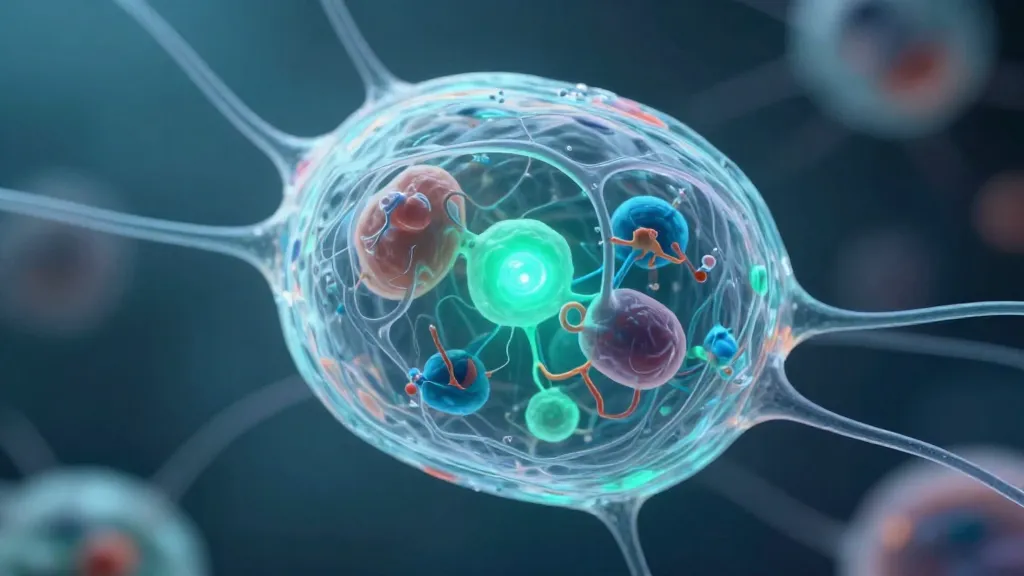
The fountain of youth might not be a myth after all – at least not in the way we’ve been thinking about it. Researchers at Vanderbilt University School of Medicine have just uncovered something extraordinary hiding inside our cells: a biological switch that appears to control how organisms age at the most fundamental level.
This isn’t just another anti-aging cream or supplement study. Scientists have discovered a previously unknown cellular adaptation that actively remodels one of the largest and most complex structures inside our cells during the aging process. The implications could reshape everything we thought we knew about why we grow old.
The Hidden Cellular Machinery of Aging
For decades, scientists have viewed aging as a gradual breakdown – cells wearing out, DNA accumulating damage, proteins losing their function. But this new research suggests something far more intriguing: aging might be an active, controlled process that cells deliberately orchestrate.
The Vanderbilt team made their discovery while studying worms, those humble laboratory creatures that have unlocked so many biological secrets over the years. What they found was a cellular adaptation that had been completely overlooked, despite being right under researchers’ noses all along.
This newly identified process doesn’t just respond to aging – it actively participates in remodeling major cellular structures as organisms grow older. Think of it as cellular renovation, but instead of improving the house, this process seems to be systematically changing how the cell operates as it ages.
What Makes This Discovery Different
Previous aging research has largely focused on damage accumulation and cellular decline. Scientists have identified numerous factors that contribute to aging:
- DNA damage from oxidative stress
- Shortened telomeres protecting chromosomes
- Accumulation of misfolded proteins
- Cellular energy production decline
- Inflammation and immune system changes
But this new finding suggests there’s an entirely separate layer of complexity. Rather than aging being purely a consequence of wear and tear, there appears to be an active cellular program that drives age-related changes.
The research team’s work reveals that cells aren’t just passive victims of time – they’re actively participating in their own aging process through this previously unknown adaptation mechanism.
From Worms to Humans: The Bigger Picture
While the study was conducted on worms, the implications extend far beyond these simple creatures. Many fundamental cellular processes discovered in worms have direct parallels in human biology. The basic machinery of cells – how they function, repair themselves, and respond to stress – is remarkably similar across species.
Reports suggest this cellular remodeling process could represent a universal aging mechanism, one that operates across different types of organisms. If confirmed in human cells, this discovery could open entirely new avenues for understanding why some people age more gracefully than others.
The Revolutionary Potential
What makes this finding particularly exciting is its active nature. If aging involves deliberate cellular remodeling rather than just passive deterioration, it suggests these processes might be modifiable. Observers note that targeting active aging mechanisms could be more promising than simply trying to prevent damage.
This doesn’t mean anti-aging treatments are around the corner – translating discoveries from animal models to human applications typically takes years or even decades. But it does provide a new framework for thinking about aging research and potential interventions.
The discovery also raises fascinating questions about evolution and aging. Why would cells have evolved active aging mechanisms? What evolutionary advantages might controlled aging processes provide? These questions could reshape our fundamental understanding of why organisms age at all.
What Comes Next
The research opens up numerous avenues for future investigation. Scientists will need to determine whether similar processes exist in human cells and how they might be influenced or modified. The complexity of cellular aging suggests there are likely many more undiscovered mechanisms waiting to be found.
This breakthrough reminds us that despite decades of aging research, we’re still uncovering basic biological processes that could hold the keys to understanding one of life’s most universal experiences. The cellular switch that controls aging may have been hidden in plain sight, but now that scientists have found it, the real work of understanding how to influence it can begin.