
Scientists Discover Your Body's Hidden Repair Switch That Accelerates Wound Healing
Researchers have uncovered how dropping levels of a common amino acid triggers hair follicle stem cells to abandon hair growth and focus on rapid skin repair instead. This cellular switch could revolutionize wound healing treatments.
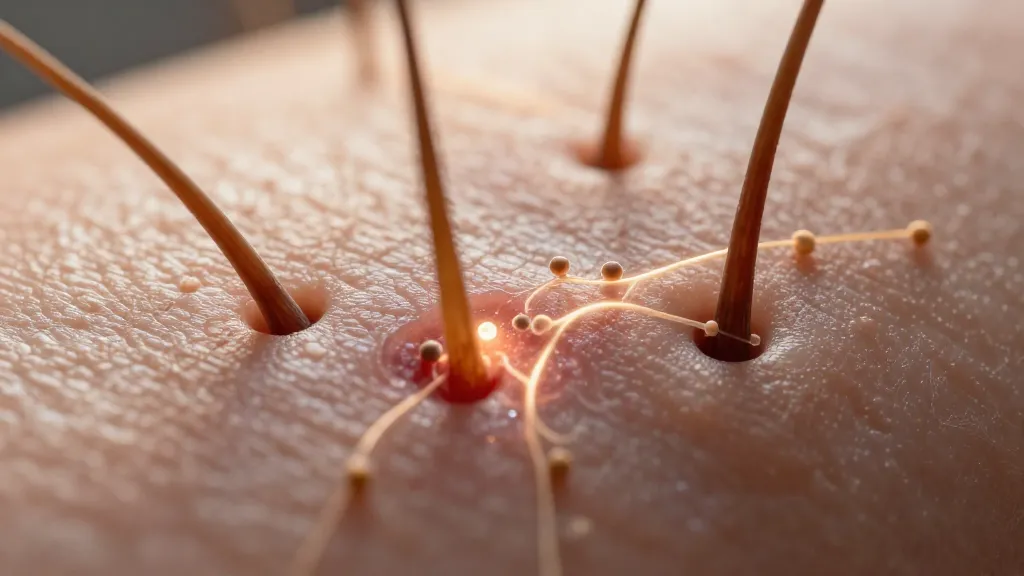
Your body has been hiding a remarkable secret from you—one that could transform how we think about healing. When you get injured, your hair follicles don’t just sit there growing hair. They can actually abandon their day job and become emergency repair crews, rushing to heal your wounds faster than ever thought possible.
Scientists have just cracked the code on this cellular career change, discovering that a simple drop in one common amino acid called serine acts like a master switch, telling hair follicle stem cells to stop worrying about your next haircut and start fixing damaged skin instead.
The Body’s Emergency Response System
This discovery reveals something extraordinary about how our bodies prioritize survival. When serine levels drop—whether from injury, stress, or nutrient deficiency—hair follicle stem cells receive what amounts to an urgent memo: “Hair growth can wait. We need all hands on deck for emergency repairs.”
The implications are staggering. Your scalp alone contains millions of hair follicles, each packed with stem cells that could potentially be redirected toward healing. It’s like discovering your body has been keeping a massive emergency response team in reserve, waiting for the right signal to spring into action.
How the Cellular Switch Works
The process centers around serine, an amino acid that plays crucial roles in protein synthesis and cellular metabolism. Under normal conditions, hair follicle stem cells use serine to maintain their hair-producing functions. But when serine becomes scarce, these cells undergo a dramatic transformation.
Instead of continuing to generate new hair, they migrate toward wounded areas and begin producing the proteins and growth factors needed for rapid skin repair. This cellular flexibility demonstrates a level of biological sophistication that researchers are only beginning to understand.
What Makes This Discovery Groundbreaking
- Hair follicle stem cells can completely change their function based on nutrient availability
- The switch happens rapidly when serine levels drop
- This mechanism accelerates wound healing beyond normal rates
- It reveals new potential targets for therapeutic intervention
Revolutionary Implications for Medicine
This discovery opens up entirely new avenues for wound healing treatments. Rather than relying solely on external interventions, doctors might soon be able to trigger the body’s own hidden repair mechanisms by manipulating serine levels or mimicking the signals that cause this cellular switch.
The potential applications stretch far beyond basic wound care. Burn victims, surgical patients, and people with chronic wounds could all benefit from treatments that harness this natural healing acceleration system.
The Science Behind Stem Cell Flexibility
What makes this finding particularly remarkable is how it challenges our understanding of stem cell behavior. Previously, researchers thought hair follicle stem cells were primarily committed to hair production. This discovery reveals they’re far more adaptable than anyone imagined.
The cells essentially reprogram themselves based on environmental cues, switching from a cosmetic function to a critical survival function. This kind of cellular versatility suggests our bodies have evolved sophisticated backup systems for dealing with emergencies.
Looking Toward Clinical Applications
While the research is still in early stages, the therapeutic potential is enormous. Scientists are now investigating whether controlled serine manipulation could be used to enhance healing in clinical settings. The goal isn’t to permanently stop hair growth, but to temporarily redirect these powerful stem cells when rapid healing is needed most.
Researchers note that understanding this mechanism could lead to new treatments within the coming years, though clinical trials and safety studies will be necessary before any therapies reach patients.
What This Means for You
This discovery fundamentally changes how we think about our body’s healing capabilities. Every hair follicle represents potential healing power that can be activated when needed. While we can’t yet flip this switch at will, knowing it exists opens up new possibilities for future medical treatments.
The research also highlights the incredible adaptability built into our biological systems—mechanisms that have been quietly working behind the scenes for millions of years, waiting for science to catch up and understand their true potential.