
Scientists Finally Discover Why Half of Kidney Disease Patients Develop Heart Problems
Groundbreaking research reveals that diseased kidneys release toxic particles that directly damage the heart, solving a medical mystery that affects millions of patients worldwide.
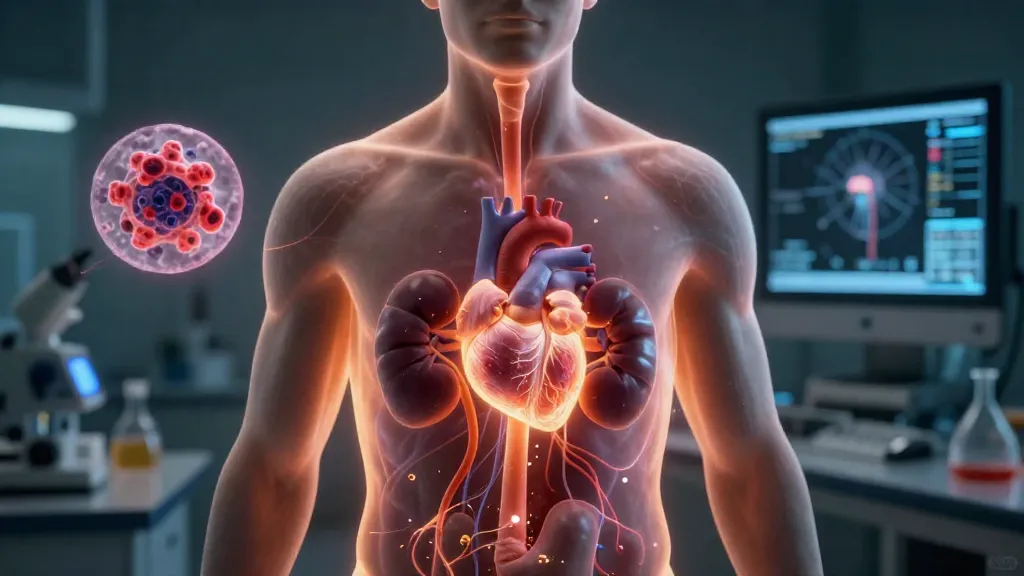
For decades, doctors have watched helplessly as their kidney disease patients developed mysterious heart problems at alarming rates. Despite their best efforts to manage blood pressure, control fluid retention, and monitor electrolytes, more than half of advanced kidney disease patients still suffered cardiovascular complications that often proved fatal. Now, groundbreaking research has finally cracked this medical mystery—and the answer lies in toxic particles that diseased kidneys secretly pump into the bloodstream.
The Hidden Connection Between Failing Kidneys and Hearts
The statistics have long puzzled medical professionals: over 50% of patients with advanced kidney disease develop serious cardiovascular problems, far exceeding the rates seen in the general population. While doctors understood that kidney disease created additional strain on the heart through fluid retention and blood pressure changes, these factors alone couldn’t explain why so many patients experienced direct heart damage.
Recent research has revealed the missing piece of this deadly puzzle. Scientists have discovered that diseased kidneys don’t just fail to filter waste properly—they actively release tiny toxic particles that travel through the bloodstream and directly attack heart tissue.
Toxic Particles: The Silent Heart Killers
These microscopic particles, released by failing kidneys, represent an entirely new mechanism of heart damage that medical science is only beginning to understand. Unlike the indirect effects of kidney disease that doctors have long recognized, these toxic particles create a direct assault on cardiovascular health.
The discovery explains why traditional approaches to protecting the hearts of kidney disease patients have shown limited success. While managing blood pressure and fluid balance remains important, these interventions don’t address the toxic particle problem that appears to be a primary driver of heart complications.
What This Means for Millions of Patients
This breakthrough has profound implications for the millions of people worldwide living with kidney disease. The findings suggest that current treatment protocols may need fundamental revisions to address this newly understood threat to heart health.
Key implications include:
- Need for new screening methods to detect toxic particle levels
- Development of treatments specifically targeting these harmful particles
- Earlier intervention strategies to prevent heart damage
- Better risk assessment tools for kidney disease patients
Revolutionary Treatment Possibilities on the Horizon
The identification of toxic particles as a key culprit in kidney disease-related heart problems opens entirely new avenues for treatment development. Researchers can now focus on creating therapies that either prevent the release of these particles from diseased kidneys or neutralize them before they can damage the heart.
This targeted approach could potentially save thousands of lives annually by preventing the cardiovascular complications that currently claim so many kidney disease patients. Rather than simply managing symptoms after heart problems develop, doctors may soon be able to prevent them entirely.
A New Chapter in Kidney Care
While this research represents a major breakthrough, scientists acknowledge that translating these findings into practical treatments will take time. The study provides crucial foundational knowledge that researchers can build upon, but developing safe and effective therapies to address the toxic particle problem will require additional research and clinical trials.
For patients and families currently dealing with kidney disease, this discovery offers something that has been in short supply: hope for better outcomes and a clearer understanding of why cardiovascular problems develop. As research continues, this breakthrough may well mark the beginning of a new era in kidney disease treatment—one where heart complications are no longer an inevitable consequence of kidney failure.
The medical community’s decades-long quest to understand the kidney-heart connection has finally yielded answers, and those answers are pointing toward a future where millions of patients might avoid the cardiovascular complications that have claimed far too many lives.