
Matt Damon's Bold Gamble: How He Convinced Mel Gibson to Step Aside from Good Will Hunting
The untold story of how a young, desperate Matt Damon directly asked Oscar-winning director Mel Gibson to abandon Good Will Hunting so he and Ben Affleck could star in it—and Gibson actually said yes.
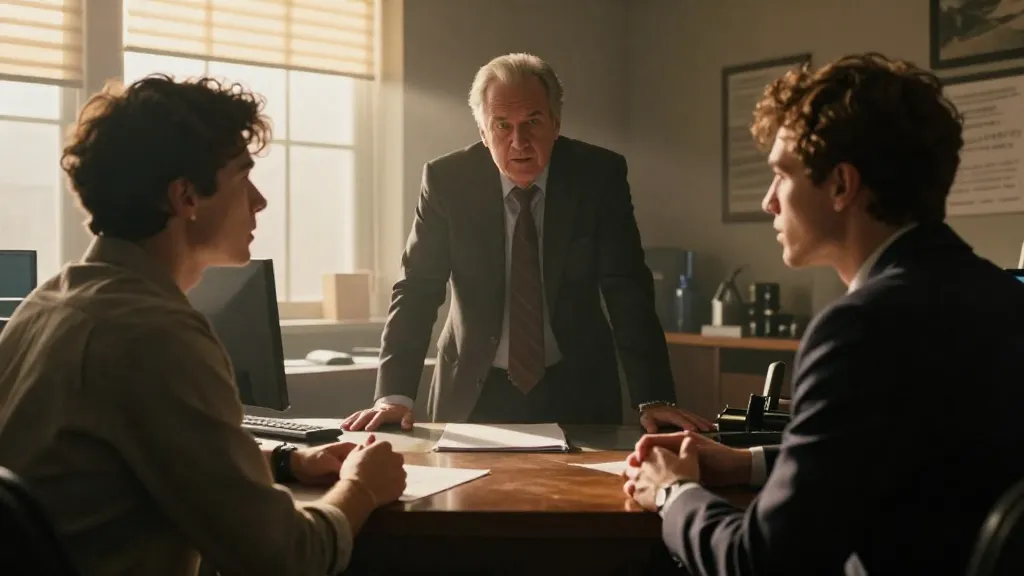
You ever wonder what separates the people who make it in Hollywood from those who don’t? Sometimes it’s not talent or luck—it’s sheer audacity. This is the story of two broke, unknown screenwriters who looked at an Oscar-winning superstar and basically said, “Hey, can you just… step aside?” And somehow, it worked. The result? One of cinema’s most beloved films, and a Hollywood lesson in desperation meeting integrity.
The Impossible Dream
Matt Damon and Ben Affleck had written something special. They knew it. The problem was that nobody else seemed to care—or at least, nobody with money in their pocket. The pair were unknowns, unproven, and completely strapped for cash. In Hollywood terms, they were essentially invisible. Yet they had one non-negotiable demand: they would only let the film be made if they could star in it themselves.
It sounds laughable now, but at the time, it was professional suicide. Studio executives don’t negotiate with broke kids. They certainly don’t hand over leading roles to untested actors, no matter how good the script is. But Damon and Affleck refused to budge. They believed in their work, and they weren’t about to watch someone else take the credit for it.
When Kevin Smith Changed Everything
The turning point came when filmmaker Kevin Smith got involved. He believed in the project enough to bring it to Harvey Weinstein, the powerful studio mogul who, at the time, was riding high in the industry. Weinstein saw what Damon and Affleck saw—a thoughtful, character-driven drama with real depth. He decided to champion it.
But getting a script made and actually getting it made with the people you want are two entirely different animals. Damon and Affleck were still facing an uphill battle.
Enter Mel Gibson—And His Braveheart Moment
Here’s where the story takes an unexpected turn. After the massive success of Braveheart, which had just won both Best Picture and Best Director at the Academy Awards, Mel Gibson was on top of the world. He was one of the biggest stars in Hollywood, a proven powerhouse at the box office. He spent months developing Good Will Hunting as his next directorial project.
On paper, this should have been perfect. Gibson directing, Damon and Affleck acting—except it wasn’t the plan Damon and Affleck had in mind. The longer Gibson took developing the film, the more anxious they became. As producer Chris Moore later recalled, time was the enemy.
The Ask That Changed Everything
Here’s where it gets bold. According to Affleck’s own account to Boston magazine, the two hadn’t even seen Braveheart. But Harvey Weinstein was very clear about what needed to happen: “You haven’t seen Braveheart? Fucking lie to him and tell him you love Braveheart!” So Affleck did exactly that when they met Gibson face-to-face.
But Damon wasn’t content with pleasantries. He could see the clock ticking, and he knew that if the development process dragged on much longer, he and Affleck would age out of the roles. The characters they’d written—Will Hunting and Chuckie Sullivan—needed to be played by young men.
So Damon did something that took incredible courage. He walked directly to Gibson and essentially said: “Look, man. We’re getting too old. If this keeps going by, Ben and I can’t play these parts. Is there any chance you’d just let it go?”
What happened next is the part that makes this story legendary.
The Stand-Up Move Nobody Expected
Gibson said yes.
According to Chris Moore, Gibson’s response was straightforward: “I totally understand what you’re saying.” That was it. The Oscar-winning director, fresh off one of the biggest wins of his career, decided to step aside so two unknown screenwriters could star in their own passion project.
Moore called it “a real stand-up thing to do,” and he wasn’t wrong. It’s not often you hear Gibson described in those terms, but in this moment, he absolutely deserved it.
What to Watch For in This Story
- The role of timing: Damon’s desperation was actually his greatest asset
- Direct communication: Sometimes asking outright is the only move that works
- Gibson’s integrity: He recognized something bigger than his own directorial ambitions
- The power of belief: Two unknowns refused to compromise on their vision
The Domino Effect
Once Gibson stepped aside, things moved quickly. Gus Van Sant came on to direct, cameras started rolling in April 1997, and the film hit theaters just eight months later. It wasn’t a slow burn—it was a rocket ship.
The box office numbers were staggering. Good Will Hunting recouped its budget twenty times over. But more importantly, it turned Damon and Affleck into overnight stars. They won the Academy Award for Best Original Screenplay, proving that their belief in the script had been justified all along.
The Lesson That Echoes
This story has become part of Hollywood folklore, and for good reason. It’s not just about two guys getting lucky or a director being generous. It’s about what happens when you combine unwavering belief in your work with the courage to ask for what you need. It’s about recognizing when someone else’s vision deserves its moment in the sun.
Mel Gibson could have held on. He could have insisted on directing. Instead, he stepped aside. And in doing so, he became part of one of cinema’s greatest success stories—just not in the way he originally planned. Sometimes the most powerful move in Hollywood isn’t holding on tighter. It’s knowing when to let go.