
China's $168 Billion 'Water Bomb': The World's Most Powerful Hydropower System Hidden in the Himalayas
China is secretly building a colossal hydropower system in Tibet that could generate triple the power of the Three Gorges Dam—but experts warn it could reshape water security for billions downstream and ignite tensions with India over a disputed border.
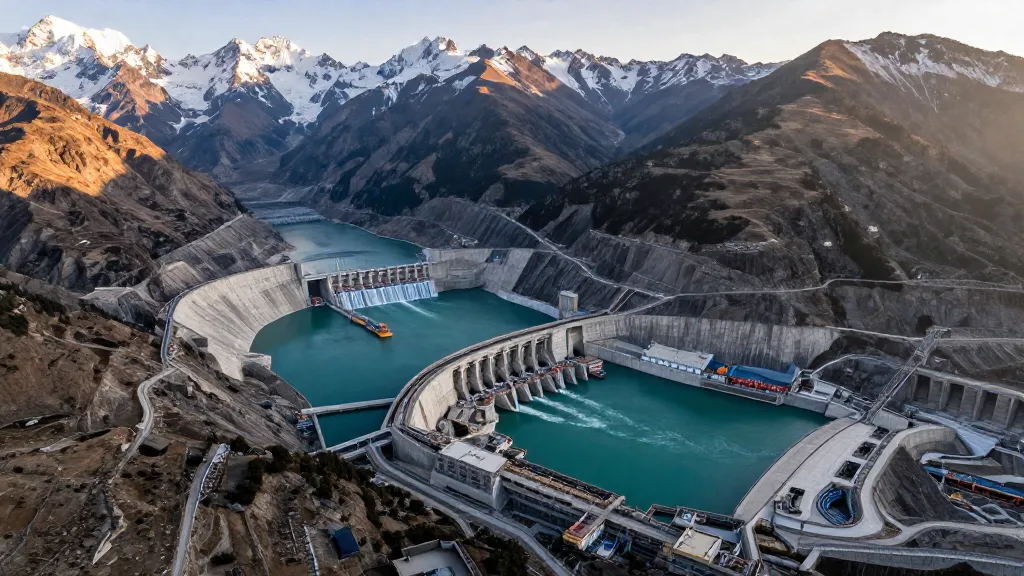
Imagine harnessing the power of a river that plummets 2,000 meters in just 50 kilometers—enough to generate three times the electricity of the world’s current largest dam. That’s exactly what China is doing right now, deep in the Himalayas, with a $168 billion project so secretive that most of the world doesn’t even know it exists. But this engineering marvel comes with a catch: it could reshape water security for billions of people, ignite a geopolitical firestorm with India, and forever alter one of Asia’s most pristine ecosystems.
The Hidden Giant in the Mountains
Hundreds of miles from China’s bustling coastline, in a remote bend of the Yarlung Tsangpo River in Tibet, one of humanity’s most ambitious infrastructure projects is taking shape. Known informally by the initials “YX” in official Chinese documents, this hydropower system is expected to generate more electricity than any other in the world—a transformative achievement for a nation racing toward an electric-vehicle future and pouring billions into AI development.
Chinese leader Xi Jinping visited Tibet in August 2025 and personally called for the project to be “advanced forcefully, systematically, and effectively.” That directive has set off a flurry of activity: satellite imagery shows roads being widened, bridges constructed, explosives storage facilities erected, and entire villages relocated to make way for construction that officially began in July 2025.
Engineering at the Edge of Possibility
The Great Bend of the Yarlung Tsangpo is nature’s gift to hydropower engineers. The river, known as the world’s highest major river, makes a dramatic horseshoe turn through the Himalayas where it loses approximately 2,000 meters in elevation over roughly 50 kilometers. That descent could theoretically generate some 300 billion kilowatt-hours of electricity annually—more than triple the output of China’s Three Gorges Dam, currently the world’s most powerful.
The proposed design, pieced together from satellite imagery, corporate documents, academic papers, and patent filings, suggests a system of breathtaking complexity:
- A main reservoir created by a dam at Mainling city
- A second dam further downstream to divert water away from the Great Bend
- Five cascade hydropower stations connected by tunnels blasted through mountains
- Underground infrastructure spanning roughly 150 kilometers
- Water diverted through tunnels hundreds of meters below ground, generating power at each level before rejoining the main river
This isn’t just hydropower—it’s hydropower reimagined for the 21st century.
What to Watch For
- The exact locations of all five power stations (still unknown)
- How much land will be inundated by reservoirs
- Whether a final dam near the India border will control overall river flow downstream
- Any official environmental impact assessments (currently lacking transparency)
- India’s formal response to water security concerns
The Clean Energy Argument
For China, the appeal is obvious. As the world’s largest carbon emitter, the nation is desperate to wean itself off coal-powered energy. This project could be transformative—a massive leap toward climate goals and energy independence. Officials argue the system has “undergone decades of in-depth research” and implemented “thorough measures for engineering safety and ecological protection.”
China’s Ministry of Foreign Affairs stated that Beijing has “maintained transparency regarding pertinent information” and will “share necessary information with the international community” as the project progresses. The official line: this is about accelerating clean energy development, improving local livelihoods, and addressing climate change.
The Geopolitical Powder Keg
But beneath the clean energy narrative lies something far more complex—and potentially explosive.
The project sits in Tibet, a region where China has tightened its grip in the name of economic growth and stability. More critically, it’s positioned along Tibet’s de facto border with an Indian state whose territory China claims. India’s media has already dubbed the project a potential “water bomb,” and analysts warn it could become a flashpoint in the long-simmering territorial dispute between two nuclear-armed powers.
Rishi Gupta, assistant director at the Asia Society Policy Institute in New Delhi, notes that “if you connect the dots of Chinese infrastructure development in the Himalayas, especially in areas where China borders India along Tibet, they are strategically placed.” The project, he argues, aligns with China’s broader goal of “leveraging its natural resources to consolidate control over critical regions like Tibet and its borders.”
This interpretation gained credence when Yan Zhiyong, then chairman of PowerChina, stated in a 2020 speech that hydropower development on the lower Yarlung Tsangpo “isn’t merely a hydropower initiative”—it’s also a national security project encompassing water resource security and territorial security.
The Downstream Dilemma
Here’s where the stakes become truly global. Tens of millions of people in India and Bangladesh depend on the Yarlung Tsangpo (known as the Brahmaputra once it crosses into India). The river sustains fisheries, irrigation systems, and entire agricultural regions. Yet the potential ecological and hydrological impacts remain largely understudied.
By controlling how water flows through the system—and potentially holding back water in upstream reservoirs—China would gain unprecedented leverage over downstream nations. Fishing communities could face collapsed stocks. Farmers could see irrigation patterns disrupted. Ecosystems that have evolved over millennia could be fundamentally altered.
Brian Eyler, director of the Energy, Water, and Sustainability Program at the Stimson Center, calls it “the most sophisticated, innovative dam system the planet has ever seen. It’s also the riskiest and potentially the most dangerous.”
Rafael Jan Pablo Schmitt, a hydropower expert at UC Santa Barbara, puts it bluntly: “With what we know it is nearly impossible to understand or evaluate the possible impacts that the project will have.”
The Secrecy Question
This is perhaps the most troubling aspect. A project of this magnitude—one that could reshape water security for billions and alter a UNESCO-protected ecosystem—remains shrouded in mystery. Official documents use coded abbreviations. Design details are scattered across academic papers and patent filings rather than consolidated in transparent environmental assessments. Villagers are being relocated with limited public information about why.
The Yani National Wetland Park, a protected area of rare ecological significance, sits near the project site. Yet the full environmental impact assessment has not been publicly released. This lack of transparency contradicts China’s claim of maintaining “open lines of communication with downstream countries.”
The Engineering Challenge
Building this system will test the limits of human engineering. The river runs through one of the world’s most seismically active regions. The mountains themselves are still growing, rising millimeters each year. Underground tunnels must be blasted through unstable geology. Reservoirs must be calibrated to regulate flow across a 150-kilometer span.
Even for a country that leads the world in mega-dam construction, this is uncharted territory.
What Comes Next
Construction has officially begun, but the full scope of the project remains hidden. China promises transparency “as the project progresses,” but critics argue that by then, the die will be cast. Billions will be invested. Political will will be entrenched. The window for meaningful international input may have already closed.
For India and Bangladesh, the question isn’t whether China is building this dam—it clearly is. The question is what leverage they have to ensure it’s built responsibly, with genuine consideration for downstream impacts. For climate advocates, the question is whether the environmental cost of such a project outweighs its carbon benefits.
And for the Tibetan people whose ancestral lands will be transformed, the question is whether their voices will ever be heard above the roar of turbines and the hum of geopolitical calculation.
This $168 billion project represents the future of energy in Asia—but at what cost, and to whom, remains profoundly unclear.