
Great White Sharks Grow Bone-Slicing Teeth as They Age to Hunt Bigger Prey
Adult great white sharks develop entirely new types of teeth specifically designed for slicing through bone, revealing how their hunting strategy evolves as they mature. These specialized teeth transform them from fish hunters into apex predators capable of taking down marine mammals.
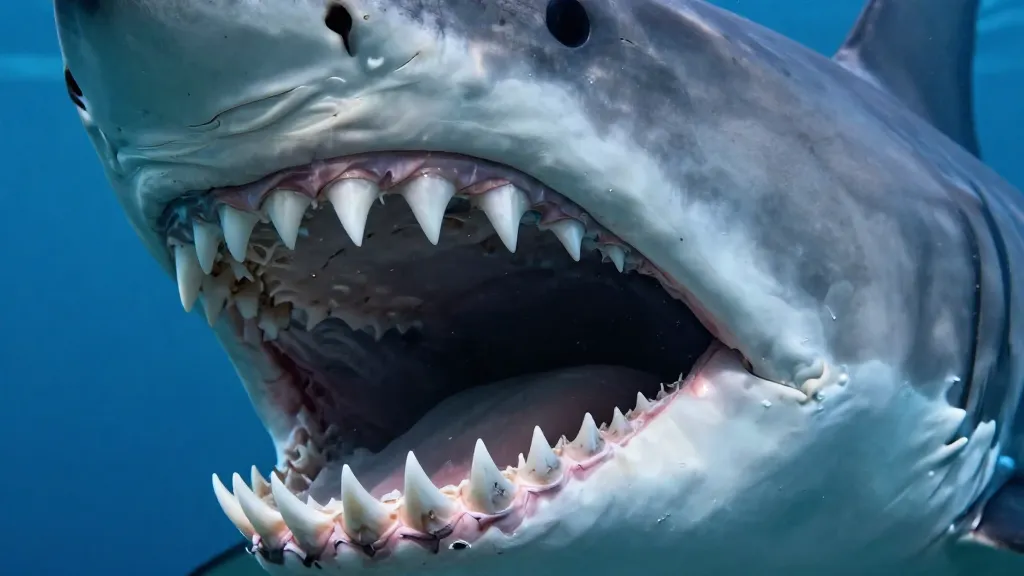
The ocean’s most feared predator has been hiding a secret weapon that scientists are only now beginning to understand. Great white sharks don’t just rely on their infamous rows of razor-sharp teeth throughout their lives—they actually grow entirely new types of teeth as they mature, transforming their hunting capabilities from catching fish to slicing through the bones of massive marine mammals.
This remarkable biological transformation reveals that shark teeth are far more than static weapons. They serve as living records of how these apex predators adapt their hunting strategies as they grow larger and target different prey.
The Evolution of a Killing Machine
Young great white sharks start their lives as fish hunters, equipped with teeth perfectly designed for their initial prey. But as these predators mature and grow larger, their dietary needs change dramatically. The transition from hunting smaller fish to taking down seals, sea lions, and other marine mammals requires an entirely different set of tools.
Reports suggest that adult great whites develop specialized teeth that function like biological bone saws, allowing them to slice through the skeletal structure of their larger prey with devastating efficiency. This adaptation represents one of nature’s most sophisticated examples of how predators evolve their hunting apparatus to match their changing needs.
Living Records of Predatory Behavior
The teeth of great white sharks function as biological archives, documenting the shark’s lifestyle changes throughout its development. Marine biology researchers note that examining a shark’s dental structure can reveal not just what it’s currently hunting, but how its predatory behavior has evolved over time.
What Makes These New Teeth Different
The specialized bone-slicing teeth that develop in mature great whites differ significantly from their earlier dental equipment:
- Designed specifically for cutting through bone rather than just flesh
- Shaped to maximize slicing efficiency on hard surfaces
- Positioned strategically within the jaw for optimal cutting leverage
- Developed only after the shark reaches a certain size and maturity
The Science Behind the Transformation
Observers note that this dental evolution reflects the sophisticated way great white sharks adapt to their environment. As these predators grow larger, they gain access to prey that was previously too large or dangerous to tackle. The development of bone-cutting teeth represents a biological investment in accessing these high-energy food sources.
The timing of this tooth development appears to coincide with the shark’s transition to hunting marine mammals, suggesting a direct evolutionary response to dietary changes. This adaptation allows mature great whites to maximize their hunting efficiency when targeting prey with substantial skeletal structures.
Implications for Understanding Shark Evolution
This discovery challenges traditional assumptions about shark dental development and reveals the dynamic nature of these predators’ hunting adaptations. Rather than maintaining the same tooth structure throughout their lives, great whites demonstrate remarkable biological flexibility in response to their changing ecological role.
Marine biology experts suggest that this finding could reshape our understanding of how apex predators evolve their hunting strategies. The ability to develop entirely new tooth types as needed represents a level of biological sophistication that highlights why great white sharks have remained successful ocean predators for millions of years.
The research also provides new insights into the complex relationship between predator development and prey selection, demonstrating how physical adaptations can drive behavioral changes in hunting patterns. As scientists continue to study these remarkable adaptations, our appreciation for the great white shark’s evolutionary success story only continues to grow.