
Scientists Discover How to Detect Aphantasia Through Your Eyes—A Breakthrough for 1.3 Million Australians
Researchers at UNSW Sydney have found the first objective biological test for aphantasia—the inability to visualize images in your mind—by measuring pupil dilation. This could revolutionize diagnosis for millions who didn't know why their imagination works differently.
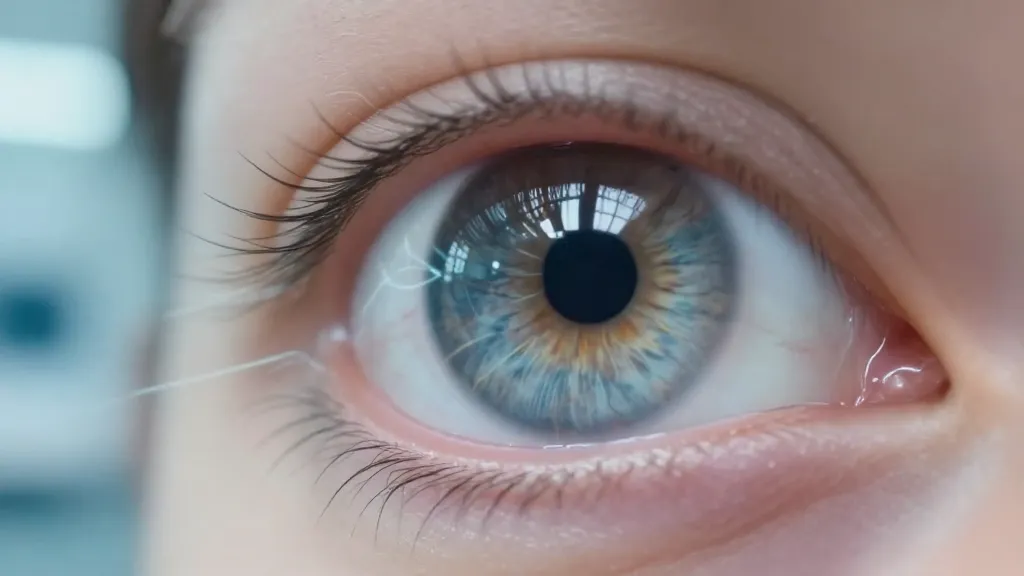
Your imagination works in pictures. You can close your eyes and see your friend’s face, recall the layout of your childhood home, or visualize the outfit you’re planning to wear tomorrow. But for roughly 1 in 50 people—including over 1.3 million Australians—that inner cinema simply doesn’t exist. They navigate the world with no visual imagination at all, a condition called aphantasia. For decades, these individuals faced a frustrating reality: there was no objective way to prove their experience was real. Now, researchers at UNSW Sydney have changed everything with a discovery so elegant it almost seems obvious—they can detect aphantasia by watching your pupils.
The Eyes Have It: A Biological Test for an Invisible Condition
For the first time, scientists have found a physiological marker for aphantasia. The breakthrough centers on something your body does automatically: pupil dilation and constriction. When you imagine a bright object, your pupils constrict (just as they would if you were actually looking at something bright). When you imagine something dark, your pupils dilate. But in people with aphantasia, this doesn’t happen. Their pupils remain unmoved by imagined imagery—even though they respond normally to actual light and darkness.
Professor Joel Pearson, senior author of the research published in eLife, explains the significance: “The pupillary reflex is an adaptation that optimizes the amount of light hitting the retina. What we found is that this reflex responds not just to real light, but to imagined light—and now, we can use that response to objectively measure visual imagination.”
How the Research Worked
The study followed a clever progression. First, researchers worked with 42 people who reported having typical visual imagination. They tracked eye movements and pupil sizes while participants viewed bright and dark shapes. As expected, pupils constricted in response to bright shapes and dilated in response to dark ones.
Then came the crucial step: participants were asked to imagine those same shapes while their pupils were being tracked. The result was striking. Even when imagining, the pupils of non-aphantasic people still constricted and dilated appropriately. Even more intriguingly, the pupil response was larger in people who reported more vivid imagery.
Next, the researchers tested 18 people with self-reported aphantasia. These individuals showed normal pupil responses to actual bright and dark shapes. But when asked to imagine those same shapes, their pupils showed no significant difference between imagined bright and imagined dark objects. The neural pathway that connects visual imagination to pupil response simply wasn’t firing.
What to Watch For
- Real vs. Imagined: Aphantasic individuals respond normally to actual light and darkness but not to imagined imagery
- Effort Response: Pupils still dilate when aphantasic people attempt more difficult mental tasks (like imagining multiple objects), proving they’re genuinely trying
- Objectivity: This is the first biological test—no relying on self-reporting or subjective assessment
- Scalability: The research team plans to move this online for global testing
The “Trying” Question Settled
One persistent skepticism about aphantasia was whether people truly couldn’t visualize or simply weren’t trying. The UNSW team addressed this head-on. When they asked aphantasic participants to imagine four objects instead of one, their pupils did dilate—indicating increased mental effort. But they still showed no difference based on whether the imagined objects were bright or dark.
As Lachlan Kay, a PhD candidate in the Future Minds Lab, puts it: “Imagining four objects simultaneously is more difficult than imagining just one. The pupils of those with aphantasia dilated when they imagined four shapes compared to one, but did not change based on whether the shapes were bright or dark. This indicated that the participants with aphantasia were indeed trying to imagine in this experiment, just not in a visual way.”
This finding has profound implications. It proves, for the first time with biological evidence, that people with aphantasia aren’t simply choosing not to visualize—they genuinely cannot.
Why This Matters Beyond Diagnosis
Understanding aphantasia isn’t just about naming a condition. It reshapes how we understand memory, emotion, and decision-making. Dr. Rebecca Keogh, a postdoctoral researcher and study author, notes that previous work has shown aphantasic individuals can perform visual memory tasks without using visual imagery. “These findings further highlight the wide variability of the human mind that can often remain hidden until we ask someone about their internal experiences or invent new ways to measure the mind,” she says.
The implications ripple outward. How we remember details, how emotionally we respond to reading, how we hold information in short-term memory—all of these may be fundamentally different for people with aphantasia. Until now, many didn’t even know why their experience differed from others’.
What’s Next
The UNSW team isn’t stopping here. Professor Pearson and the Future Minds Lab plan to scale this method for online testing, potentially reaching millions globally. The goal is an objective, reliable test for not just aphantasia, but also its opposite—hyperphantasia, or exceptionally strong visual imagery.
“This really is an exciting time,” Pearson says. “We are very close to having objective, reliable tests for extreme imagery, aphantasia and hyperphantasia that could be scaled up to run online for millions of people everywhere.”
For 1.3 million Australians and 400 million people worldwide, this research offers something precious: validation. It transforms an invisible difference into something measurable and real. Your pupils, it turns out, are windows not just to the soul—but to how your mind actually works.