
Scientists Discover 5.5 Million Wild Bees Living in Secret Underground City Beneath Cemetery
Researchers stumbled upon a massive underground metropolis of 5.5 million native bees thriving beneath a cemetery, revealing a hidden ecosystem crucial for spring pollination. This remarkable discovery shows how biodiversity can flourish in the most unexpected places.
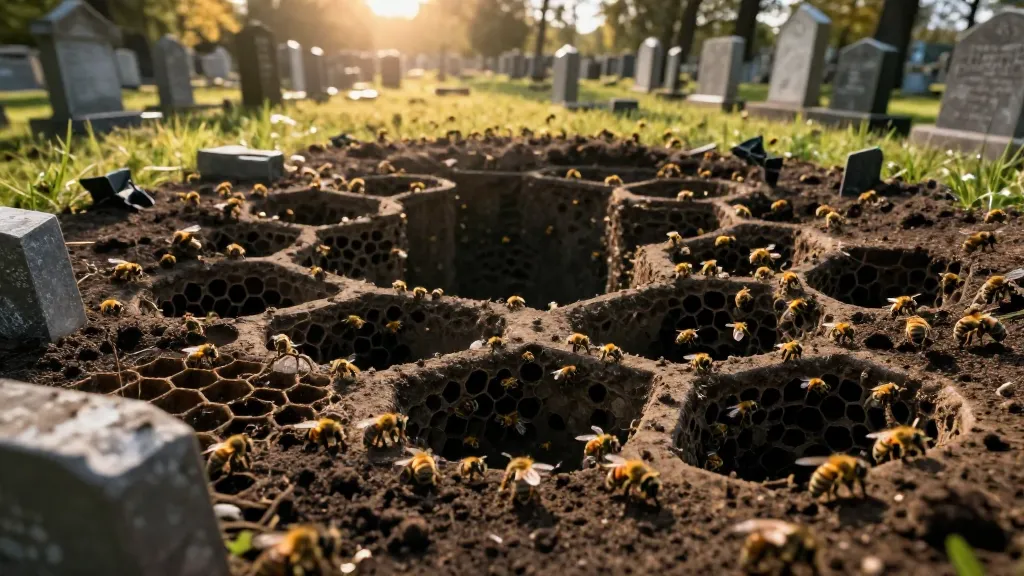
Imagine walking through a quiet cemetery on your way to work and discovering one of nature’s most spectacular hidden cities right beneath your feet. That’s exactly what happened to Rachel Fordyce, a Cornell University entomology lab technician, when she stumbled upon something extraordinary during her daily commute through East Lawn Cemetery in Ithaca.
What started as a simple shortcut to save on parking fees led to the discovery of a massive underground metropolis—home to an estimated 5.5 million wild bees living in a complex network of tunnels and chambers that rivals any human city in its organization and scale.
A Chance Discovery Changes Everything
In spring 2022, Fordyce noticed something unusual during her walk through the cemetery. Armed with nothing more than a jar, she collected what she thought might be interesting specimens. When she brought them to the Cornell entomology lab where she worked, researchers realized they had stumbled upon something remarkable.
The cemetery, which most people saw as a peaceful resting place for the departed, was actually bustling with life just inches below the surface. The underground bee city represents one of the largest documented wild bee colonies ever discovered, challenging our understanding of where biodiversity thrives.
The Hidden Metropolis Revealed
Researchers from Cornell University began investigating this underground ecosystem and uncovered a sophisticated network that puts human urban planning to shame. The 5.5 million bees have created an intricate system of tunnels, nurseries, and storage chambers that extends throughout the cemetery grounds.
What Makes This Discovery So Special
The underground bee city isn’t just impressive for its size—it’s crucial for the surrounding ecosystem’s health. These wild bees play an essential role in spring pollination, supporting local plant communities and agricultural systems when they emerge from their underground homes.
Key aspects that make this discovery remarkable:
- Massive scale: 5.5 million bees represent an enormous population for a single location
- Hidden location: The cemetery setting shows how biodiversity can thrive in unexpected urban spaces
- Ecological importance: The colony’s timing aligns perfectly with critical spring pollination needs
- Urban biodiversity: Demonstrates how green spaces in developed areas can support wildlife
Spring Pollination Powerhouse
When spring arrives, this underground army emerges to become a pollination powerhouse for the region. The timing of their emergence coincides perfectly with the blooming of countless plants that depend on bee pollination for reproduction and survival.
The Bigger Picture for Ecosystem Health
This discovery highlights how much we still don’t know about the natural world around us. While scientists have long understood the importance of pollinators, finding such a massive population thriving beneath a cemetery reveals that nature often finds ways to adapt and flourish in spaces we might not expect.
The underground bee city also raises important questions about urban planning and conservation. If 5.5 million bees can create a thriving ecosystem beneath a cemetery, what other hidden biodiversity might exist in our cities and towns?
What This Means for Conservation
The Cornell University research team’s discovery emphasizes the critical role that seemingly ordinary spaces can play in supporting wildlife populations. Cemeteries, with their open green spaces and diverse plantings, may serve as unexpected refuges for pollinators and other wildlife in increasingly developed landscapes.
This finding could influence how urban planners and conservationists think about protecting pollinator populations. Rather than focusing solely on designated natural areas, the bee city demonstrates that biodiversity can thrive in the spaces between—if we create the right conditions and leave room for nature to adapt.
The 5.5 million bees living beneath East Lawn Cemetery remind us that nature’s resilience and adaptability often exceed our expectations. Their hidden metropolis serves as both a testament to the ingenuity of wild bees and a call to look more carefully at the ecosystems that might be thriving right beneath our feet.