
One Jar of Honey Requires Bees to Fly Twice Around Earth—Here's the Math
A single pound of honey represents an almost incomprehensible economy of effort: bees visit roughly two million flowers and collectively fly over 50,000 miles—more than twice around the planet.
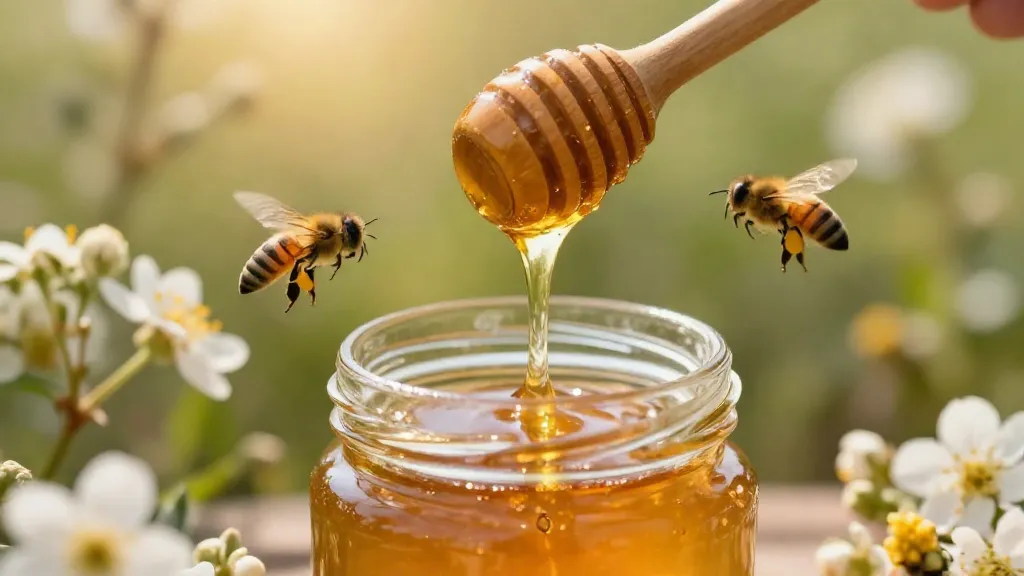
Next time you reach for honey at the grocery store, pause for a moment. That innocent jar sitting on the shelf represents something almost impossible to fathom: millions of flower visits, tens of thousands of miles traveled, and an almost incomprehensible coordinated effort by thousands of tiny insects working in concert. A single pound of honey is far more than a sweet condiment—it’s a monument to one of nature’s most efficient and exhausting enterprises.
The Numbers That Stagger Belief
The math behind a single jar reads like science fiction. To produce just one pound of honey, bees in a hive visit approximately two million flowers. Let that sink in. Two million individual blooms, each one a stop on an endless route that spans the countryside, gardens, and wildflower meadows.
But the distance is where the true scale becomes almost absurd. Those millions of flower visits require bees to collectively fly more than 50,000 miles—equivalent to circling the entire Earth more than twice. For perspective, that’s roughly the distance from New York to Tokyo and back, multiplied several times over.
A Collective Journey
This isn’t the work of a single bee. It’s a distributed effort across hundreds or thousands of individual workers, each contributing their own flights and foraging runs. A single honey bee may visit 50 to 100 flowers during one foraging trip, and each bee makes multiple trips per day during the active season. Over weeks and months, these journeys accumulate into that staggering total.
What to Watch For
Understanding the effort behind honey shines light on several connected issues:
- Pollinator decline: When bee populations shrink, the entire food system feels the impact
- Agricultural pressure: Monoculture farming reduces flower diversity, making bees work harder
- Climate change: Shifting seasons can disrupt the timing between blooming plants and bee activity
- Habitat loss: Wild areas that once provided nectar sources continue to disappear
Why This Matters Beyond the Jar
The statistics aren’t just trivia—they’re a window into how fragile and interconnected our food systems really are. Honeybees don’t just make honey for themselves; they pollinate roughly one-third of the food we eat. Every almond, apple, cucumber, and countless other crops depend on their work.
When we realize that a single pound of honey represents 50,000 miles of collective flight effort, it reframes our relationship with these insects. They’re not background players in nature’s story—they’re essential laborers whose work sustains us.
The Real Cost of Sweetness
The next time you taste honey, you’re experiencing the distilled essence of millions of flowers and tens of thousands of miles of flight. That jar on your shelf is proof that some of nature’s most valuable gifts come at a cost we rarely consider. Protecting bee populations, preserving flowering habitats, and supporting sustainable agriculture aren’t just feel-good causes—they’re investments in the invisible infrastructure that keeps our world fed and thriving.
A simple jar of honey. Two million flowers. 50,000 miles. Once you know the numbers, you’ll never look at it the same way again.