
Scientists Discover Your Brain Uses Identical Neurons for Seeing and Imagining
Groundbreaking research reveals that your brain treats imagined objects exactly like real ones, using the same neurons and neural pathways. This discovery could revolutionize our understanding of creativity, memory, and learning.
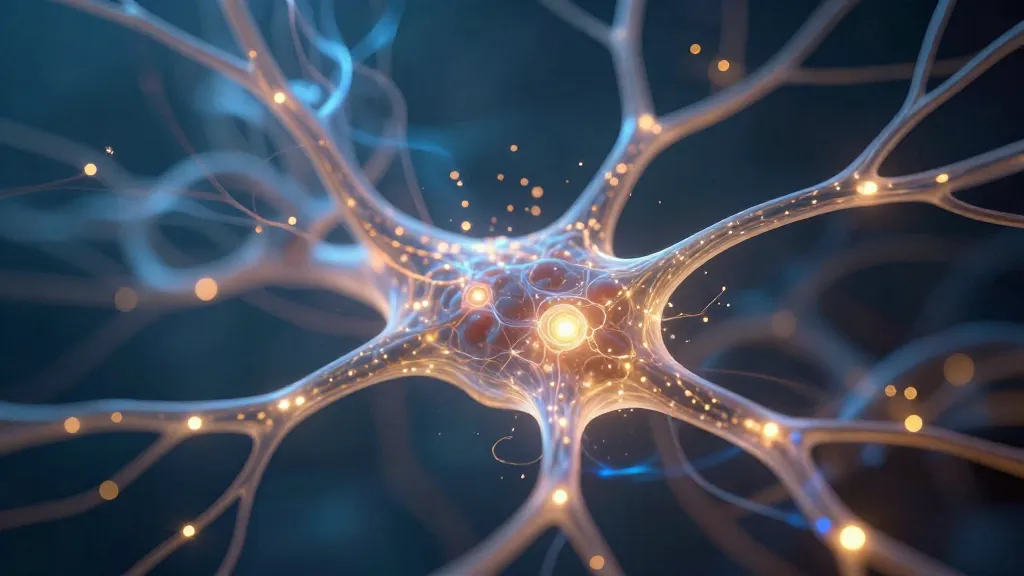
Have you ever wondered why closing your eyes and picturing your childhood bedroom feels so vivid, almost as if you’re actually there? Scientists have just uncovered the remarkable reason: your brain literally cannot tell the difference between what you see and what you imagine. Both experiences activate the exact same neurons and follow identical neural pathways.
This groundbreaking discovery is reshaping everything we thought we knew about how our minds work, with profound implications for creativity, learning, and memory formation.
The Brain’s Ultimate Magic Trick
The research reveals that when you visualize an apple in your mind’s eye, your brain fires the same neurons it would use if you were actually looking at a real apple sitting on your kitchen counter. The neural code—the specific pattern of electrical signals—is virtually identical in both scenarios.
This finding helps explain why imagination can feel so incredibly real and why some people have such vivid mental imagery that it rivals actual sight. Your brain isn’t just approximating or simulating visual experience when you imagine something; it’s literally recreating the same neural activity pattern.
What This Means for Creativity and Learning
The discovery has researchers excited about its potential applications across multiple fields:
Memory Formation Gets a New Framework
If sight and imagination use the same neural machinery, it suggests that vividly imagining an experience might create memories that are neurologically similar to those formed from real events. This could explain why some false memories feel so authentic and why visualization techniques can be so powerful for learning.
Creativity Takes on New Meaning
Artists, writers, and innovators have long described their creative process as “seeing” their ideas. This research suggests they might be more literal than anyone realized. When a novelist envisions a scene or an architect visualizes a building, their brain is essentially constructing a visual experience using the same neural tools as actual sight.
Training and Skill Development
The findings could revolutionize how we approach skill training and education. If imagining an action activates the same neural pathways as performing it, mental rehearsal might be far more powerful than previously understood.
Key Signs Your Imagination Is Working
Researchers note several indicators that your visual imagination system is actively engaged:
- Ability to “see” colors and shapes when your eyes are closed
- Experiencing visual details that feel almost photographic
- Finding that imagined scenes can trigger emotional responses
- Noticing that some mental images seem to “pop” into view spontaneously
The Bigger Picture for Neuroscience
This discovery represents a significant shift in how scientists understand the relationship between perception and imagination. Previously, many researchers viewed imagination as a separate, higher-order cognitive process that might borrow from visual systems. Now it appears that imagination doesn’t just borrow from vision—it literally is vision, just directed inward rather than outward.
The research also raises intriguing questions about the nature of consciousness itself. If our brains process real and imagined experiences so similarly, what does that tell us about the boundary between external reality and internal mental life?
What’s Next for This Research
Scientists are now investigating whether this neural overlap extends to other senses beyond vision. Early indications suggest that imagined sounds, smells, and even physical sensations might follow similar patterns, potentially revealing that all imagination relies on repurposing the same neural circuits we use to perceive the world.
The implications stretch far beyond academic curiosity. Understanding how imagination works at the neural level could lead to new treatments for conditions involving altered perception, more effective learning techniques, and deeper insights into human creativity.
As researchers continue to map these neural pathways, we’re getting closer to answering one of humanity’s most fascinating questions: how does a three-pound organ create the rich, vivid inner world of human imagination? The answer, it turns out, might be simpler and more elegant than anyone expected—our brains simply repurpose the same exquisite machinery we use to see the world around us.