
Trump Orders Total Blockade of Venezuelan Oil Tankers—Here's What It Means for Gas Prices and Global Oil Markets
Trump has ordered a military blockade of all sanctioned oil tankers entering and leaving Venezuela, escalating pressure on Maduro's government and triggering immediate oil price spikes. Legal experts are questioning whether the move constitutes an act of war.
You’re looking at the boldest economic power play of the year—and it could hit your wallet faster than you think.
On December 16, President Trump ordered a complete blockade of all sanctioned oil tankers entering and leaving Venezuela, marking an extraordinary escalation in pressure against Nicolas Maduro’s government. The move targets Venezuela’s primary source of revenue and has already triggered immediate market reactions. Oil prices spiked over 1% in Asian trading, with Brent crude climbing to $59.62 a barrel and U.S. West Texas Intermediate rising to $56 a barrel.
But here’s where it gets complicated: legal scholars are openly questioning whether this blockade constitutes an act of war, and energy experts are warning of significant ripple effects across global markets and consumer prices.
What Trump Just Did—And Why It Matters
Trump announced the blockade via Truth Social, citing what he called the Venezuelan regime’s involvement in “theft of our Assets,” terrorism, drug smuggling, and human trafficking. He also formally designated Venezuela’s government as a foreign terrorist organization.
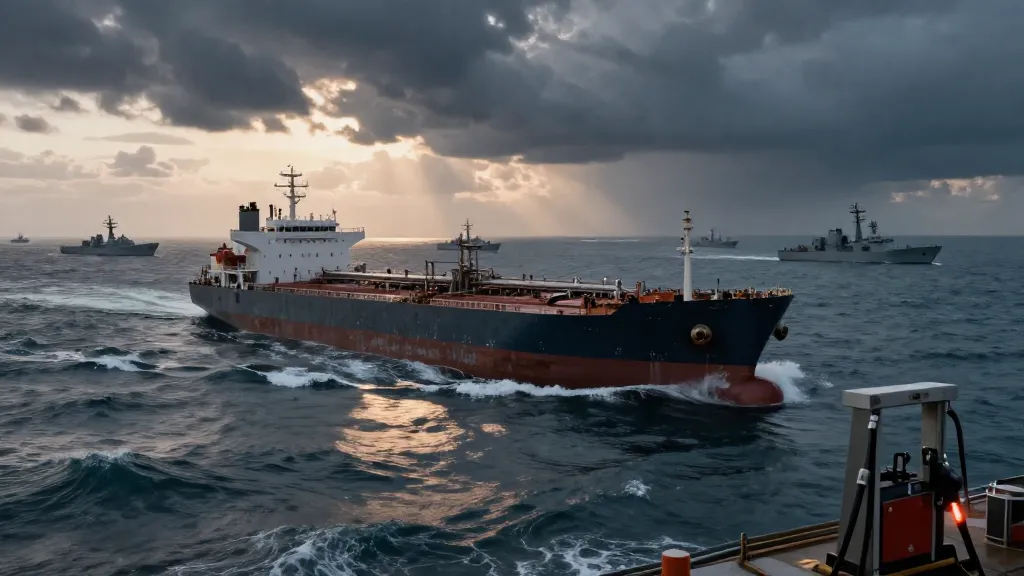
The practical enforcement remains murky. It’s unclear exactly how the administration will implement the blockade, though the Trump administration has already repositioned thousands of troops and nearly a dozen warships—including an aircraft carrier—to the region. Last week, the U.S. seized a sanctioned oil tanker off Venezuela’s coast, which effectively created an informal embargo: loaded vessels are now staying in Venezuelan waters rather than risk seizure.
The Oil Market Shock
Venezuela’s crude exports represent roughly 4% of China’s oil imports, with shipments averaging over 600,000 barrels per day. Analysts warn that if the blockade remains in place, losing nearly a million barrels a day of crude supply could push oil prices significantly higher.
According to David Goldwyn, a former State Department energy diplomat, the impact could be severe:
- Oil price increase: Five to eight dollars per barrel if Venezuela’s lost exports aren’t replaced by OPEC spare capacity
- Inflation spike: Widespread across the economy
- Migration crisis: Massive displacement from Venezuela to neighboring countries
Currently, the global oil market remains relatively well-supplied, with millions of barrels waiting to offload at Chinese ports. But that cushion may not last long if the blockade tightens.
The Legal Minefield
Here’s where things get genuinely contentious. International law scholar Elena Chachko of UC Berkeley Law School says Trump’s blockade represents “a new test of presidential authority.” While blockades have historically been treated as permissible “instruments of war,” they only qualify under strict legal conditions—and serious questions exist on both domestic and international law fronts.
U.S. Representative Joaquin Castro called the move “unquestionably an act of war,” adding: “A war that the Congress never authorized and the American people do not want.”
What to Watch For:
- Congressional response: Whether lawmakers challenge the blockade’s legality
- International reaction: How allies and adversaries respond to the escalation
- Enforcement details: How the administration actually stops non-sanctioned vessels
- OPEC capacity: Whether other producers can offset Venezuelan losses
- Gas pump prices: Real-world impact on American consumers within weeks
The Bigger Picture: A Pressure Campaign
The blockade isn’t happening in isolation. Trump’s administration has ramped up military pressure dramatically, conducting more than two dozen military strikes on vessels in the Pacific Ocean and Caribbean near Venezuela—strikes that have killed at least 90 people. Trump has also indicated that U.S. land strikes on Venezuela will begin soon.
Maduro has alleged the U.S. military buildup aims at overthrowing him and seizing control of Venezuela’s vast oil reserves, which represent the world’s largest crude deposits. In interviews with Vanity Fair, Trump’s chief of staff Susie Wiles said Trump “wants to keep on blowing boats up until Maduro cries uncle”—language that underscores the intensity of the pressure campaign.
Why Venezuela’s Oil Matters to You
Venezuela wasn’t always a minor player in global oil markets. The country once supplied significant volumes to U.S. refineries. Now, with a blockade in place, every dollar increase in crude oil translates to higher gas prices at the pump, increased shipping costs, and broader inflation pressures.
The timing matters too. Oil prices had already fallen to their lowest close since February 2021 before the blockade announcement. Any supply disruption now could reverse that downward trend quickly.
The Uncertainty Factor
What makes this situation particularly volatile is the unknowns. Oil traders and analysts are waiting to see whether Trump’s blockade will extend beyond sanctioned vessels to include non-sanctioned ships as well. That distinction could mean the difference between a minor market adjustment and a genuine energy crisis.
Additionally, Venezuela has already been hit by a cyberattack that knocked out state-run PDVSA’s administrative systems this week, compounding the export challenges beyond even the blockade itself.
The Bottom Line
Trump’s Venezuela blockade represents one of the most aggressive unilateral economic actions in recent memory. It’s designed to cripple Maduro’s regime by cutting off oil revenue—Venezuela’s lifeblood—but the collateral damage could ripple through global energy markets and consumer prices worldwide.
Legal experts are questioning its constitutionality. Energy analysts are warning of significant price impacts. And the international community is watching to see whether this escalates into direct military conflict.
For now, the blockade is in effect, oil prices are rising, and markets are bracing for impact. How this unfolds over the coming weeks could reshape global energy markets—and your monthly gas bill.