
Seven Feel-Good Science Stories That Prove 2025 Was a Breakthrough Year
From gene-editing cures to endangered species recoveries and renewable energy milestones, 2025 delivered transformative wins across medicine, conservation, and climate. Here's why scientists say this year restored hope.
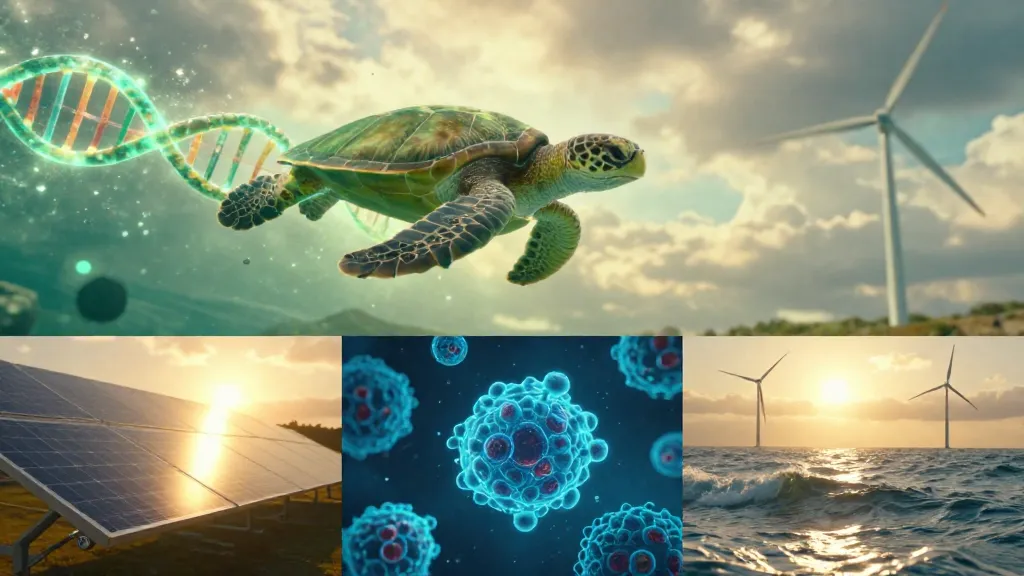
Despite political headwinds and funding cuts facing the scientific community, 2025 delivered transformative breakthroughs that prove the power of human innovation and collaboration. From gene therapies slowing devastating neurological diseases to endangered species bouncing back from the brink of extinction, this year reminded us why science matters. Here are seven concrete victories that restored hope and reshaped what’s possible.
Gene Editing Reaches Historic Milestones
2025 was undeniably a breakthrough year for gene therapy. Researchers achieved medical victories that many thought were years away, with multiple clinical trials launching and delivering results that exceeded expectations.
Huntington’s Disease: A First Victory
For the first time ever, gene therapy successfully treated Huntington’s disease, slowing the rate of cognitive decline in participants by 75%. This represents a watershed moment for neurodegenerative disease treatment—a condition that has long resisted therapeutic intervention.
Expanding the Gene-Therapy Arsenal
The wins didn’t stop there. A new CAR-T-cell therapy using base-editing technology showed remarkable promise in treating T-cell acute lymphoblastic leukaemia, with the majority of participating children and adults entering remission. Researchers also trialled the first CRISPR technology tailored to an individual patient, while others launched the first clinical trial for gene therapy targeting chronic granulomatous disease—a rare immune disorder—and another correcting mutations that cause lung and liver damage.
As gene-therapy researcher Annarita Miccio notes, these successes demonstrate that collaboration between academia and industry can finally deliver cures for rare diseases that affect thousands of people worldwide.
Endangered Species Make Stunning Comebacks
Conservation efforts paid off spectacularly in 2025, with multiple species recovering from near-extinction.
From Red List to Recovery
The green sea turtle, endangered since the 1980s, moved from ‘endangered’ to ‘least concern’ on the International Union for Conservation of Nature red list thanks to decades of egg protection and fishing-net safety measures. In Australia, the ampurta—a rat-sized marsupial once on the brink—also achieved ‘least concern’ status. Between 2015 and 2021, ampurta territory expanded by more than 48,000 square kilometres despite harsh conditions.
A Historic Treaty for the Oceans
Nations reached a landmark moment in September when the United Nations High Seas Treaty received approval from more than 60 countries. Taking effect in January 2026, this agreement legally protects biodiversity in international waters and aims to conserve at least 30% of land and sea areas—a historic commitment to preserving our planet’s last great frontiers.
The Ozone Hole Continues Its Recovery
After decades of careful environmental stewardship, the Antarctic ozone hole has shrunk to its smallest size since 2019—a tangible reminder that international cooperation can heal planetary wounds.
The ozone hole emerged in 1985 as a result of human-emitted chlorofluorocarbons (CFCs) used in refrigerators and aerosols. The Montreal Protocol in 1987 phased out these chemicals, setting a precedent for global environmental action. Since then, the ozone layer has been steadily recovering, with 2025 showing continued progress. Scientists project complete recovery by the late 2060s, provided efforts to develop climate-friendly alternatives continue.
Renewable Energy Surpasses Coal
For the first time in human history, renewable energy became the world’s largest energy source—a pivotal turning point in the global energy transition.
China’s Solar Surge
China became the first country to install 1 terawatt of solar power capacity, hitting this milestone in May 2025. In the first six months alone, the country installed 256 gigawatts of new solar capacity—twice as much as the rest of the world combined. Looking ahead, China plans to add 200–300 gigawatts of solar and wind energy capacity in its five-year plan beginning in 2026.
Global Momentum Builds
Europe saw renewable energy supply around half of the EU’s electricity demand in the second and third quarters of 2025. Globally, renewable-energy capacity is projected to increase by almost 4,600 gigawatts between 2025 and 2030—double the capacity deployed between 2019 and 2024.
What to watch for:
- Renewable energy scaling faster than predicted
- Battery storage innovations enabling grid reliability
- Developing nations leading clean-energy deployment
- Fossil fuel phase-out timelines accelerating
What These Victories Mean
As climate-policy researcher Glen Peters observes, despite political turbulence in some nations, the work continues. Scientists around the world keep doing their jobs—and in 2025, those jobs produced results that matter.
These breakthroughs prove that even amid uncertainty, the scientific enterprise delivers. Gene therapies offer hope to families facing genetic diseases. Conservation efforts prove that species can recover. Renewable energy shows we can transition away from fossil fuels. And the ozone recovery demonstrates that when the world acts together on environmental threats, healing is possible.
The challenges ahead remain formidable. Greenhouse-gas emissions from fossil fuels reached a new high in 2025, and the transition to clean energy must accelerate further. But these seven victories remind us why investment in science, conservation, and clean energy isn’t just idealistic—it’s practical, necessary, and increasingly successful.