
3.4-Million-Year-Old Fossil Foot Challenges Lucy's Place in Human Evolution
A newly analyzed fossil foot from Ethiopia is forcing scientists to reconsider the established narrative of human evolution and our understanding of how early ancestors moved. The 3.4-million-year-old discovery may reshape Lucy's role in the human origins story.
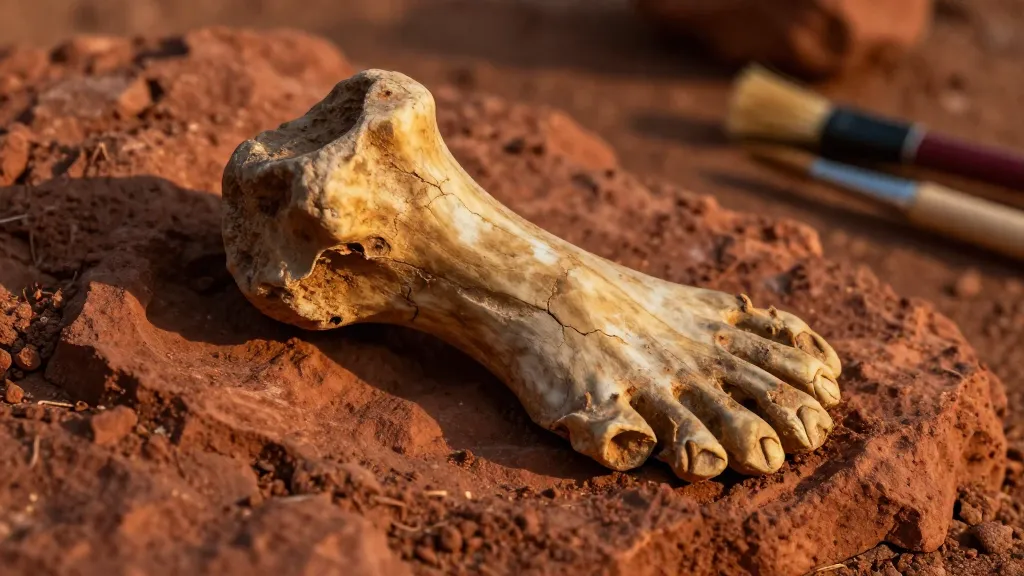
A fossil foot buried in Ethiopian sediment for over 3.4 million years is sending shockwaves through the scientific community, potentially rewriting one of the most celebrated chapters in human evolution. The ancient discovery, recently brought to light after being hidden for more than a decade, reveals unexpected insights that challenge our fundamental understanding of how early human ancestors moved—and Lucy’s pivotal role in our origins story.
The Discovery That Changes Everything
The fossil foot, unearthed in Ethiopia’s fossil-rich landscape, represents a crucial piece of evidence that scientists are still working to fully understand. According to reports, this ancient specimen has been tucked away from scientific scrutiny for years, making its recent emergence all the more significant for researchers studying human evolution.
What makes this discovery particularly intriguing is its age—at 3.4 million years old, it provides a direct window into a critical period of human development when our ancestors were developing the locomotion patterns that would eventually lead to modern human walking.
Challenging Lucy’s Legacy
For decades, “Lucy”—the famous Australopithecus afarensis specimen discovered in 1974—has held a central position in the narrative of human evolution. Her relatively complete skeleton has served as a cornerstone for understanding how early hominins transitioned from tree-dwelling to ground-walking creatures.
However, this newly analyzed fossil foot appears to tell a different story about early ancestor movement patterns. The discovery suggests that the established timeline and mechanisms of how our ancestors developed bipedalism may need significant revision.
What Scientists Are Watching For
- Peer review validation of the fossil’s analysis and implications
- Independent confirmation from other paleontology teams
- Additional fossil evidence that either supports or contradicts these findings
- Consensus building within the scientific community about the discovery’s significance
The Broader Implications
The potential implications of this discovery extend far beyond a single fossil. If the findings hold up to scientific scrutiny, they could fundamentally alter our understanding of:
The timeline of bipedal development in early hominins, the diversity of locomotion strategies among our ancestors, and the role of environmental factors in shaping human evolution.
Scientific Caution and Future Research
While the discovery is generating considerable excitement, experts emphasize the importance of rigorous peer review and scientific consensus before drawing definitive conclusions. The fossil’s analysis represents just one piece of an incredibly complex evolutionary puzzle that scientists continue to assemble.
Observers note that single discoveries, no matter how significant they appear, must be evaluated within the broader context of existing fossil evidence and evolutionary theory. The scientific community will likely spend months or even years thoroughly examining the implications of this find.
What Comes Next
As researchers continue to analyze this remarkable specimen, the fossil foot may either revolutionize our understanding of human evolution or take its place alongside other important but less paradigm-shifting discoveries. The true test will come as other scientists examine the evidence and attempt to replicate or challenge the initial findings.
For now, this ancient foot serves as a powerful reminder that our understanding of human origins continues to evolve—sometimes in unexpected directions that challenge even our most cherished scientific narratives.