
Madagascar Spider Spins 80-Foot Webs With Silk Stronger Than Steel
Scientists document Madagascar spiders building massive 80-foot webs across rivers using silk that rivals bulletproof materials in strength. This discovery could revolutionize biomimetic engineering and material science applications.
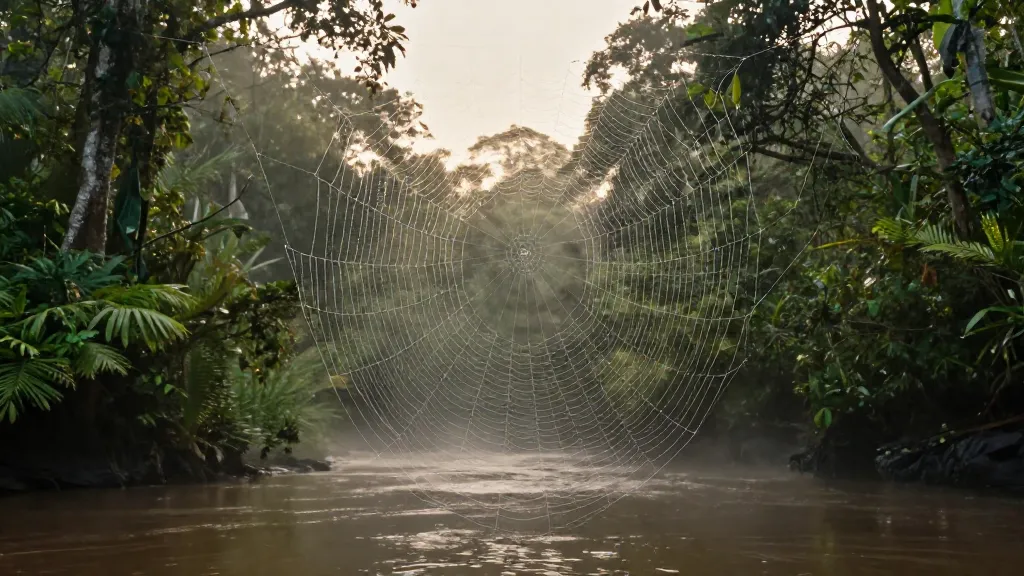
Deep in the remote wilderness of Madagascar, nature has been quietly engineering one of the most extraordinary materials on Earth. A spider species has been discovered constructing massive webs that stretch an incredible 80 feet across rivers, using silk that rivals the strength of bulletproof materials. This remarkable discovery is capturing the attention of scientists worldwide and could revolutionize how we think about biomimetic engineering.
Nature’s Master Engineer
The Madagascar spider’s achievement seems almost impossible. Picture a web spanning the width of a football field, suspended across flowing water with engineering precision that would challenge human architects. Reports suggest these arachnids have mastered the art of long-distance web construction, creating structures that dwarf typical spider webs by orders of magnitude.
What makes this discovery even more astounding is the material properties of the silk itself. Scientists have documented that this spider silk demonstrates strength characteristics that rival modern bulletproof materials, opening up fascinating possibilities for material science applications.
The Science Behind Super-Strong Silk
Spider silk has long intrigued researchers for its unique combination of strength and flexibility, but this Madagascar species appears to have taken these properties to extraordinary levels. The silk’s toughness reportedly approaches that of steel, while maintaining the lightweight and flexible characteristics that make spider silk so remarkable.
Key Properties Scientists Are Studying:
- Tensile strength comparable to bulletproof materials
- Exceptional elasticity and flexibility
- Lightweight construction ideal for spanning large distances
- Natural biodegradability unlike synthetic alternatives
The implications for biomimetic engineering are profound. If scientists can understand and replicate the molecular structure of this silk, it could lead to revolutionary advances in everything from protective equipment to aerospace materials.
Engineering Marvels in the Wild
The construction process itself represents a marvel of natural engineering. Observers note that these spiders somehow manage to anchor their massive webs across rivers, dealing with challenges that would stump human engineers: wind resistance, water spray, varying anchor points, and the sheer logistics of spanning such distances.
The discovery raises fascinating questions about spider behavior and adaptation. How do these creatures navigate the physics of building across such vast spaces? What evolutionary pressures led to this remarkable ability?
Revolutionary Applications on the Horizon
This discovery could transform multiple industries. Material scientists are particularly excited about the potential applications in protective equipment, where the combination of strength, flexibility, and light weight could create superior alternatives to current bulletproof materials.
The aerospace industry is also taking notice. Materials that combine the strength of steel with the flexibility and light weight of natural fibers could revolutionize aircraft and spacecraft design.
The Future of Bio-Inspired Materials
As researchers continue studying this remarkable Madagascar spider, the potential applications seem limitless. From medical sutures that are both strong and biodegradable to architectural materials that could span unprecedented distances, nature may have provided the blueprint for the next generation of super-materials.
The discovery serves as a powerful reminder that some of our most challenging engineering problems may already have solutions in the natural world. We just need to know where to look and how to listen to what nature has been perfecting for millions of years.
This Madagascar spider’s 80-foot webs represent more than just an impressive natural phenomenon—they could be the key to unlocking a new era of biomimetic materials that are stronger, lighter, and more sustainable than anything humans have created so far.