
Scientist Spent 63 Days Alone in Total Darkness—His Discovery Changed Biology Forever
A groundbreaking isolation experiment in a cave with no sunlight or clocks led to a major breakthrough in circadian rhythm research that still influences biology today. The scientist's 63-day journey into darkness revealed secrets about human biological clocks.
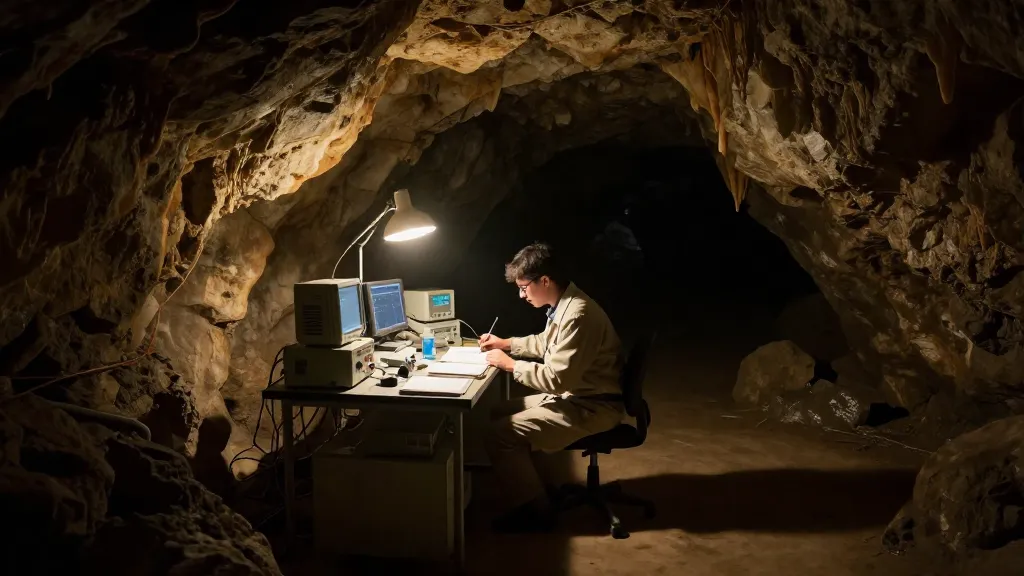
Imagine willingly descending into a cave and staying there for over two months—no sunlight, no clocks, no human contact, and no way to track time. That’s exactly what one brave scientist did in a groundbreaking experiment that would revolutionize our understanding of human biology and continue influencing research six decades later.
This wasn’t just another scientific study tucked away in a laboratory. This was an act of extraordinary human endurance that pushed the boundaries of what we knew about our internal biological clocks. The researcher’s 63-day journey into complete darkness would unlock secrets about circadian rhythms that scientists are still building upon today.
The Ultimate Isolation Experiment
The experiment was as extreme as it sounds. The scientist vanished into total darkness for over two months, completely cut off from all the time cues that normally govern our daily lives. No natural light to signal dawn or dusk, no artificial lighting to mark the hours, and no timepieces to anchor the mind to the outside world’s rhythm.
This level of isolation goes beyond what most people can imagine. Without any external time markers, the human body becomes a living laboratory, revealing the mysterious workings of our internal biological systems.
What the Darkness Revealed
During those 63 days underground, something remarkable happened. The scientist’s body began operating on its own internal schedule, free from the external influences that typically synchronize our biological processes. This natural experiment provided unprecedented insights into how human circadian rhythms function when left to their own devices.
The discoveries made during this period of isolation sparked a breakthrough in circadian rhythm biology that continues to influence research today. Scientists gained crucial understanding about:
- How our internal clocks operate independently of external time cues
- The natural rhythms our bodies follow in the absence of light
- The fundamental mechanisms that govern human biological timing
- The resilience and adaptability of human circadian systems
A Legacy That Endures
What makes this experiment truly remarkable isn’t just the extreme nature of the isolation—it’s the lasting impact on scientific understanding. Sixty years later, researchers are still building upon the insights gained from this extraordinary sacrifice. The work opened new avenues of research that continue to shape how we understand sleep, metabolism, hormone regulation, and countless other biological processes.
The Human Cost of Discovery
While the scientific breakthroughs were groundbreaking, the personal toll of spending 63 days in complete isolation cannot be understated. This wasn’t a comfortable laboratory setting—it was a real cave, with all the physical and psychological challenges that such an environment presents. The scientist’s willingness to endure this extreme isolation demonstrates the lengths researchers will go to in pursuit of knowledge.
The experiment stands as a testament to human curiosity and the drive to understand our own biology, even when it means pushing the boundaries of human endurance.
Modern Implications
Today’s circadian rhythm research—from studies on shift work to investigations into jet lag and sleep disorders—can trace its roots back to this pioneering experiment. The fundamental insights about how our biological clocks work continue to inform medical treatments, workplace policies, and our understanding of human health.
Reports suggest that the discoveries made during those 63 days in darkness laid crucial groundwork for modern chronobiology, the scientific study of biological time. As our understanding of circadian rhythms continues to evolve, this extraordinary experiment remains a cornerstone of the field, proving that sometimes the most profound scientific breakthroughs come from the most extreme human experiences.