
Scientists Discover DNA 'Switches' That Make Humans Uniquely Human Despite 99% Shared Genes with Chimps
New research identifies the genetic regulatory switches that explain distinctly human traits, despite sharing 99% of our DNA with chimpanzees and bonobos. Scientists may have finally cracked the code of what makes us unmistakably human.
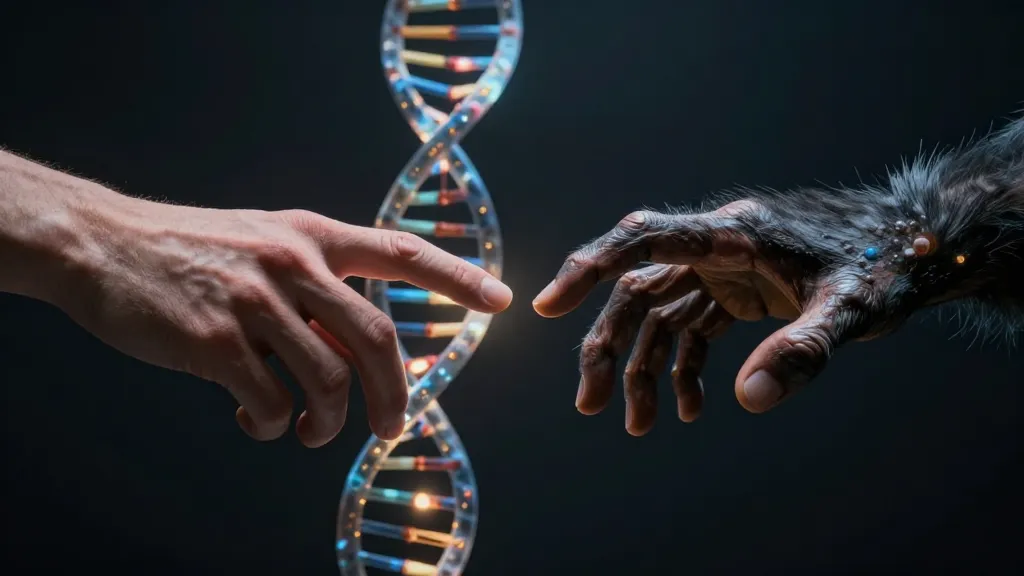
We share an astonishing 99% of our DNA with chimpanzees and bonobos, yet the differences between us couldn’t be more dramatic. While our closest evolutionary relatives swing through trees, we build skyscrapers, compose symphonies, and explore space. For decades, this genetic paradox has puzzled scientists: if we’re so genetically similar, what makes us so remarkably different?
New research suggests the answer may lie not in the genes themselves, but in the molecular “switches” that control how those genes are expressed. Scientists have identified DNA regulatory mechanisms that appear to explain the distinctly human traits that set us apart from our primate cousins, potentially solving one of evolution’s most intriguing mysteries.
The 99% Paradox
The human genome shares up to 99% of its genes with chimpanzees and bonobos, our closest living relatives. This remarkable similarity has long raised fundamental questions about human evolution and identity. If our genetic blueprints are nearly identical, how did humans develop such radically different capabilities?
The answer, researchers now believe, lies in the regulatory switches that control gene expression rather than the genes themselves. These molecular switches determine when, where, and how strongly genes are activated, essentially controlling the volume and timing of genetic instructions.
What DNA Switches Actually Do
Think of genes as light bulbs and regulatory switches as dimmer controls. While humans and chimps have virtually the same set of “light bulbs,” the switches that control their brightness and timing appear to be calibrated very differently. These regulatory elements can:
- Amplify or suppress gene activity in specific tissues
- Control the timing of gene expression during development
- Coordinate complex genetic programs that shape physical and cognitive traits
- Fine-tune the molecular processes that distinguish species
The Human Difference
Reports suggest these newly identified DNA switches may explain several key human characteristics that distinguish us from other primates. While the specific mechanisms are still being studied, scientists believe these regulatory differences could account for traits like enhanced cognitive abilities, unique physical features, and complex behavioral patterns.
The research indicates that small changes in gene regulation can have profound effects on an organism’s development and capabilities, explaining how relatively minor genetic differences can produce such dramatically different species.
What This Means for Understanding Human Evolution
This discovery could fundamentally change how we understand human evolution and what makes our species unique. Rather than looking for entirely new genes that separate us from other primates, scientists are now focusing on the subtle regulatory differences that control our shared genetic toolkit.
Key implications include:
- A new framework for understanding species differences despite genetic similarity
- Potential insights into human cognitive and physical development
- Better understanding of evolutionary processes and genetic regulation
- Possible applications in medicine and biotechnology
The Bigger Picture
While this research represents a significant step forward, observers note that much work remains to fully understand these regulatory mechanisms and their effects. The identification of these DNA switches opens new avenues for research into human evolution, development, and the fundamental question of what makes us uniquely human.
As scientists continue to map these genetic control systems, we may finally begin to understand how nature’s tiny adjustments to our shared genetic heritage created the remarkable diversity of life we see today—and why humans, despite sharing so much DNA with our closest relatives, became something entirely unique in the natural world.
The research suggests that in the grand symphony of genetics, it’s not just the notes that matter, but the conductor’s interpretation that makes all the difference.