
Scientists Discover Earth's Core May Hold Water Equal to 45 Oceans
Groundbreaking research reveals Earth's core could contain hydrogen equivalent to 45 oceans worth of water, fundamentally changing our understanding of how planets acquire water during formation.
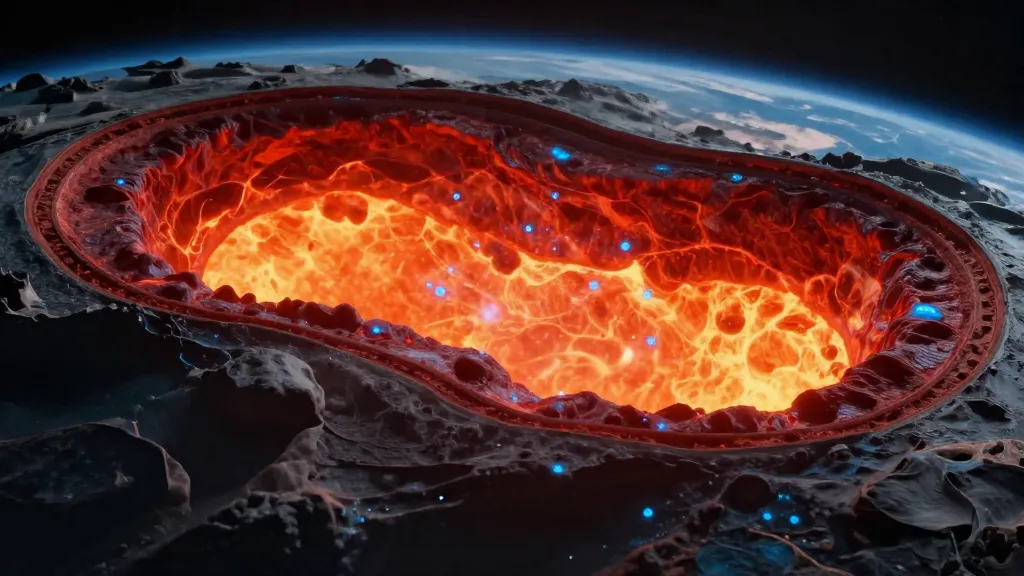
Imagine discovering that beneath your feet lies a hidden reservoir containing more water than all the oceans combined. Scientists have just made exactly that kind of jaw-dropping discovery, revealing that Earth’s core may harbor hydrogen equivalent to 45 entire oceans worth of water—a finding that’s turning everything we thought we knew about our planet upside down.
A Hidden Ocean Beneath Our Feet
This groundbreaking research suggests that deep within Earth’s molten core, an enormous quantity of hydrogen exists—so vast that if converted to water, it would dwarf the approximately 1.4 billion cubic kilometers of water in all our surface oceans. To put this in perspective, we’re talking about a hydrogen reservoir that could theoretically create 45 times more water than currently exists on Earth’s surface.
The implications stretch far beyond simple numbers. This discovery fundamentally challenges how scientists understand where Earth’s water came from in the first place.
Rewriting the Story of Earth’s Water
For decades, researchers have debated the origins of Earth’s abundant water. The prevailing theories suggested that much of our planet’s water arrived later in its history, delivered by asteroids and comets during what’s known as the Late Heavy Bombardment period.
But this new evidence points to a dramatically different scenario: most of Earth’s water may have been present from the very beginning, incorporated during the planet’s formation roughly 4.6 billion years ago.
What This Means for Planetary Science
The research indicates that as Earth formed from the cosmic dust and debris of the early solar system, it captured and retained far more hydrogen than previously imagined. This hydrogen became locked away in the planet’s core, where it has remained hidden for billions of years.
This discovery could reshape our understanding of:
- How planets acquire their water during formation
- The role of planetary cores in storing volatile elements
- Why Earth became such a water-rich world
- The potential for water on other rocky planets
The Bigger Picture for Life on Earth
While this core hydrogen remains inaccessible to life on the surface, its existence tells a remarkable story about Earth’s capacity to harbor the essential ingredients for life. The fact that our planet has been a water reservoir on such a massive scale since its earliest days provides new insights into why Earth became the vibrant, life-supporting world we know today.
What Scientists Are Watching For
Researchers are now focusing on several key areas to better understand this discovery:
- Developing new methods to study the composition of Earth’s deep interior
- Investigating whether similar hydrogen reservoirs exist in other rocky planets
- Understanding how this hidden water might interact with geological processes
- Exploring what this means for the long-term evolution of planetary atmospheres
A New Chapter in Earth Science
This revelation represents more than just an impressive number—it’s a fundamental shift in how we view our planet’s history and the processes that shape rocky worlds throughout the universe. The idea that Earth has been sitting on a water treasure trove equivalent to 45 oceans challenges us to think differently about planetary formation and the distribution of life-essential elements.
As scientists continue to probe the mysteries of our planet’s interior, this discovery opens up entirely new questions about what other secrets Earth might be hiding in its depths. The story of our planet’s water is far from over—in fact, it seems we’re just beginning to understand how truly water-rich our world has always been.