
Scientists Discover Hidden Ecosystem Thriving Beneath Earth's Driest Desert
Researchers have uncovered a thriving microbial ecosystem hidden beneath the surface of the Atacama Desert, revealing how life adapts to Earth's most extreme conditions. The discovery has major implications for understanding potential life on other planets.
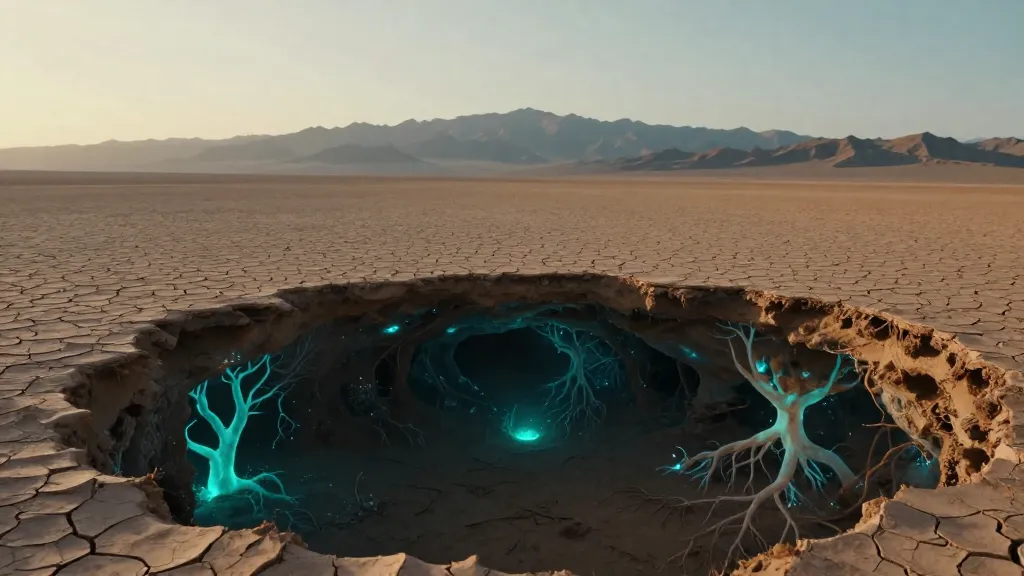
In the most barren place on Earth, where rain hasn’t fallen in some areas for decades and the landscape resembles the surface of Mars, scientists have just uncovered something extraordinary. Deep beneath the scorching sands of Chile’s Atacama Desert, researchers have discovered a thriving ecosystem that challenges everything we thought we knew about the limits of life on our planet.
This hidden world, teeming with microscopic organisms, has been quietly flourishing in conditions so extreme that NASA uses the Atacama Desert as a testing ground for Mars rover missions. The discovery not only rewrites the book on where life can exist but also opens up tantalizing possibilities for finding life beyond Earth.
Life in the Ultimate Extreme
The Atacama Desert has long held the title of Earth’s driest non-polar desert, with some weather stations recording zero rainfall for years at a time. Surface temperatures can swing wildly from scorching heat during the day to freezing cold at night, while intense UV radiation bombards the landscape with deadly precision.
Yet somehow, life has found a way to not just survive but thrive in this seemingly impossible environment. Reports suggest that the microbial ecosystem exists several meters below the desert’s surface, where conditions are more stable but still incredibly harsh by most standards.
The organisms discovered in this subterranean world have developed remarkable adaptations to cope with extreme dryness, temperature fluctuations, and limited nutrients. These microscopic survivors represent a testament to life’s incredible resilience and creativity when faced with seemingly insurmountable challenges.
What Makes This Discovery So Significant
Scientists are calling this finding groundbreaking for several reasons that extend far beyond our understanding of desert ecosystems:
Redefining the Limits of Life
This discovery pushes the boundaries of what scientists call the “habitable zone” – the conditions under which life can exist. If organisms can thrive beneath one of Earth’s most hostile environments, it suggests that life might be possible in places previously thought to be completely sterile.
Implications for Astrobiology
The finding has enormous implications for the search for extraterrestrial life. Mars, with its cold, dry conditions and subsurface environment, shares many similarities with the deep Atacama Desert. If life can flourish beneath Earth’s driest desert, similar organisms might exist beneath the Martian surface.
New Frontiers in Biotechnology
The unique adaptations these organisms have developed could lead to breakthrough discoveries in biotechnology, potentially offering solutions for everything from water purification to developing crops that can survive in extreme conditions.
Key Characteristics of the Hidden Ecosystem
Observers note several fascinating aspects of this subterranean world:
- Extreme drought tolerance: Organisms that can survive with virtually no water
- Temperature resilience: Life forms adapted to dramatic temperature swings
- Unique metabolic pathways: Novel ways of processing nutrients and energy
- Protective mechanisms: Sophisticated defenses against harmful radiation
- Community cooperation: Evidence of complex microbial interactions
The Search Continues
While this discovery represents a major breakthrough, researchers acknowledge that much remains unknown about the full extent and diversity of life beneath the Atacama Desert. Scientists are now working to map the ecosystem more comprehensively and understand exactly how these organisms manage to survive and reproduce in such challenging conditions.
The implications stretch far beyond academic curiosity. As climate change continues to create more extreme environments on Earth, understanding how life adapts to such conditions could prove crucial for both conservation efforts and preparing for an uncertain future.
A New Chapter in the Story of Life
This remarkable discovery beneath the Atacama Desert reminds us that life on Earth is far more tenacious and creative than we ever imagined. In a place where nothing should be able to survive, an entire hidden world has been quietly thriving, waiting for us to discover its secrets.
As we continue to explore the cosmos in search of life beyond Earth, this finding suggests that we might not have to look as far as we thought. Sometimes, the most extraordinary discoveries are hiding right beneath our feet, in the most unlikely places imaginable.
The next time you look at a seemingly lifeless landscape, remember the hidden world beneath the Atacama Desert – and consider what other secrets our planet might still be keeping from us.