
Scientists Discover Trees Can Actually Sense When They're Being Eaten—And Fight Back
New research reveals trees have evolved sophisticated sensory systems to detect different types of herbivory and communicate stress signals to neighbors. From detecting insect saliva to responding to acoustic vibrations, trees are far from passive victims.
Imagine walking through a forest and suddenly realizing that every tree around you is engaged in an invisible battle for survival—sensing attacks, calling for backup, and launching chemical counterstrikes against their enemies. This isn’t science fiction; it’s the remarkable reality researchers are uncovering about how trees actually experience and respond to being eaten.
For centuries, we’ve viewed trees as silent, passive giants that simply endure whatever nature throws at them. But new research is revolutionizing our understanding of plant intelligence, revealing that trees possess sophisticated sensory systems that would make any security network jealous.
Trees Are Master Detectives
From their roots to their highest branches, trees have evolved extraordinary abilities to identify exactly who’s trying to make them lunch. They can distinguish between the gnawing of beetles and the munching of caterpillars, detect the piercing and sucking of various bugs, and even pick up on acoustic vibrations from grasshoppers moving through their branches.
But their sensory powers go far beyond just feeling physical damage. Trees can actually analyze the saliva left behind by deer, identify specific microbes deposited by different animals, and even eavesdrop on the chemical stress signals released by their neighbors when giraffes start browsing nearby.
The Chemical Warfare Response
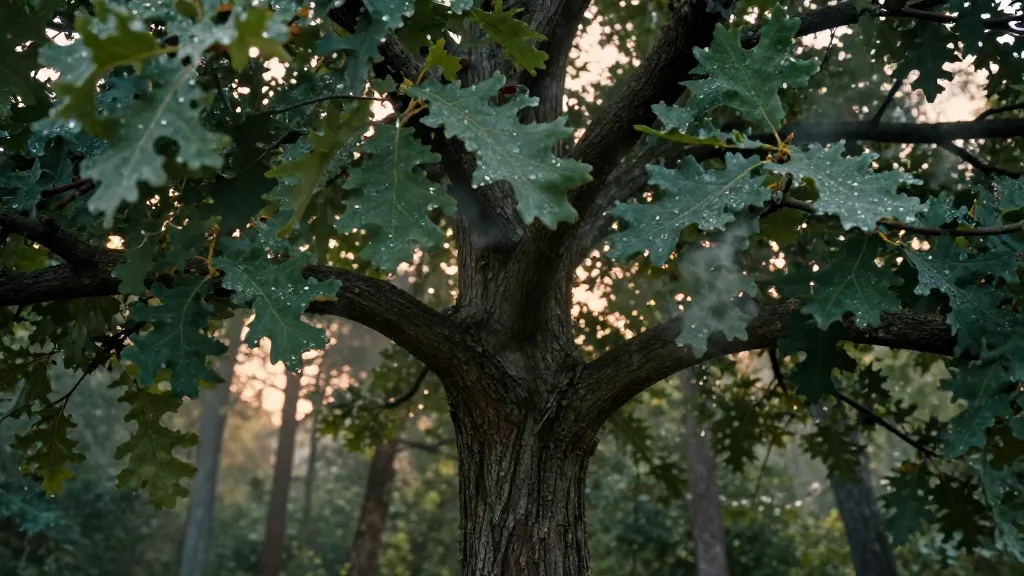
When trees realize they’re under attack, they don’t just sit there and take it. Many species launch sophisticated defense campaigns that would impress any military strategist. Oak trees, for example, ramp up production of tannins and phenol compounds after detecting heavy caterpillar activity—essentially making their leaves taste terrible to discourage further munching.
What Trees Do When Under Attack:
- Produce bitter, unpalatable chemicals to deter herbivores
- Grow tougher, harder-to-chew leaves
- Release alarm gases to attract predators of their attackers
- Share warning signals with neighboring trees
- Modify their chemical composition based on the specific threat
Nature’s Emergency Broadcasting System
Perhaps most fascinating is how trees communicate danger to their forest community. Pines, elms, acacias, and many other species release alarm gases when under attack—chemical SOS signals that serve a dual purpose. These airborne messages not only warn neighboring trees to beef up their defenses but also attract the natural predators of whatever is eating them.
Imagine lodgepole pines essentially calling in air support by releasing chemicals that summon parasitic wasps to attack the insects trying to devour them. It’s like having a built-in 911 system that automatically dispatches the cavalry.
Rewriting the Rules of Plant Intelligence
This research challenges our fundamental assumptions about consciousness and intelligence in the natural world. While scientists are careful not to attribute human-like emotions or thoughts to trees, the evidence suggests these organisms possess far more complex sensory and response systems than we ever imagined.
The ability to distinguish between different types of threats, remember past attacks, and coordinate community-wide defensive responses points to a level of plant sophistication that’s forcing researchers to reconsider what it means to be “intelligent” in nature.
The Forest Network
What emerges from this research is a picture of forests not as collections of individual trees, but as interconnected communities engaged in constant communication and mutual protection. Trees aren’t just competing for sunlight and nutrients—they’re actively sharing information about threats and coordinating their responses to survive.
This discovery has profound implications for how we understand ecosystem management, forest conservation, and the intricate relationships that keep our natural world in balance. The next time you walk through a forest, remember: you’re not just surrounded by trees, you’re witnessing an ancient, ongoing conversation between some of nature’s most sophisticated survivors.