
Scientists Say Your Finger Length Reveals How Your Brain Evolved
New research suggests the ratio of your finger lengths could reveal how prenatal hormones shaped your brain development and offer clues about human evolution. The simple measurement might unlock secrets about cognitive development that scientists are just beginning to understand.
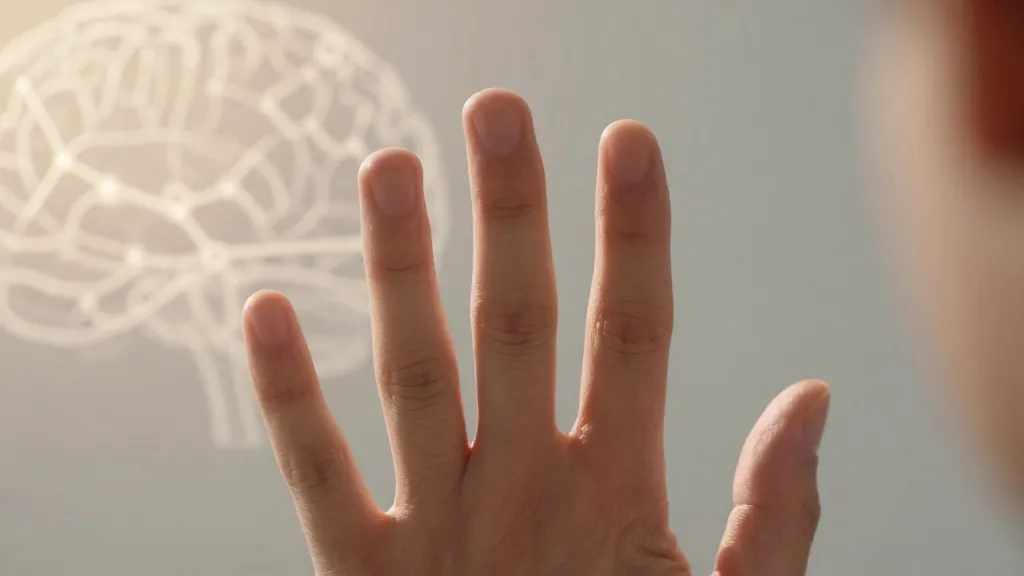
Looking down at your hands right now, you might be staring at one of the most revealing clues about how your brain developed before you were even born. New research suggests that something as simple as comparing the length of your fingers could unlock secrets about prenatal hormone exposure that shaped not just your individual brain development, but offers insights into how human brains evolved over millions of years.
The intriguing connection centers on what scientists call the digit ratio—specifically, the relationship between your index finger and ring finger lengths. This measurement, researchers now believe, may serve as a window into the prenatal estrogen environment that influenced your developing brain in the womb.
The Finger-Brain Connection
Professor John Manning from Swansea University has been investigating how finger length ratios might reflect the hormonal conditions present during crucial early development. The research suggests that prenatal estrogen exposure, which can be indicated by these finger measurements, may play a significant role in determining brain size and structure.
This isn’t just about individual differences—the implications stretch back through human evolutionary history. The research points to a fascinating possibility: that increases in prenatal estrogen over evolutionary time may have contributed to the dramatic brain size increases that mark human development as a species.
What Your Fingers Might Tell You
The digit ratio measurement focuses on comparing your second digit (index finger) to your fourth digit (ring finger). While the exact mechanisms are still being studied, researchers believe this ratio reflects the hormonal environment you experienced in the womb, particularly exposure to estrogen and testosterone.
Key indicators researchers are studying:
- Index finger to ring finger length ratios
- Variations between individuals in these measurements
- Potential correlations with brain development patterns
- Links to cognitive and behavioral traits
The measurement is surprisingly simple—you can examine your own hands right now—but the implications for understanding human development and evolution are profound.
Evolutionary Implications
What makes this research particularly compelling is how it connects individual development with our species’ evolutionary journey. The human brain has roughly tripled in size over the past few million years, and scientists have long sought to understand what drove this remarkable expansion.
The new findings suggest that changes in prenatal hormone exposure, particularly estrogen, may have been a crucial factor in this evolutionary leap. If finger length ratios truly reflect these hormonal influences, they could provide researchers with a simple tool for studying both individual brain development and broader evolutionary patterns.
The Science Behind the Measurement
While the connection between finger length and brain development might seem surprising, it’s grounded in developmental biology. During fetal development, the same hormonal influences that affect digit formation also impact brain growth and structure. This shared developmental pathway creates the potential link that researchers are now investigating.
Reports suggest that prenatal estrogen exposure doesn’t just influence brain size, but may also affect cognitive development patterns. However, scientists emphasize that this research is still in early stages, and the relationships between hormones, finger length, and brain development are complex and not fully understood.
What This Means for Understanding Human Development
The research opens up new avenues for studying how prenatal environments shape individual differences in brain structure and function. Rather than relying solely on expensive brain imaging or complex hormonal testing, researchers might be able to use simple finger measurements as an initial indicator of prenatal hormone exposure.
This could prove valuable for understanding not just typical development, but also conditions that may be influenced by prenatal hormone levels. The simplicity of the measurement makes it accessible for large-scale studies that could reveal population-level patterns in brain development.
Looking Ahead
While the finger length research offers an intriguing new perspective on brain evolution and development, scientists caution that much work remains to be done. The relationships between prenatal hormones, finger ratios, and brain development are complex, and researchers are still working to understand exactly how these connections function.
What’s clear is that this research represents a fascinating convergence of evolutionary biology, neuroscience, and developmental psychology. The idea that something as simple as measuring your fingers could provide insights into both your individual brain development and our species’ evolutionary journey captures the imagination and highlights how much we still have to learn about human development.
The next time you look at your hands, remember—you might be looking at a record of the hormonal environment that helped shape your developing brain millions of years of evolution in the making, written in the length of your fingers.