
Why Humans Can Outlast Horses in Summer Heat—The Sweat Advantage
Harvard physiologist Daniel Lieberman reveals the counterintuitive truth: while horses dominate sprints, humans' superior cooling system gives them the edge in grueling long-distance races under the summer sun.
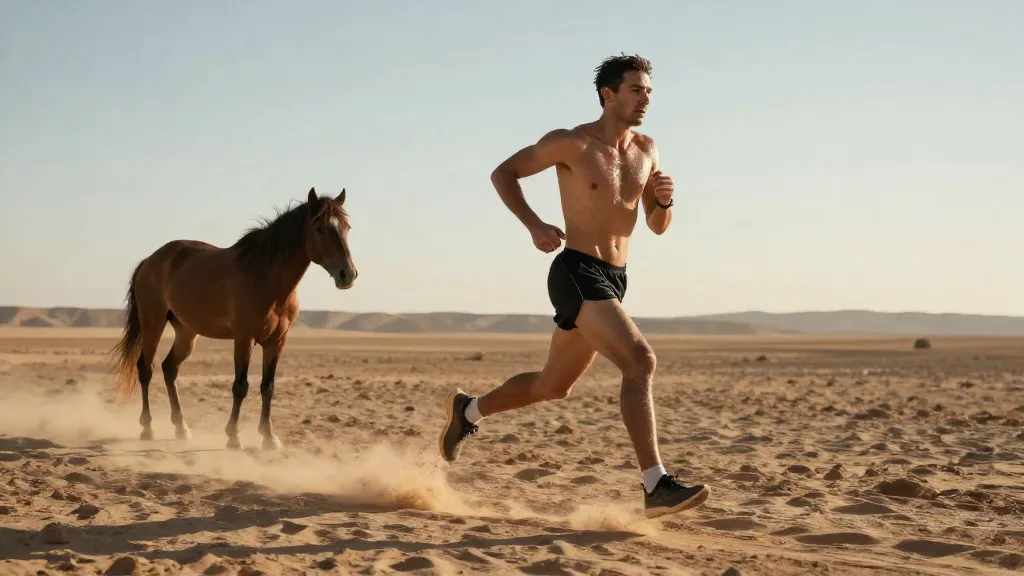
We’ve all seen the memes: a horse effortlessly outrunning a human, leaving us in the dust. It seems obvious that these powerful animals are superior runners in every way. But what if we told you that in one specific scenario—a grueling, scorching marathon across an unforgiving landscape—a human could actually outlast a horse? It sounds absurd. Yet according to Harvard physiologist Daniel Lieberman, this counterintuitive truth reveals something profound about human evolution and our ancestors’ place in the natural world.
The Sprint: Horses Win, Hands Down
Let’s start with what everyone already knows. In a short sprint, there’s no contest. A horse would leave a human far behind before either competitor had even covered a hundred meters. Horses possess explosive power, raw muscle mass, and biomechanics refined over millions of years of evolution. In any short-distance race, the horse is the undisputed champion.
But sprint dominance isn’t the whole story.
The Long Game: When Distance and Heat Change Everything
Over a long, punishing distance—especially under the brutal conditions of summer heat—something remarkable happens. The advantage flips. Humans, it turns out, have a cooling system that horses simply cannot match: sweat.
This isn’t just about comfort. It’s about survival and endurance at the cellular level.
How Sweat Gives Humans the Edge
Humans cool themselves remarkably efficiently through perspiration. Our bodies can regulate temperature by releasing moisture across our skin, which then evaporates and carries heat away. It’s an elegant system, refined through hundreds of thousands of years.
Horses, despite their size and strength, face a critical disadvantage: their larger bodies struggle to shed heat fast enough during prolonged exertion in hot conditions. As a horse’s core temperature rises during a long run in summer heat, its cooling mechanisms can’t keep pace with the metabolic demands. The animal risks overheating—a serious physiological crisis that forces it to slow down or stop.
A human, by contrast, keeps cooling, keeps moving, and keeps pushing forward.
What to Watch For
- Core body temperature during endurance events in heat
- Sweat rate differences between humans and horses under similar conditions
- Pacing strategies that leverage cooling advantages
- Environmental factors like humidity and sun exposure
The Evolutionary Hunter’s Advantage
Why does this matter beyond a hypothetical race? Lieberman’s argument points to a deeper evolutionary truth: this cooling advantage may explain why human ancestors became such formidable endurance hunters. Long before we invented tools or weapons, we hunted large prey across vast, hot landscapes—a capability no horse can match in extreme heat.
Our ancestors didn’t overpower prey through brute strength. They outlasted them. They pursued animals across miles and miles under the scorching sun, their superior cooling system allowing them to maintain a relentless pace while their prey grew exhausted and overheated. This wasn’t luck or accident. It was an evolutionary superpower.
The Bigger Picture
This comparison between humans and horses reveals something important about how we categorize athletic ability. We tend to think of strength and speed as the ultimate measures of physical superiority. But endurance—especially the ability to perform under extreme conditions—is equally remarkable and equally worthy of respect.
Horses are sprinters. Humans are distance warriors. Both adaptations are magnificent; they’re simply designed for different challenges.
The next time someone boasts about a horse’s raw power, you’ll know the real story: give that human a long enough race, turn up the heat, and the tables might just turn.