
Video Games Actually Make Kids Smarter, New Research Reveals
A groundbreaking study challenges decades of parenting wisdom by showing video games boost children's IQ scores. The research contradicts long-held beliefs about gaming's negative impact on young minds.
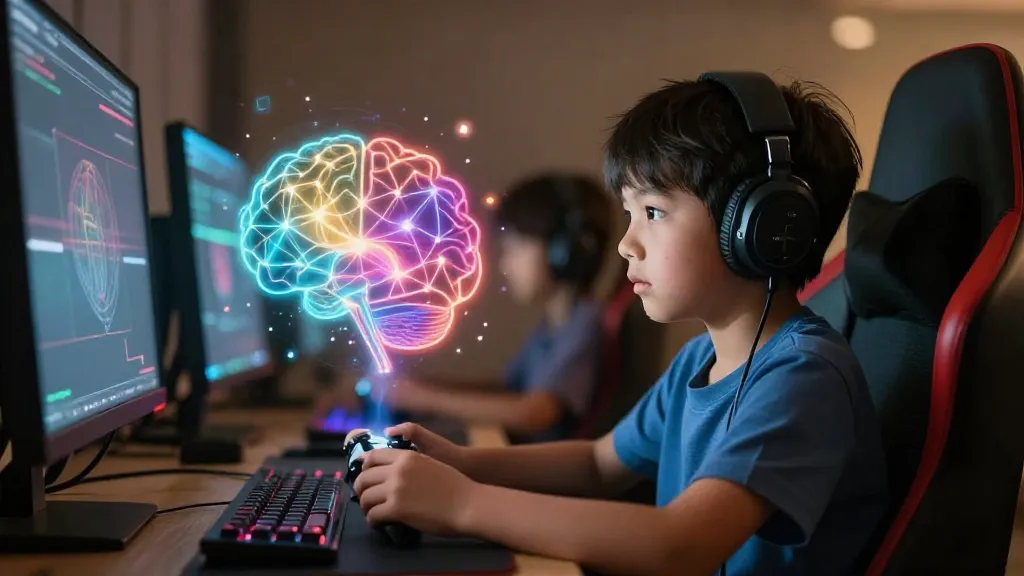
Parents worldwide have been waging a battle against their children’s gaming habits for decades, armed with warnings about “rotting brains” and “wasted time.” But what if they’ve been fighting the wrong enemy? Groundbreaking new research suggests that video games might actually be making kids smarter—not dumber.
The Science Behind Gaming and Intelligence
Recent research has uncovered a surprising connection between video game playing and cognitive development in children. According to findings reported by ScienceAlert, researchers have identified a positive correlation between increased gaming time and measurable improvements in children’s IQ scores.
This discovery represents a significant departure from the prevailing narrative that has dominated parenting conversations for years. Instead of the cognitive decline many parents fear, the data suggests something entirely different is happening in young gamers’ minds.
What the Research Reveals
The study challenges decades of conventional wisdom about screen time and brain development. While specific details about the research methodology remain to be fully explored, the core finding is clear: children who spend more time playing video games show notable intelligence gains compared to their non-gaming peers.
Key findings include:
- Positive correlation between gaming time and IQ improvements
- Measurable cognitive benefits that contradict traditional concerns
- Evidence suggesting gaming’s intellectual advantages may outweigh screen time worries
Beyond the “Gaming is Bad” Narrative
For years, parents have operated under the assumption that video games represent little more than mindless entertainment—or worse, a harmful distraction from “real” learning. This research suggests that assumption may have been fundamentally flawed.
The cognitive benefits observed in the study point to something more complex happening during gameplay. Video games often require players to solve problems, think strategically, process information quickly, and adapt to changing scenarios—all activities that could contribute to intellectual development.
What Parents Should Watch For
While this research offers encouraging news for gaming families, observers note that balance remains important. Reports suggest that the benefits don’t necessarily mean unlimited screen time is ideal, but rather that gaming shouldn’t be dismissed outright as cognitively worthless.
Parents might consider:
- Monitoring the types of games their children play
- Ensuring gaming doesn’t completely replace other activities
- Recognizing that moderate gaming might actually support learning
- Moving away from blanket restrictions based on outdated assumptions
The Bigger Picture
This research represents more than just good news for kids who love their controllers—it highlights how scientific understanding of technology’s impact on development continues to evolve. As researchers delve deeper into how digital experiences shape young minds, parents may need to reconsider many long-held beliefs about childhood and learning.
The findings also raise important questions about educational approaches and whether schools and families are missing opportunities to harness gaming’s cognitive benefits in more structured ways.
A New Chapter in the Gaming Debate
While one study doesn’t definitively settle decades of debate about gaming and child development, it does suggest that the conversation is far from over. Parents who have felt guilty about their children’s gaming habits might find some relief in these findings, while those who have completely banned video games might want to reconsider their approach.
The research reminds us that our understanding of how children learn and develop continues to evolve. What seemed certain yesterday—that video games are purely detrimental to young minds—may not be the whole story after all.
As more research emerges in this field, families might find themselves navigating a very different landscape when it comes to gaming and childhood development. The controller, it turns out, might be mightier than we thought.