
Frozen Methane Bubbles Create Otherworldly Ice Lake Portal—Here's the Science
These frozen methane bubbles look like a portal to another dimension—and the science behind them is just as wild. Bacteria beneath frozen lakes create stunning UFO-like formations that have captivated viewers worldwide.
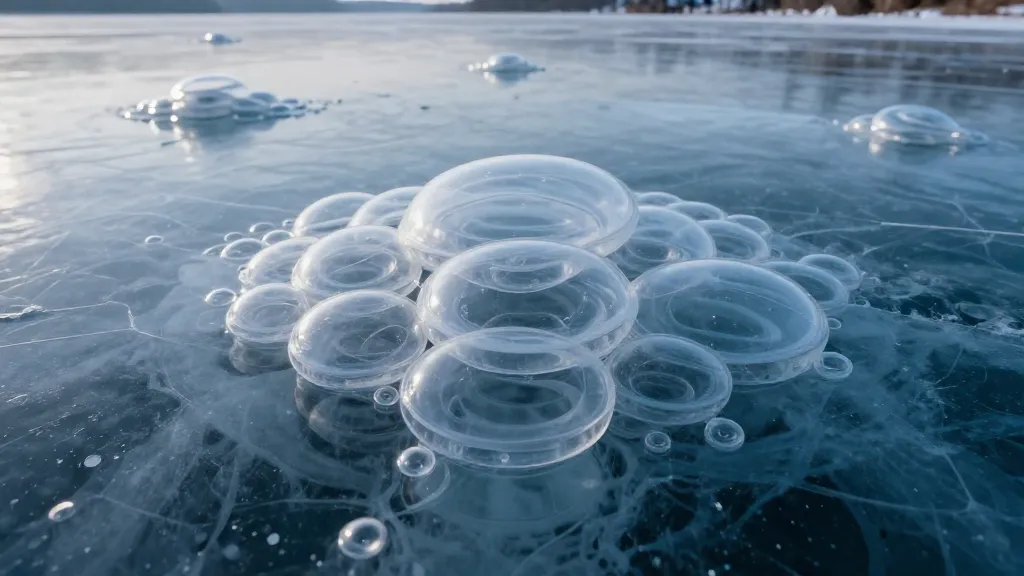
Picture this: you’re walking across a frozen lake when suddenly, beneath your feet, what looks like a fleet of translucent UFOs appears suspended in crystal-clear ice. These aren’t alien spacecraft—they’re one of nature’s most mesmerizing phenomena, and the science behind them is absolutely wild.
Nature’s Frozen Time Capsules
These ethereal formations are frozen methane bubbles, created by an intricate dance between bacteria, gas, and ice that transforms ordinary lakes into what appears to be portals to another dimension. The visual effect is so striking that viewers worldwide have been captivated by images of these otherworldly ice sculptures.
The phenomenon occurs when methane-producing bacteria deep beneath the lake’s surface release gas that begins its journey upward through the water column. But here’s where the magic happens: as winter temperatures plummet and the lake surface freezes, these rising gas bubbles get trapped mid-ascent, creating stunning stacked formations that look remarkably like hovering UFOs beneath the ice.
The Bacterial Engine Behind the Beauty
The real stars of this show are microscopic bacteria living in the lake’s sediment. These tiny organisms work tirelessly in the oxygen-free environment at the bottom of freshwater lakes, breaking down organic matter and releasing methane gas as a byproduct of their metabolic processes.
How the Process Unfolds
Reports suggest this phenomenon requires very specific conditions to create the most dramatic visual effects:
- High bacterial activity in lake sediments
- Rapid freezing that traps gas bubbles mid-rise
- Crystal-clear ice formation that allows perfect visibility
- Freshwater lakes with the right chemical composition
As the bacteria continue their work throughout the winter months, they keep producing methane that rises toward the surface. When new bubbles encounter the already-frozen formations above them, they can create layered, stacked structures that observers note look remarkably like a fleet of alien vessels frozen in time.
A Window Into Underwater Ecosystems
Beyond their visual appeal, these frozen methane bubbles offer scientists a unique window into the hidden world of lake ecosystems. The patterns and distribution of bubbles can reveal information about bacterial activity levels, sediment composition, and the overall health of aquatic environments.
The phenomenon also highlights the constant biological activity happening even in seemingly dormant winter lakes. While the surface may appear lifeless and frozen, these bubble formations serve as evidence of the thriving microbial communities working beneath the ice.
Environmental scientists have noted that lakes with particularly active bacterial communities tend to produce the most spectacular frozen bubble displays, creating natural art installations that change throughout the winter season as new gas continues to rise and freeze in place.
This remarkable intersection of biology, chemistry, and physics reminds us that some of nature’s most stunning spectacles happen when we least expect them—turning a simple winter lake into what genuinely appears to be a portal between worlds.