
2026 Will Be a Watershed Year for Science—Here's What to Watch
From AI agents making independent discoveries to the first crewed Moon mission in 50 years, 2026 promises breakthroughs that could reshape medicine, space exploration, and our understanding of Earth itself.
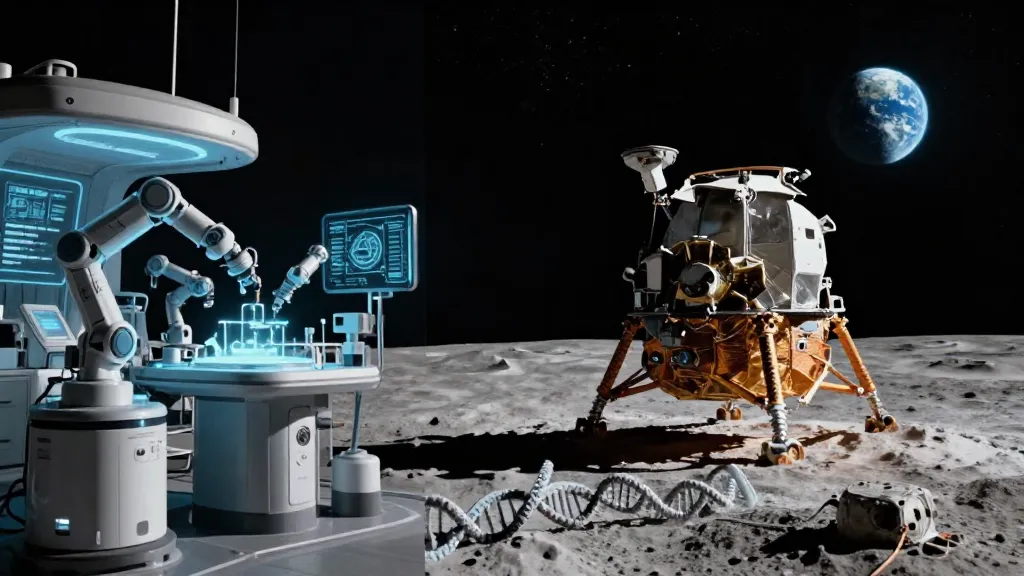
You’re about to witness a year where science doesn’t just advance—it transforms. 2026 is shaping up as a watershed moment when artificial intelligence makes its first truly independent scientific discoveries, when personalized gene therapies expand beyond experimental cases to help multiple children with rare disorders, and when humanity sets foot on the Moon for the first time in fifty years. If you’ve been waiting for the future to feel tangible, next year is when it arrives.
The Age of AI Scientists Begins
Artificial intelligence has been creeping into labs for years, but 2026 marks the moment when AI agents—systems that weave together multiple language models to execute complex, multi-step research processes—will likely make their first consequential scientific breakthroughs with minimal human oversight. This shift is significant. Unlike traditional AI tools that assist researchers, these agents will operate with growing autonomy, making decisions and discoveries on their own.
But there’s a catch. As AI systems take on more responsibility, their failures will become more visible too. Researchers have already flagged serious errors that AI agents are prone to, including data deletion and logical missteps. 2026 will test whether the benefits outweigh the risks.
Beyond the headline-grabbing language models, a quieter revolution is underway. Smaller, specialized AI models are emerging that don’t generate text but instead process mathematical representations of information. These systems train on limited datasets and focus on solving specific reasoning puzzles—and they’re already outperforming massive language models at logic tests. Expect these lean, focused systems to play a larger role in 2026 as researchers seek alternatives to the expensive, energy-intensive training of larger models.
Gene Therapy Enters a New Phase
The success of KJ Muldoon—a baby who received a personalized CRISPR therapy tailored to his specific genetic mutation—has opened a door that won’t close. Next year, two major clinical trials are expected to launch, expanding personalized gene therapy from a singular miracle case to multiple children with rare genetic disorders.
The team behind Muldoon’s treatment plans to seek FDA approval for a clinical trial in Philadelphia that will test gene-editing therapies in more children with rare metabolic disorders. These conditions are caused by variants in seven genes, all addressable with the same type of gene editing used in Muldoon’s case. Simultaneously, another team hopes to begin testing genetic therapies for rare immune system disorders.
This represents a critical inflection point: the shift from proof-of-concept to scalable treatment.
What to Watch For
- AI’s first major independent discovery — Will 2026 be the year machines crack a previously unsolved scientific problem?
- Gene therapy expansion — How many children will be enrolled in the new clinical trials, and what will the early results show?
- Artemis II launch — Will NASA successfully send four astronauts around the Moon?
- Cancer screening breakthrough — Can a blood test really detect 50 types of cancer before symptoms appear?
Cancer Detection at Scale
The United Kingdom is about to conduct one of the most ambitious clinical trials in modern medicine. More than 140,000 participants have been enrolled in a trial testing a single blood test that can detect around 50 types of cancer before symptoms even begin. The test works by identifying fragments of DNA that cancer cells release into the bloodstream, and crucially, it can pinpoint which tissue or organ the signal originates from.
If the results are promising—and early indicators suggest they might be—the UK health authorities plan to roll out this tool across hospitals. This isn’t just incremental progress; this is the kind of screening capability that could transform cancer outcomes across entire populations.
Meanwhile, regulatory changes are accelerating the pace of clinical research itself. In April, the UK will implement the biggest overhaul to clinical trial regulations in two decades, allowing researchers to seek ethics and regulatory approval in a single application. New rules also mandate that all medicine trials be publicly registered before recruiting participants and that results be published within 12 months of completion. The FDA is considering similar streamlining, potentially reducing the number of required trials for new drug approvals from two to one.
A Crowded Moon Once Again
For the first time since the 1970s, humans will return to the Moon in 2026. NASA’s Artemis II will carry four astronauts on a ten-day flight around the lunar surface aboard the Orion spacecraft. This isn’t a landing mission—not yet—but it’s the crucial stepping stone that will prepare NASA for subsequent crewed landings.
But the Moon won’t be quiet. China is launching Chang’e-7 in August, a probe equipped with a hopper spacecraft designed to handle the treacherous terrain near the lunar south pole. This region, strewn with rocks and craters, represents one of the most challenging landing zones on the Moon. If successful, Chang’e-7 will hunt for water ice and study moonquakes, adding to the knowledge base India began building when Chandrayaan-3 successfully touched down near the same region in 2023.
Eyes on Mars and the Sun
Japan is launching an ambitious mission to the moons of Mars. The Martian Moons eXploration (MMX) spacecraft will visit Phobos and Deimos, collect samples from Phobos’s surface, and return them to Earth in 2031—an achievement that has never been attempted before.
Meanwhile, the European Space Agency is deploying PLATO, a planet-hunting satellite equipped with 26 cameras, toward the end of 2026. PLATO will monitor over 200,000 bright stars and identify ‘Earth twin’ planets—worlds with temperatures that could support liquid water.
And India’s Aditya-L1 solar mission, already stationed 1.5 million kilometers from Earth, will observe the Sun during solar maximum, the peak of its roughly 11-year activity cycle. This timing is crucial. Solar maximum brings the highest rates of sunspots, flares, and solar storms, and the data Aditya-L1 collects will help researchers understand the Sun’s behavior during this turbulent phase.
Drilling Into Earth’s Mantle
Perhaps the most ambitious project of all is happening beneath the waves. China’s ocean-drilling ship, Meng Xiang, is expected to embark on its first scientific expedition in 2026. This vessel is designed to drill up to 11 kilometers through oceanic crust directly into Earth’s mantle and collect samples. The implications are profound: this work will help researchers understand how the ocean floor forms and what drives the tectonic activity that shapes our planet.
2026 isn’t just another year in science. It’s a threshold year where multiple breakthroughs converge—where the promise of AI in research becomes reality, where gene therapy expands beyond individual cases, where humans return to the Moon, and where we literally drill into the foundations of our planet. The year ahead will reshape what we know and what we can do.