
150 Shooting Stars Per Hour Tonight: The Geminid Meteor Shower Peak Is Here—Here's Exactly Where to Look
Up to 150 Geminid meteors will light up the night sky on Dec. 13-14 as Earth passes through debris from comet 3200 Phaethon. Here's the expert guide to catching the year's best meteor shower with your naked eye.
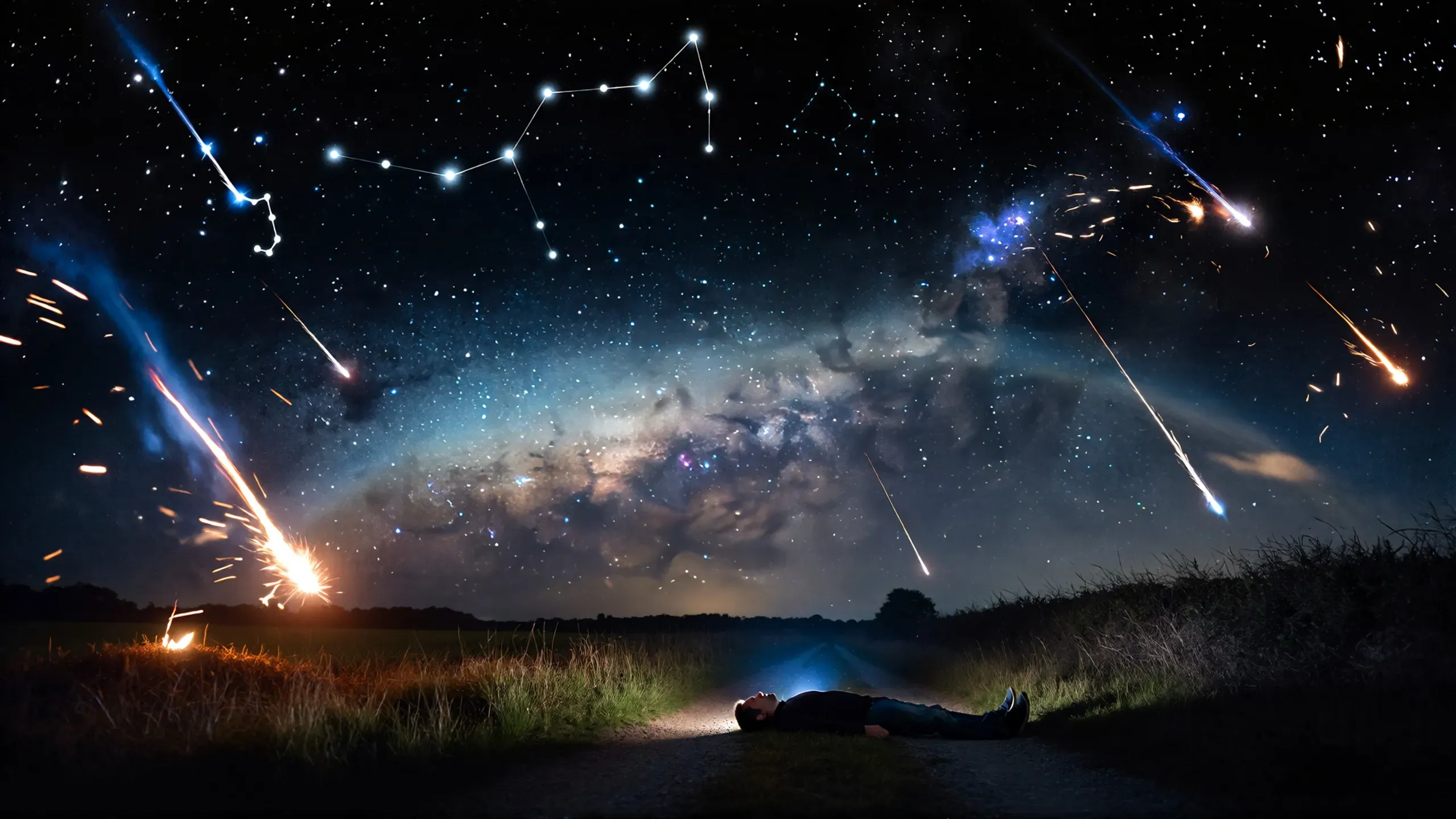
Tonight and into tomorrow morning, our planet will pass directly through a cosmic minefield of dust and rock left behind by comet 3200 Phaethon. The result? One of the most spectacular light shows the night sky has to offer, visible from your backyard with nothing more than your eyes.
The Geminid meteor shower peaks on December 13-14, and according to the American Meteor Society, up to 150 shooting stars could streak across the sky each hour at maximum. That’s not a typo—roughly one meteor every 24 seconds if conditions are perfect. This is the year’s most reliable and dramatic meteor shower, and unlike many astronomical events, you don’t need special equipment to witness it.
How Shooting Stars Actually Form
When particles no larger than grains of sand slam into Earth’s upper atmosphere at incredible speeds, they ignite from friction and burn up spectacularly. Larger fragments—sometimes exceeding 3 feet across—create what astronomers call “fireballs,” brilliant streaks that can actually outshine the planet Venus itself.
The Geminid meteors originate from a radiant point near the bright star Castor in the constellation Gemini. Think of it as the vanishing point where all the shooting stars appear to converge—it’s the key to knowing where to look.
The Best Times to Watch (And Why Timing Matters)
Your viewing experience will dramatically improve as the night progresses:
- Just after sunset: A few Geminids will be visible, but here’s the secret—these early meteors skim the atmosphere rather than penetrating deeply, so they last several seconds instead of a fraction of a second. Worth watching for this reason alone.
- After 10 p.m. local time: Expect up to 30 meteors per hour as the radiant climbs higher in the sky.
- Around 2 a.m. local time: This is the golden hour. Meteor expert Robert Lunsford notes that maximum activity arrives near 2 a.m., when you could see up to 60 Geminids from dark rural locations.
- After 2 a.m.: A waning crescent moon will rise, but don’t pack it in—you can still see plenty of shooting stars by keeping the moon out of your direct line of sight.
Where to Look: A Simple Guide
Finding the radiant is easier than you think:
- Use a smartphone astronomy app to locate Castor in Gemini, or look for the bright planet Jupiter, which shines in the same constellation throughout December.
- Look 30-40 degrees above Castor for the longest meteor trails. If you don’t have a protractor handy, use this trick: your clenched fist at arm’s length spans about 10 degrees of sky, so aim for three to four fist widths above the star.
- Don’t stare directly at the radiant—meteors can appear anywhere in the sky, so scan the general area rather than fixating on one spot.
What to Watch For
- Fireballs: Brilliant, slow-moving streaks that outshine planets
- Long-duration meteors: The early-night meteors that last several seconds due to shallow atmospheric entry
- Colorful streaks: Some Geminids display subtle colors as different elements burn up
- Rapid sequences: During peak hours, you might catch multiple meteors within minutes
The Practical Setup for Maximum Comfort
Meteor hunting isn’t just about showing up—it’s about staying comfortable enough to keep watching:
- Allow 30 minutes for your eyes to adjust to darkness before expecting to see many meteors
- Use a red flashlight if you need light; it preserves your night vision far better than white light
- Bring a reclining chair, sleeping bag, or blanket so you can lie back and observe large sections of sky without straining your neck
- Dress warmly and bring a hot drink—December nights are cold, and discomfort will cut your viewing session short
- Find a dark location away from city lights if possible; rural areas will show far more meteors than urban zones
Why the Geminids Are Special
Unlike many meteor showers that fade in and out with inconsistent intensity, the Geminids reliably deliver year after year. They’re also one of the few showers that produce significant activity relatively early in the evening, making them accessible even for those who can’t stay up until dawn. And unlike solar eclipses or planetary alignments, you need absolutely zero equipment beyond your own eyeballs.
The Bottom Line
Tonight offers a rare opportunity to witness genuine cosmic drama. The particles burning up above you tonight have been traveling through space for decades, waiting for this exact moment when Earth’s orbit intersects with their path. Set aside an hour or two, find a dark spot, bundle up, and prepare for one of nature’s most reliable pyrotechnics displays.
The show begins as soon as darkness falls—but the best show starts around 2 a.m. Whether you’re an astronomy enthusiast or just someone looking for a genuinely awe-inspiring experience, the Geminid meteor shower delivers.