
Brainless Parasites Are Hacking Insect Minds Like Malware
Horsehair worms have no brain, mouth, or digestive system—yet they can hijack cricket brains using stolen genes. This biological horror story reveals nature's most disturbing mind-control technique that sounds like science fiction but is terrifyingly real.
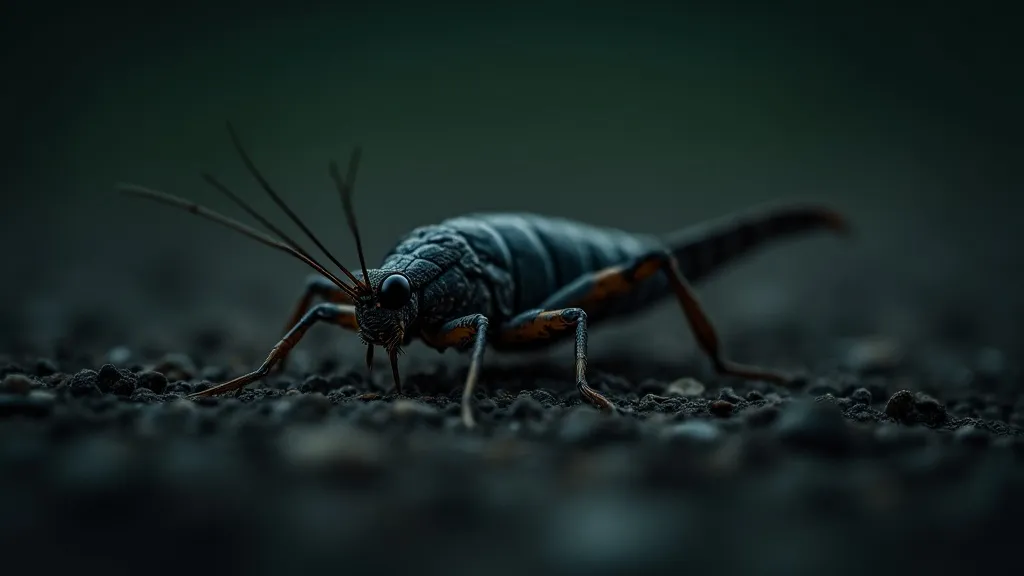
Imagine a creature with literally zero brain cells, no mouth, no digestive system, and no ability to process food. Now imagine that same creature successfully hacking into the neural networks of other animals with the precision of an elite cybercriminal. Welcome to the utterly bizarre world of horsehair worms—nature’s proof that you don’t need intelligence to be terrifyingly effective.
The Parasite That’s Basically a String With Ambition
Horsehair worms are biological minimalists taken to the extreme. For months, these parasites live inside crickets and grasshoppers, floating through their hosts’ bloodstream like they’re on an extended vacation. Without a mouth or gut, they absorb nutrients directly through their skin—a biological osmosis sponge that redefines what it means to be a freeloader.
But don’t let their simplicity fool you. What these worms lack in anatomy, they more than make up for in sheer evolutionary audacity.
The Mind-Control Method That Breaks Biology
Here’s where things get genuinely disturbing. When a horsehair worm is ready to reproduce, it faces a critical problem: it needs to get back into water, but its host lives on land and has zero natural inclination to drown itself.
The worm’s solution? Complete neural hijacking.
The parasite manipulates the cricket’s light-interpreting organs, rewiring how the host perceives its environment. Specifically, it makes the cricket become obsessed with horizontally polarized light—the exact type of light that reflects off water surfaces.
The result? The cricket sees a puddle and its reprogrammed brain screams “I MUST JUMP INTO THAT IMMEDIATELY.” And it does. Suicide by biological reprogramming.
The Most Disturbing Discovery: Genetic Theft
Scientists recently uncovered how a brainless tube pulls off this sophisticated neural manipulation, and the answer is somehow even more unsettling than the mind control itself.
The worm is stealing genes.
Not metaphorically. Through a process called horizontal gene transfer, horsehair worms literally take genetic code directly from their host’s genome. They then use those stolen genes to manufacture the exact proteins needed to manipulate that specific species’ brain chemistry.
Think of it like this: it’s as if a USB drive could hack your computer by copying your own source code and weaponizing it against you. Except the USB drive has no brain and developed this technique through millions of years of evolution.
The Horror Doesn’t End There
Because nature apparently takes creative inspiration from horror writers, horsehair worms have one more trick up their metaphorical sleeve.
If a bird eats the infected cricket, the worm can survive digestion, wiggle out of the predator’s system, and simply continue with its life cycle. The cricket dies. The bird has a weird afternoon. The worm goes on to reproduce.
It’s the parasitic equivalent of having a backup plan, an escape pod, and plot armor all rolled into one.
They’re Everywhere (Yes, Really)
There are over 300 species of horsehair worms, with some growing up to six feet long. You’ve almost certainly seen them—they’re those strange, impossibly knotted string-like creatures in swimming pools, water troughs, and random puddles in your driveway that look like someone’s trying to debug biological spaghetti code.
Most people assume they’re weird aquatic plants or random debris. In reality, they’re sophisticated biological hackers completing their life cycle.
The Question Nobody Wants Answered
And yes, before you spiral into existential dread, there are documented cases of horsehair worms in humans. They’re rare, accidental, and extremely uncomfortable to think about. The good news? Unlike with insect hosts, they can’t complete their life cycle in humans and don’t perform their mind-control routine on us.
Small mercies.
Nature’s Zero-Day Exploit
We live in a world where brainless parasites are stealing genetic source code and recompiling their hosts’ neurological firmware, and most people just think they’re weird pool noodles.
Horsehair worms represent one of nature’s most sophisticated exploits—a reminder that complexity isn’t always necessary for effective manipulation. Through millions of years of evolution, these simple organisms have developed techniques that would make cybersecurity experts jealous: stealing code, exploiting vulnerabilities, and manipulating systems from the inside out.
Nature’s running a zero-day exploit, and we’re all just raw-dogging reality without antivirus software.
The next time you see a tangled mass of what looks like animated fishing line in a puddle, remember: you’re looking at one of evolution’s most successful hackers. No brain required.