
China's $83B Gold Discovery: Engineering Marvel 3km Underground
Chinese geologists have discovered what might be the world's largest gold deposit, buried 3 kilometers underground in Hunan province. Learn how cutting-edge technology made this remarkable engineering feat possible and what it means for the global gold market.
Imagine finding a single gold coin in a football stadium filled with sand. Now multiply that challenge by a thousand, and you’ll begin to understand the monumental achievement recently accomplished by Chinese geologists. Using technology that pushes the boundaries of modern engineering, they’ve discovered what may be the world’s largest gold deposit ever found—buried an astonishing three kilometers beneath the Earth’s surface.
A Supergiant Discovery
This isn’t just another gold mine. Experts have classified this find as a “supergiant” deposit—containing an estimated 1,100 tons of gold ore beneath an existing mine in China’s Hunan province. With current market values, this treasure trove could be worth approximately $83 billion.
To grasp the depth of this discovery, consider this: if you stood at the top of the Empire State Building and drilled straight down, you would need to stack six more Empire State Buildings beneath it to reach the depth where this gold sits—a staggering 9,800 feet underground.
The Technology Behind Finding Invisible Gold
How does one detect something as small as gold particles three kilometers beneath the Earth’s surface? The answer lies in a remarkable convergence of technologies working in perfect harmony:
Advanced Drilling Systems
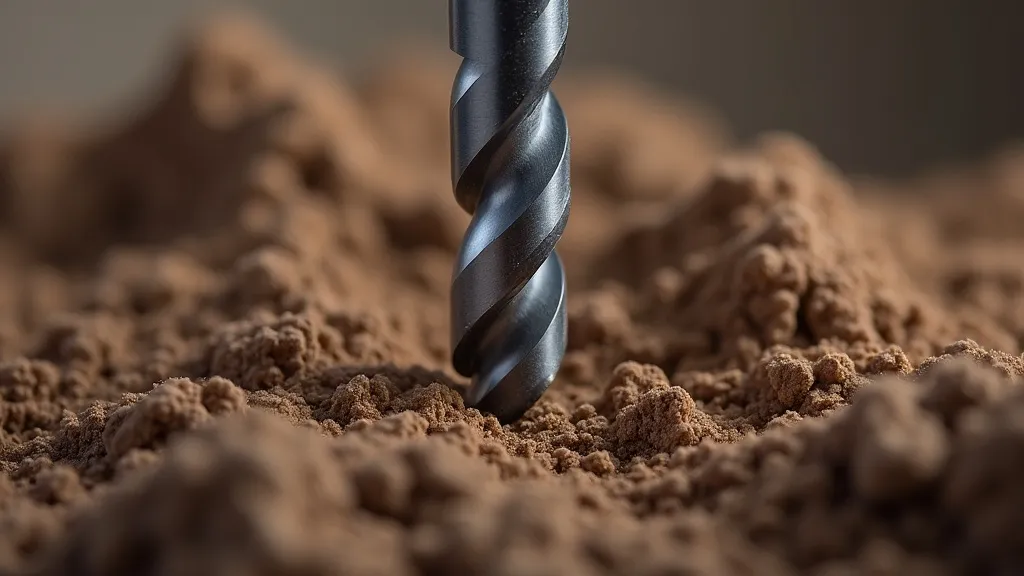
Engineers didn’t simply point a massive drill bit downward and hope for the best. They employed directional drilling technology equipped with diamond-tipped bits capable of changing direction mid-bore. This precision drilling was guided by:
- Real-time seismic imaging mapping density variations in subsurface rock
- Continuous core sampling bringing up intact cylinders of rock from extreme depths
- Downhole telemetry systems transmitting data from the drill bit to surface computers
Microscopic Detection Methods
Once core samples reached the surface, they underwent analysis using technologies so sensitive they can detect gold at the parts-per-billion level:
- Mass spectrometry identifying elemental compositions
- Neutron activation analysis detecting trace amounts of precious metals
- X-ray fluorescence providing immediate elemental screening
What made geologists particularly excited was something rarely seen in modern mining—visible gold particles in the rock cores, suggesting an unusually rich deposit.
Extraordinary Quality That Defies Mining Norms
The quality of this find is perhaps even more remarkable than its size. The deposit contains approximately 138 grams of gold per metric ton of ore—an extraordinarily high concentration in an industry where profitable operations typically run on just 1-4 grams per ton.
This isn’t just lucky guesswork. The full extent of the deposit was mapped using 3D modeling that employed advanced geostatistical algorithms. These computational models processed data from hundreds of drill points to extrapolate the likely extent and composition of the entire ore body with remarkable precision.
Global Market Implications
If these models prove accurate, this single mine would exceed South Africa’s South Deep mine (1,025 tons) as the world’s largest gold deposit. The discovery could fundamentally reshape the global gold market.
China, despite being the world’s largest producer at approximately 10% of global output, currently consumes about three times more gold than it mines. This new deposit could significantly reduce China’s dependence on imported gold and potentially affect global prices.
The market has already responded to the news, with gold prices climbing to $2,700 per ounce—and this may be just the beginning, as additional drilling around the site’s periphery continues to yield promising results.
Engineering Challenges Ahead
Discovering gold is one thing; extracting it from nearly 10,000 feet underground is quite another. The engineering challenges ahead are as monumental as the discovery itself:
- Extreme pressure and temperature requiring specialized equipment
- Water inrush risks that demand sophisticated drainage systems
- Rock burst dangers necessitating advanced support structures
- Ventilation challenges to maintain breathable air at these depths
- Equipment reliability under conditions that would quickly destroy standard mining tools
Mining engineers will need to design custom solutions that can operate reliably under these harsh conditions while protecting worker safety.
More Than Just Treasure
This discovery represents far more than just monetary value—it’s a testament to how modern geological science, advanced drilling technology, and computational modeling have transformed our ability to detect resources that would have remained completely hidden just decades ago.
It demonstrates how the invisible can become visible through human ingenuity and technological advancement. Just as astronomers can now detect planets orbiting distant stars, geologists can now “see” gold deposits buried kilometers beneath our feet.
Looking Forward
As extraction planning begins, the world watches with interest. This discovery may prove to be just the beginning of a new era in deep mining. The technologies pioneered here could potentially unlock other deeply buried resources worldwide, changing our understanding of what’s accessible beneath the Earth’s surface.
One thing is certain: finding a gold deposit three kilometers underground is like locating a needle in a Manhattan-sized haystack. That Chinese geologists have accomplished this feat is a remarkable testament to modern engineering and scientific achievement—and a powerful reminder that even in our age of space exploration and quantum computing, there are still astonishing discoveries to be made right beneath our feet.
What hidden treasures might lie beneath other parts of our planet, waiting for the right technology to reveal them? Only time—and advancing engineering capabilities—will tell.