
Decoding Cosmic Secrets: How Spectroscopy Revealed 3I/ATLAS's Origins
Discover how scientists use spectroscopy to read the chemical fingerprint of interstellar comet 3I/ATLAS. Learn about this powerful technique that unlocked the comet's 10-billion-year journey through space and try a simple spectroscopy experiment at home.
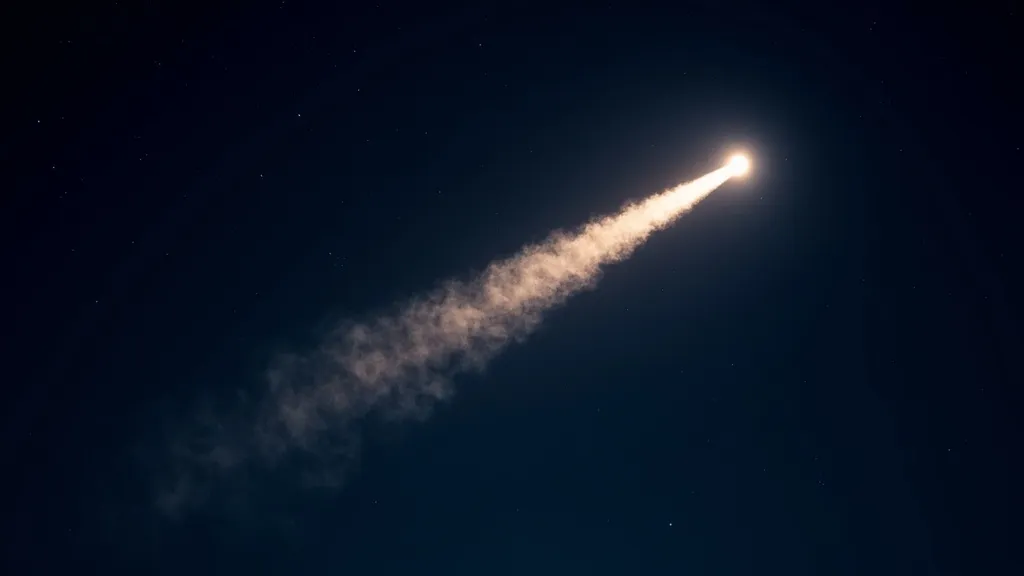
Every photon that travels across the universe carries a story—a tale of its cosmic origins, the elements it encountered, and the journey it took to reach us. But how do scientists decode these light-based messages from distant celestial bodies? The answer lies in a powerful technique called spectroscopy, which recently helped unlock the mysteries of interstellar comet 3I/ATLAS.
The Rainbow Bridge to Cosmic Understanding
Have you ever held a prism up to sunlight and watched it split into a rainbow of colors? Or noticed how a CD reflects light in a spectrum of vibrant hues? That simple phenomenon forms the foundation of one of astronomy’s most powerful tools—spectroscopy.
At its core, spectroscopy is the study of how matter interacts with light. When light passes through or reflects off an object in space, certain wavelengths get absorbed or emitted, creating a unique pattern—essentially a chemical fingerprint. Scientists analyze these patterns to determine what distant celestial objects are made of, all without ever having to collect a physical sample.
How Scientists Read 3I/ATLAS’s Light
When the interstellar comet 3I/ATLAS made its journey through our solar system, astronomers at the Keck telescope captured its faint light and put it under spectroscopic analysis. Here’s how they decoded its secrets:
-
Light Capture: First, the massive Keck telescope collected the dim light reflected from the comet
-
Spectrum Creation: A specialized instrument called a spectrograph split this light into its component wavelengths—creating a detailed rainbow pattern
-
Pattern Analysis: Scientists examined dark lines in the spectrum—places where specific elements absorbed light—creating a distinctive pattern
-
Chemical Identification: This analysis revealed the presence of nickel and cyanide in the comet’s coma (the cloud of gas and dust surrounding the nucleus)
-
Distribution Mapping: Remarkably, they determined the nickel extended only 594km from the nucleus, while cyanide spread much further to 841km
What Makes 3I/ATLAS Special?
The spectroscopic analysis revealed something fascinating: 3I/ATLAS contains unusually high levels of nickel compared to comets originating in our solar system. This chemical difference is a crucial clue that helps confirm its interstellar origins.
Another intriguing feature is the comet’s rare “anti-solar tail” pointing toward the Sun—not away from it as most comet tails do. While this might sound like something from science fiction, it’s actually a natural phenomenon. It occurs when large dust particles are ejected slowly and don’t get pushed away by solar radiation pressure.
Pro Tip for Aspiring Astronomers
When examining spectral data, don’t just look for dark absorption lines—bright emission lines are equally important! Elements emit specific colors when excited, adding another dimension to cosmic detective work.
A Cosmic Time Capsule
By carefully reading this interstellar light, scientists made an astonishing determination: 3I/ATLAS likely traveled alone through interstellar space for up to 10 billion years. That makes it one of the oldest objects ever observed passing through our solar system—a true cosmic time capsule carrying chemical secrets from another star system.
This cosmic wanderer formed around another star, was ejected from its home system, and drifted through the void of space for billions of years before briefly passing through our neighborhood, giving scientists a rare glimpse at matter from beyond our solar system.
Try Your Own Spectroscopy at Home
While you might not have a multi-million dollar telescope in your backyard, you can still experience the basics of spectroscopy with a simple experiment:
- Find a prism or old CD/DVD
- Hold it up to different light sources (sunlight, LED lights, fluorescent bulbs)
- Observe how different light sources create slightly different rainbow patterns
- Take photos of your results
These different patterns occur because various light sources emit different wavelengths of light—just as different elements in space create unique spectral signatures.
The Cosmic Detective’s Toolkit
Spectroscopy represents one of humanity’s most powerful tools for understanding the universe without physically traveling to distant objects. From determining the composition of stars billions of light-years away to analyzing interstellar visitors like 3I/ATLAS, this technique allows us to read the stories written in starlight.
The next time you look up at the night sky, remember that each point of light carries detailed information about its chemical makeup, temperature, movement, and history—if you just know how to read the light.
Have you tried any simple spectroscopy experiments at home? Share your experiences in the comments below and join the community of cosmic detectives unlocking the secrets of the universe, one wavelength at a time!