
Interstellar Detective: The Bizarre Secrets of Comet 3I/ATLAS
Astronomers discovered a strange interstellar comet with impossible chemistry and a backward tail. Learn how this alien visitor is challenging our understanding of the cosmos.
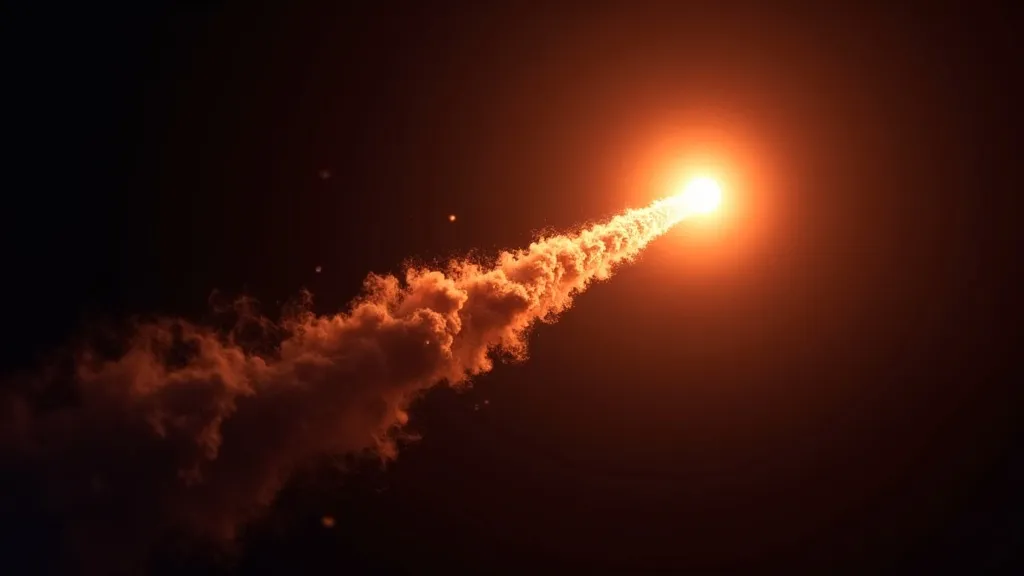
Imagine traveling alone through the cosmic void for ten billion years before anyone noticed you. That’s the story of 3I/ATLAS, an interstellar visitor currently racing through our solar system and bringing with it chemical mysteries that are forcing astronomers to rethink what we know about the universe beyond our cosmic neighborhood.
The Fastest Stranger in Our Solar System
In 2025, the routine sky survey of the ATLAS telescope system revealed something extraordinary – the fastest comet ever observed speeding through our solar system. But it wasn’t just the comet’s velocity that caught astronomers’ attention. The object’s orbital eccentricity – a measurement exceeding 6 – confirmed what they suspected: this celestial traveler wasn’t from our solar system.
3I/ATLAS became the third confirmed interstellar object ever discovered, a rare messenger from another star system that gives scientists a unique opportunity to study material that formed in a completely different part of our galaxy.
A Tail That Defies the Laws of Physics
When astronomers pointed the powerful Keck telescope at this cosmic wanderer, they discovered something that shouldn’t exist – a rare “anti-solar tail” pointing toward the Sun, not away from it.
This is bizarre because cometary tails typically stream away from the Sun as solar radiation pushes dust and gas outward. Yet 3I/ATLAS breaks this fundamental pattern. Unlike some anti-solar tails that are merely optical illusions from Earth’s perspective, this one appears to be a genuine physical phenomenon.
The leading theory? Larger dust particles ejected from the comet’s sun-facing side at such slow speeds that they don’t get pushed back by solar radiation pressure. Instead, they continue on a trajectory that creates this unusual sunward-pointing tail – a rare sight that has only been documented in a handful of comets.
Impossible Chemistry: The Nickel Conundrum
The backward tail isn’t even the most perplexing aspect of 3I/ATLAS. When scientists analyzed the light spectrum from the comet, they found something that defies explanation – significant amounts of gaseous nickel in its coma, the cloud surrounding the nucleus.
Here’s why astronomers are scratching their heads: at the frigid temperatures where comets exist, nickel should remain locked in solid form. It simply shouldn’t be vaporizing. The comet is too distant from the Sun and too cold for nickel to become gaseous through normal thermal processes.
Yet there it is, concentrated within the innermost 2,000 kilometers of the comet’s coma.
Even more intriguing – the ratio of nickel compared to other elements is dramatically higher than what we see in comets native to our solar system. This chemical signature suggests our visitor formed in an environment with fundamentally different chemistry than the one that birthed our familiar comets.
Solving the Chemical Mystery
To explain this nickel anomaly, scientists are exploring unconventional mechanisms. One compelling hypothesis suggests the nickel might be released through a completely different process – potentially first attaching to complex organic molecules called polycyclic aromatic hydrocarbons (PAHs) before being broken apart by solar radiation.
This would represent a chemical pathway previously unobserved in cometary studies and could reveal new insights about how elements interact in the extreme environments of deep space.
A Cosmic Time Capsule
What makes these discoveries so valuable is that 3I/ATLAS serves as a pristine sample from another star system, potentially preserving chemical conditions from an earlier era of the universe.
By studying objects like this, astronomers essentially gain access to material from around other stars without having to travel there – an interstellar laboratory delivered right to our cosmic doorstep.
“Each interstellar object is like a message in a bottle,” as one astronomer described it, “carrying chemical signatures and physical properties that tell us about distant places we may never visit.”
The Future of Interstellar Astronomy
This is just the beginning of our interstellar investigations. The soon-to-be-operational Vera C. Rubin Telescope, with its unprecedented wide-field survey capabilities, will dramatically improve our ability to spot more interstellar visitors before they zip past us.
This new generation of telescopes will give astronomers an unprecedented opportunity to study the chemistry and composition of material from beyond our solar system, potentially revealing patterns that could tell us about the diversity of environments around other stars.
Conclusion: Cosmic Detectives
3I/ATLAS reminds us that space exploration isn’t just about destinations – it’s about the messengers that occasionally grace our cosmic neighborhood. By decoding these travelers from afar, we’re learning not just about strange visitors, but about the incredible diversity of environments that exist around other stars.
As we continue to detect and analyze these interstellar emissaries, we may finally begin to understand just how unique – or perhaps how common – the chemistry of our own solar system truly is within the vast expanse of our galaxy.
The universe has sent us a message. Now it’s up to our cosmic detectives to decode it.