
Mind-Controlling Parasites Are Holding Ecosystems Together
In Japanese mountain streams, a parasitic worm hijacks cricket brains to provide 60% of annual calories for an entire fish population. This horror-movie scenario isn't disrupting nature—it's the glue holding it together.
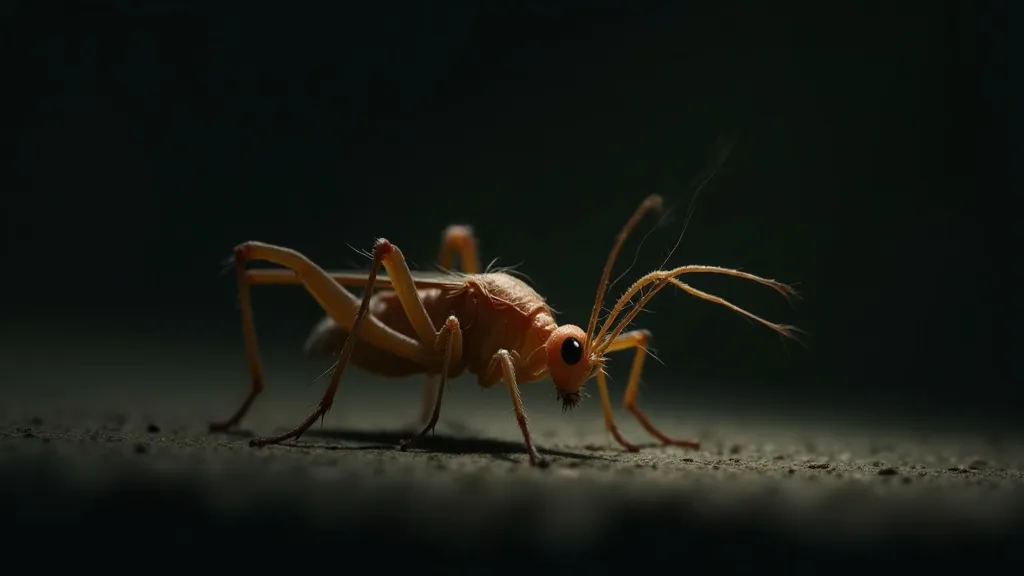
Imagine discovering that more than half of what keeps an entire animal population alive comes from mind-controlled insects. Not in a science fiction novel, but in a mountain stream in Japan, happening right now.
Researchers studying the Kirikuchi char noticed something that defied explanation: these fish were thriving on a steady diet of crickets and grasshoppers. The problem? These insects don’t naturally hang out near water, let alone voluntarily jump in and drown themselves.
Except they do. And the reason why will fundamentally change how you think about parasites.
The Parasite That Rewrites Reality
The culprit behind this biological manipulation is the horsehair worm—a creature that has perfected the art of neurological hijacking over 100 million years of evolution.
Here’s how this sinister process unfolds:
The Infection: Horsehair worm larvae get consumed by a cricket during its normal feeding. Once inside, the nightmare begins.
The Growth Phase: For months, the worm grows inside the cricket’s body cavity, absorbing nutrients directly through its skin like some kind of internal parasite vine.
The Hijacking: When the worm reaches maturity and needs to return to water to reproduce, it doesn’t just wait for its host to wander near a stream. It takes control.
Hacking the Cricket’s Brain
The mechanism behind this mind control is terrifyingly precise. The worm doesn’t crudely puppet the cricket’s movements—it’s far more sophisticated than that.
It specifically hijacks the organs that interpret polarized light. Water surfaces reflect horizontal polarization in a distinctive pattern. By rewiring how the cricket’s brain processes this visual information, the worm makes water surfaces absolutely irresistible to its host.
The result? Infected crickets become twenty times more likely to enter water than their healthy counterparts. They can’t resist. Their perception of reality has been fundamentally altered.
The cricket walks into the stream, drowns, and the worm bursts out to swim away and mate. The char get an easy meal. Circle of life, right?
Not quite. It’s much stranger than that.
The Accidental Ecosystem Engineers
What makes this story remarkable isn’t just the horror-movie mind control—it’s the scale of the impact.
Those infected crickets jumping into water aren’t just providing a snack for fish. They’re functioning as energy bridges, converting terrestrial calories into aquatic calories. And they’re so effective at this that they constitute 60% of the annual caloric intake for the char population.
Read that again: More than half of what keeps an entire predator population alive comes from parasitized insects.
What Happens When You Remove the Parasite?
Researchers did something clever—they modeled what would happen if you removed the horsehair worm from this ecosystem. The results were shocking.
Without their primary food source, the char would need to feed more heavily on native aquatic invertebrates:
- Mayfly populations would crash
- Caddisfly larvae would disappear
- Ecological pressure would cascade through the entire community
The parasite that seems like it should be disrupting the ecosystem is actually holding it together.
The Scale of What We Don’t Know
Here’s the truly unsettling part: we only discovered this because someone bothered to actually count and measure energy flow in this particular stream.
Scientists estimate there are approximately 2,000 species of horsehair worms worldwide. We’ve documented only 351 of them.
How many other ecosystems are being secretly orchestrated by parasites we haven’t studied yet? In most riparian systems around the world, we have absolutely no idea if this same dynamic is playing out.
100 Million Years of Perfection
Horsehair worms aren’t newcomers to the manipulation game. They’ve been doing this for at least 100 million years—we’ve found them fossilized in Cretaceous amber, already in their modern form, already perfected.
But they’re not resting on their evolutionary laurels.
Recent genomic analysis has revealed something that sounds like it belongs in a horror film: these worms have been stealing genes directly from their hosts through horizontal gene transfer. They’re taking genetic instructions from insect brains and incorporating them into their own DNA to get even better at manipulation.
They’re not just passengers in the ecosystem. They’re architects.
Rethinking Parasites
We tend to think of parasites as purely destructive—diseases to be eradicated, problems to be solved. And in many cases, especially when they affect human health, that’s absolutely correct.
But this horsehair worm story forces us to reconsider the role of parasites in nature. Some parasites aren’t disrupting ecosystems—they’re fundamental structural components of them.
Remove the parasite, and you don’t restore balance. You trigger collapse.
The Bigger Picture
This discovery raises profound questions about conservation and ecosystem management:
- How many species are we trying to save while ignoring the parasites that keep them fed?
- How many “pest control” efforts might be inadvertently destabilizing food webs?
- What happens to ecosystems when we eliminate parasites without understanding their full ecological role?
The natural world is vastly more interconnected—and more strange—than we typically imagine. Energy flows through ecosystems in ways that defy our intuitions about predator and prey, about healthy and sick, about normal and manipulated.
Conclusion: Nature’s Hidden Architects
In a Japanese mountain stream, crickets with rewritten brains jump into water they would normally avoid, feeding fish that would otherwise starve, stabilizing an ecosystem that would otherwise collapse.
And this might be happening in thousands of places we haven’t looked yet.
The horsehair worm isn’t an aberration—it’s a glimpse into the hidden machinery of nature. A reminder that the natural world operates on principles far more complex and counterintuitive than we’ve barely begun to understand.
Sometimes the villain of the horror story turns out to be the hero all along. We just needed to count carefully enough to notice.