
Parasites Control Ecosystems: The Horsehair Worm Mystery
A mind-controlling parasite forces crickets to drown themselves, feeding 60% of entire fish populations. Discover how horsehair worms reshape ecosystems as invisible architects—and why removing them causes ecological collapse.
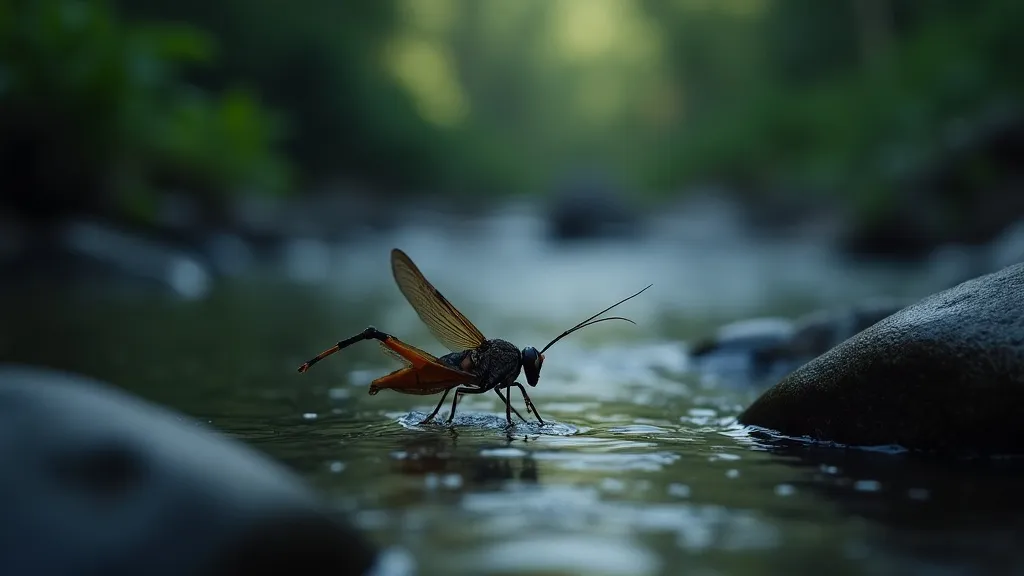
Imagine a world where a single species of parasite doesn’t just infect its host—it orchestrates mass suicides that feed an entire fish population. This isn’t science fiction. This is the remarkable reality of horsehair worms, parasites so influential they literally reshape the food webs of mountain streams.
The Cricket Suicide Epidemic
Horsehair worms (Nematomorpha) are masters of manipulation. These thread-like parasites, which can grow up to 2 meters long but remain just 1-3 millimeters in diameter, spend their larval stage inside crickets, beetles, and other insects. But what happens when they’re ready to reproduce is where things get truly disturbing.
The worm doesn’t simply exit its host. It rewrites the cricket’s brain.
Through sophisticated chemical manipulation, these parasites make water—normally a dangerous environment for terrestrial insects—irresistible. Infected crickets seek out streams, ponds, and puddles with singular determination, then willingly drown themselves. The worm then emerges from the deceased host to begin its aquatic reproductive phase.
The Numbers That Change Everything
In Japanese mountain streams, researchers made a startling discovery that transformed our understanding of ecosystem dynamics:
- Infected crickets are 20 times more likely to enter water than their healthy counterparts
- These orchestrated drownings provide 60% of the annual caloric intake for entire populations of Kirikuchi char fish
- A conservative estimate suggests approximately 2,000 freshwater horsehair worm species exist worldwide—each potentially exerting similar ecological influence
One parasite species. Three-fifths of a fish population’s energy budget.
This isn’t parasitism as we typically understand it. This is ecosystem engineering on a profound scale.
The Neuroscience of Mind Control
How does a worm hijack a cricket’s brain? Through terrifyingly precise mechanisms:
Protein Manipulation
The parasite manufactures specific proteins that target light-processing neurons in the host’s brain. Infected crickets become hypersensitive to horizontally polarized light—the distinctive pattern created by water surfaces.
Horizontal Gene Transfer
Researchers have discovered that many genes horsehair worms use for host manipulation were actually stolen from their hosts’ genomes through horizontal gene transfer. The parasite literally uses the cricket’s own genetic tools against it.
Behavioral Rewiring
The infection doesn’t cause random confusion. It creates targeted behavioral changes: infected insects first display erratic movement that eventually brings them near water, then experience a compulsive urge to enter it.
The Predator That Couldn’t Kill It
Here’s where horsehair worms break the rules of parasitology entirely.
When predators eat infected crickets, the worm doesn’t die. Species like Paragordius tricuspidatus can survive digestion, then wiggle out of the predator that consumed their host. They’ve solved what should be an evolutionary dead-end, turning predation into just another dispersal mechanism.
The Cascade Effect: Remove the Parasite, Collapse the System
What happens when horsehair worms disappear from an ecosystem? The consequences ripple outward:
- Char fish lose 60% of their food source almost immediately
- Fish shift hunting strategies to prey more heavily on aquatic invertebrates
- Populations of mayflies, caddisflies, and other aquatic insects experience unprecedented predation pressure
- The entire riparian community structure fundamentally reorganizes
This isn’t a minor adjustment. This is ecological upheaval triggered by the absence of an organism most people have never heard of.
Parasites as Ecosystem Architects
The horsehair worm story forces us to reconsider parasites’ role in nature. They’re not simply disease-causing passengers—they’re primary engineers of ecosystem structure and energy flow.
Consider the implications:
- Energy transfer: Parasites move calories from terrestrial to aquatic environments, bridging ecosystems
- Population control: They regulate host populations, preventing overcrowding
- Behavioral ecology: They influence predator-prey dynamics by altering host behavior
- Community structure: Their presence or absence determines which species thrive
The Ones We Don’t See
Horsehair worms are conspicuous because they’re large enough to see and their effects are dramatic enough to measure. But they represent just one of countless parasitic species shaping ecosystems in ways we’re only beginning to understand.
An estimated 351 known freshwater species exist, with potentially 2,000 total worldwide. And that’s just horsehair worms. The true number of parasites influencing ecosystem dynamics? We don’t even have reliable estimates.
Beyond Insects: When Horsehair Worms Meet Mammals
While their primary hosts are arthropods, horsehair worms occasionally make accidental appearances in vertebrates—including dogs, cats, and even humans. Cases involving Parachordodes, Paragordius, and Gordius species have been documented in human hosts in Japan and China, though these represent dead-end infections rather than completed life cycles.
The Gordian Knot Connection
The name “Gordian worm” refers to the legendary Gordian knot, reflecting these parasites’ tendency to coil into tight, complex tangles during mating. When multiple worms aggregate in water, they form intricate balls that resemble impossible knots—a fitting metaphor for their complex role in ecosystem dynamics.
What This Means for Conservation and Ecology
The horsehair worm phenomenon reveals critical blind spots in conservation biology:
We manage ecosystems for the species we can see, often ignoring the parasites that may be pulling the strings. When we protect fish populations, are we accounting for the parasites that feed them? When we restore streams, are we considering the terrestrial-aquatic bridges that parasites maintain?
The Bigger Picture
Horsehair worms offer a humbling reminder: the species that shape ecosystems aren’t always the ones at the top of the food chain, or the largest, or the most charismatic. Sometimes they’re thread-like parasites living invisibly inside insects.
They force crickets to commit suicide, survive being eaten by predators, steal genes from their hosts, and restructure entire food webs. They’re proof that parasites aren’t merely survivors in ecosystems—they’re architects.
And the ones we notice? Just the surface of systems we haven’t even begun to map.
The next time you see a cricket near water, consider: is it making that choice, or is something inside it rewriting the very definition of choice? In nature’s most profound manipulations, the puppet master is often invisible.