
The Parasite That Commits Nature's Perfect Crime
Horsehair worms hijack cricket brains, forcing them to commit suicide by drowning. This mind-control parasite has mastered evolution's most disturbing heist—and it's probably living in your backyard right now.
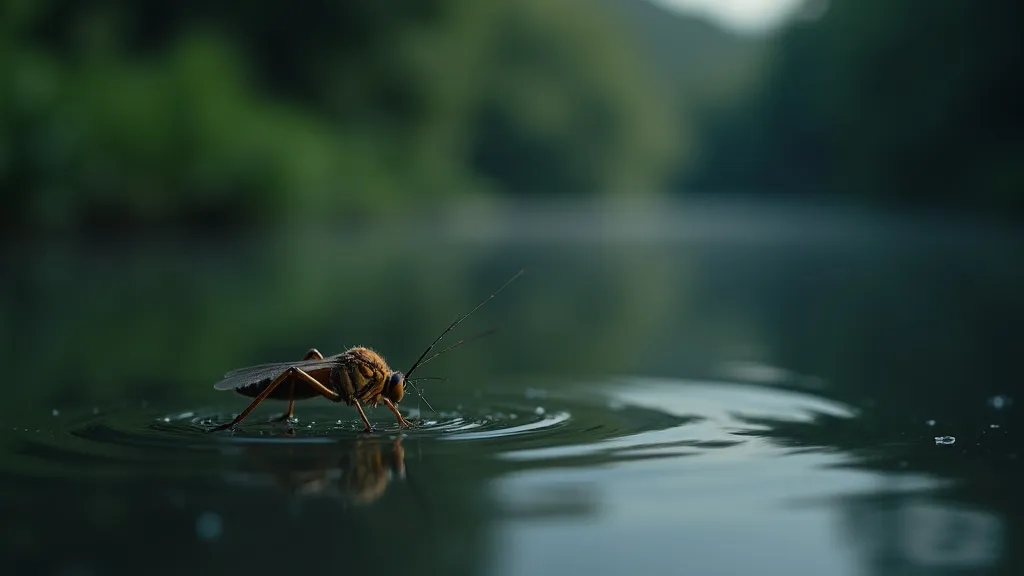
Imagine a creature so diabolical that it spends months living inside another animal, hijacks its brain, forces it to commit suicide, and then casually walks away to complete its life cycle. Sounds like science fiction, right? Wrong. Meet the horsehair worm—nature’s most accomplished mind-control artist, and it’s been perfecting this crime in ecosystems worldwide.
The World’s Worst Houseguest
Horsehair worms (Nematomorpha) are parasites that make their home inside crickets and other terrestrial insects. But calling them houseguests is generous—they’re more like biological squatters with a sinister exit strategy.
For months, these worms live inside their cricket hosts, absorbing nutrients directly through their skin. They have no mouth and no digestive system. They’re just there, vibing in the cricket’s bloodstream, growing longer and more menacing by the day. Some can reach up to a foot in length, coiled up inside an insect barely an inch long.
The cricket goes about its life, seemingly normal, completely unaware that it’s being slowly consumed from the inside.
The Mind-Control Protocol
Here’s where things go from creepy to genuinely disturbing.
When the worm reaches maturity, it needs to reproduce—and it can only do that in water. There’s just one problem: its host is a land insect. Crickets don’t naturally seek out bodies of water to drown themselves. They’re terrestrial creatures with a healthy survival instinct.
So what does the parasite do? It rewires the cricket’s brain.
Specifically, the horsehair worm alters how its host interprets light. It makes the cricket attracted to horizontally polarized light—the type of light that reflects off water surfaces. Suddenly, when the infected cricket sees a pond, stream, or even a puddle, its brain screams: “I MUST jump in there RIGHT NOW.”
The cricket obeys. It jumps. It drowns.
And the worm? It emerges from the cricket’s body like something out of a horror movie, ready to find a mate and continue the cycle.
The Ecological Plot Twist
You might think this is just another weird parasite doing weird parasite things. But scientists discovered something that makes this story even more bizarre: these mind-controlled crickets are essential to entire ecosystems.
In some Japanese rivers, researchers found that suicidal, parasite-infected insects made up a staggering 60% of the annual diet for certain fish species. Sixty percent!
Remove the horsehair worms from the equation, and suddenly those fish populations have to actually hunt for aquatic prey instead of relying on a steady stream of brainwashed delivery crickets. The entire food web starts to wobble.
The parasite isn’t just committing crimes against individual crickets—it’s become an integral, if horrifying, part of how these ecosystems function.
The Ultimate Survivor
Think the story ends when the cricket dies? Think again.
These worms have evolved an almost supernatural ability to survive predation. If a bird or other predator snatches up an infected cricket, the worm can wiggle back out of the predator’s body later. The cricket dies. The parasite lives. There is absolutely zero justice in nature.
They’re practically indestructible, capable of surviving in everything from pristine mountain streams to swimming pools, puddles, and water troughs.
Yes, You’ve Probably Seen One
Before you comfort yourself with the thought that these creatures live in some distant, exotic location, here’s the uncomfortable truth: horsehair worms are everywhere.
They live in backyards, gardens, parks—basically anywhere damp. You’ve probably seen one coiled up near a puddle or pool and thought it was a weird shoelace or piece of string.
And yes, there are documented cases of them accidentally ending up in humans (usually through contaminated water). Fortunately, we’re not their preferred host because apparently, we’re not worth the brain-hacking effort. Small consolation.
The Ultimate Betrayal: Stolen Code
Here’s the kicker that elevates this from “creepy parasite” to “nature’s most elaborate heist.”
The genes horsehair worms use to manipulate their hosts? They stole them from the hosts themselves through a process called horizontal gene transfer.
Think about that. These parasites literally learned the brain’s programming language by copying its homework. They reverse-engineered their victims’ neural code and weaponized it for mind control.
It’s like a hacker stealing your password by reading your own diary.
The Uncomfortable Conclusion
The horsehair worm’s strategy is efficient, effective, and deeply disturbing. It represents evolution at its most creative and morally ambiguous—a reminder that nature doesn’t operate on principles of fairness or justice.
This parasite has been running its elaborate heist for millions of years, right under our noses, turning innocent crickets into puppet suicide bombers for the sake of reproduction.
And the most unsettling part? It’s been happening in your backyard this whole time.
So the next time you see a cricket near water acting strangely, or spot what looks like a dark, thin shoelace in a puddle, remember: you might be witnessing nature’s perfect crime in action.
Evolution said “yeah, this is fine”—and somehow, terrifyingly, it is.