
The Parasite That Zombifies Crickets and Survives Being Eaten
Horsehair worms hijack cricket brains, force them to drown, and then do the unthinkable—survive being eaten by fish. This mind-control parasite might be closer to your home than you think, and its survival strategy breaks all the rules of biology.
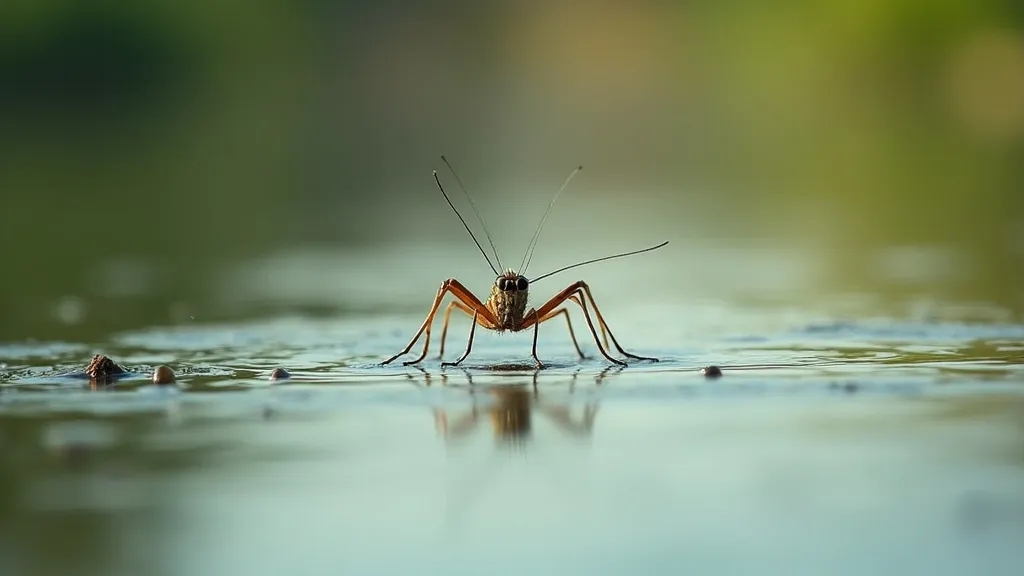
Picture this: A cricket suddenly abandons everything it knows about survival and jumps deliberately into a swimming pool. As it drowns, a worm—sometimes as long as three feet—slowly emerges from its body. Then a fish swallows the cricket whole, and here’s where things get truly bizarre: the worm simply crawls back out of the fish and continues on its way.
This isn’t science fiction. It’s the everyday life of the horsehair worm, one of nature’s most sophisticated and disturbing parasites.
The Puppet Master Living Inside
Horsehair worms (Nematomorpha) spend months growing inside their unfortunate hosts—typically crickets, grasshoppers, or beetles. During this time, they’re coiled up in the insect’s body cavity like a biological time bomb, absorbing nutrients directly through their skin.
What makes them particularly alien is their anatomy: they have no mouth and no digestive system. They’re essentially living IV tubes, soaking up everything they need from their host’s body. The cricket becomes a walking nutrient battery, completely unaware of the passenger hijacking its biology from within.
Brain Hacking 101: How to Drown Your Host
When the worm reaches maturity and needs to reproduce, it faces a critical problem: it must return to water to complete its lifecycle. The solution? Reprogram the cricket’s brain.
Scientists have discovered that these parasites hijack their host’s light-interpreting organs, specifically manipulating how the cricket perceives horizontally polarized light—the type of light that reflects off water surfaces. The cricket, once cautious around water, suddenly becomes irresistibly attracted to it.
The infected insect literally cannot help itself. Its brain has been chemically rewired. It marches toward the nearest pool, stream, or puddle with single-minded determination and jumps in, drowning itself to complete the parasite’s mission.
Plot Twist: The Worm Survives Everything
You might think the story ends with the worm escaping into the water and the cricket meeting its tragic end. But researchers in Japan uncovered something that defies everything we thought we knew about predator-prey relationships.
In some river ecosystems, these zombie crickets comprise up to 60% of the annual diet for certain fish species. The fish are essentially eating parasite delivery systems all day long.
Here’s the part that breaks the rules of biology: the horsehair worm can survive being eaten by the fish. When swallowed along with its cricket host, the worm simply exits through whatever opening is available—mouth, gills, or otherwise—and continues its lifecycle completely unharmed.
Think about that for a moment. The host dies. The predator gains nothing (and loses energy on digestion). The parasite wins twice. It’s a biological magic trick that seems to violate the fundamental laws of the food chain.
They’re Everywhere (Yes, Even Near You)
These creatures have been found in:
- Swimming pools
- Water troughs
- Puddles in parking lots
- Garden ponds
- Birdbaths
You’ve probably seen one and dismissed it as a strange stick, a piece of dark grass, or some odd root. They’re often mistaken for horsehairs (hence the name), and they’re far more common than most people realize.
But Wait—Can They Infect Humans?
Before you start panicking, take a breath. While there are documented cases of horsehair worms accidentally ending up in humans, these incidents are extremely rare and typically occur when someone accidentally ingests an infected insect or contaminated water.
Unlike with their cricket hosts, horsehair worms cannot complete their lifecycle in humans. They can’t survive for long or cause the same kind of manipulation. Cases usually involve the worm being expelled naturally from the body, often leaving very confused medical professionals in their wake.
Nature’s Precision Weapon
The horsehair worm represents evolution at its most ruthlessly efficient. It’s a mind-control weapon refined over millions of years, capable of:
- Neurological manipulation with surgical precision
- Surviving multiple predators in a single lifecycle
- Exploiting ecosystem gaps that other parasites can’t access
- Reproducing in environments where most organisms would fail
This isn’t just a creepy curiosity—it’s a reminder that the natural world operates on a level of complexity and strangeness that regularly exceeds our imagination.
The Bigger Picture
Horsehair worms play a surprisingly significant role in their ecosystems. By forcing terrestrial insects into aquatic environments, they create an unexpected food transfer between land and water ecosystems. Fish that would never encounter crickets otherwise get a significant portion of their diet from these zombie insects.
Some scientists believe that parasites like horsehair worms are crucial for understanding:
- Ecosystem energy transfer
- Behavioral manipulation in nature
- Evolution of complex life cycles
- Potential applications in pest control
Final Thoughts
The next time you’re at a backyard barbecue and notice a cricket behaving strangely near the pool, you might be witnessing one of nature’s most sophisticated horror shows in real-time. That “stick” floating in your birdbath? Take a closer look.
The horsehair worm reminds us that the world is far stranger—and far more interconnected—than we typically imagine. Nature doesn’t just compete; it hacks, manipulates, and rewrites the rules entirely.
And it’s probably happening three feet from where you’re standing right now.