
Scotland Paralyzed: Amber Alert as Blizzard Shuts Hundreds of Schools and Grinds Transport to Halt
Scotland faces its worst winter disruption in days as an upgraded amber alert blankets the north with up to 6 inches of snow, forcing hundreds of schools to close and crippling roads, trains, and airports. Temperatures plummeted to -11.2°C overnight as transport operators battle snowdrifts forming faster than they can clear them.
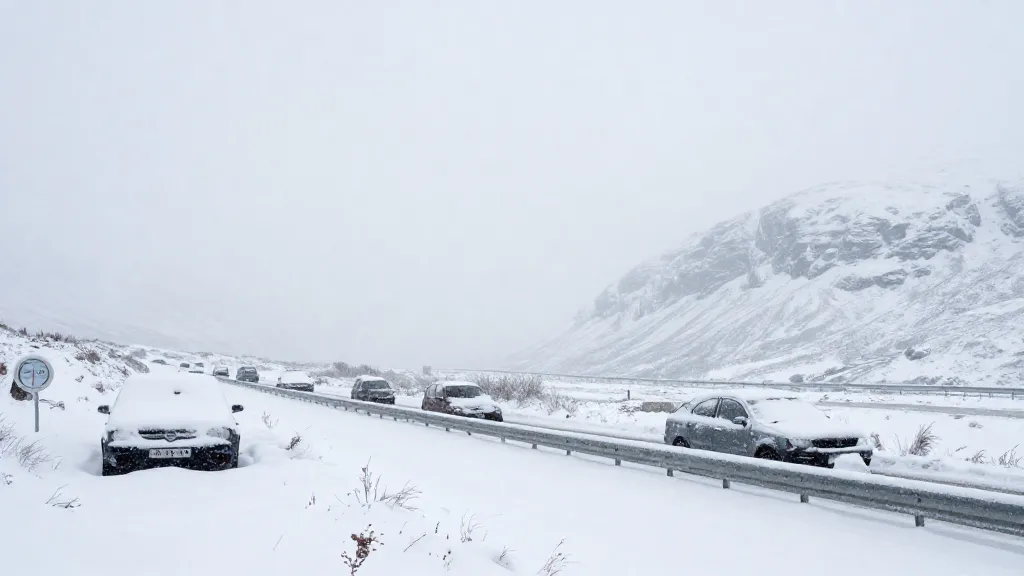
Scotland is grinding to a halt. As an upgraded amber alert blankets the north, hundreds of schools have shuttered their doors, roads are becoming impassable death traps, and rail crews are fighting a losing battle against snowdrifts that reform faster than they can clear them. With temperatures plummeting to -11.2°C overnight and up to 6 inches of snow expected on higher ground, this is shaping up to be Scotland’s worst winter disruption in days—and the impact on ordinary people is only just beginning.
The Amber Alert: When Yellow Isn’t Enough
The Met Office has escalated its warning to amber across parts of northern Scotland until 19:00, signaling conditions severe enough to warrant serious concern. Meanwhile, central and southern areas remain under a yellow warning until 11:00. This isn’t just weather—it’s a crisis unfolding in real time.
Within the amber zone, forecasters expect a further 2-4 inches (5-10cm) of snow, with a staggering 6 inches (15cm) possible on higher ground above 656 feet. Fresh warnings for both ice and snow now cover all of Scotland on Tuesday, a blanket of danger stretching from the Shetland Islands to the borders.
First Minister John Swinney acknowledged the scale of the challenge, saying there had been a “huge effort to keep transport moving and public services open.” But even those efforts are being tested to their limits.
Schools Closed, Families Stranded
The human cost is immediate and visible. Hundreds of schools across northern Scotland have closed, leaving parents scrambling to arrange childcare and children missing days of learning. Aberdeenshire, Orkney, and Shetland councils have announced schools will remain shut, while most institutions in Aberdeen and Moray have followed suit.
For families already stretched thin, the disruption cascades quickly. Parents working from home juggle supervision with video calls. Single parents face impossible choices. And for children in areas with limited internet access, the educational gap widens.
Transport in Freefall
Roads: A Hazard at Every Turn
On the A9 near Caithness, a Royal Mail lorry crashed on Monday, forcing a closure from 09:00 to 11:00 on Tuesday for recovery operations. Bear Scotland and Amey maintenance operators are working around the clock, but the conditions are relentless. In the northeast, many routes are passable only with extreme care—if at all.
Police Scotland Assistant Chief Constable Alan Waddell put it bluntly: driving conditions remain “hazardous in some areas,” and his advice is simple but stark—only travel if absolutely necessary.
All 27 trunk routes in the southwest will receive double salt treatments at 13:00 and 01:00 throughout the week, a sign of just how serious the situation has become.
Rails: Snowdrifts Winning the War
Network Rail has deployed multiple snowploughs across affected lines, but the battle is becoming Sisyphean. Gary Hopkirk, Network Rail Scotland’s route programme director, revealed the cruel reality: “Deep snow can pose a serious risk to the railway, and when snow depth exceeds 30cm, trains can’t run safely unless fitted with snow ploughs. Our teams are working as hard as they can, however, in some parts the snowdrifts are forming as quickly as we’re clearing them.”
Travel on the Inverness to Wick/Thurso, Inverness to Kyle, and Inverness to Aberdeen lines remains disrupted, with Network Rail saying it’s “unlikely” these routes will reopen by Tuesday morning. The Aberdeen to Dundee line has since reopened, offering a sliver of hope.
LNER has advised anyone travelling between Edinburgh and Aberdeen not to attempt the journey until 14:00 on Tuesday.
Air and Bus: Cancellations Mount
Buses in the northeast face widespread cancellations and delays. Stagecoach suspended its Orkney bus services until 10:00 on Tuesday. Aberdeen International Airport reopened Monday night, but several flights have been cancelled. Sumburgh Airport in Shetland is seeing delays pile up, though Kirkwall is expected to run on time.
A power failure caused by ice has even grounded Glasgow Subway services on both the inner and outer circles—a rare disruption that shows just how pervasive the weather’s grip has become.
What to Watch For
- Continued snowfall: 2-5cm likely to fall widely on Tuesday, with 10-15cm possible in some areas
- Drifting conditions: Snowdrifts reforming as quickly as they’re cleared on rail lines and roads
- Temperature drops: Overnight lows already reached -11.2°C at Dalwhinnie
- Route closures: Multiple transport lines expected to remain closed through Tuesday morning
- Hazardous driving: Police urging all non-essential travel to be postponed
A Community Under Siege
Beyond the statistics lies a deeper story. Families are isolated. Elderly residents are cut off from essential supplies. Healthcare workers are struggling to reach hospitals. The Scottish Government’s Resilience Room met on Monday to discuss recovery efforts, and First Minister Swinney’s plea was direct: “Plan ahead, look out for each other and pay close attention to the weather and travel advice available.”
It’s a call for solidarity in the face of nature’s indifference—a reminder that when infrastructure fails, communities must hold themselves together.
The Days Ahead
Forecasters predict the worst will pass, but not before Scotland endures several more days of severe conditions. The central belt southward may see lighter snow, with most places expecting just 1-2cm. But in the north, where the amber alert holds sway, the struggle will continue.
Even routine activities have become luxuries. Aberdeen Football Club closed Pittodrie Stadium to visitors on Tuesday. Livingston Football Club scheduled a pitch inspection before their match against St Mirren. Sports, entertainment, commerce—all grinding to a halt under the weight of white.
This is more than weather. It’s a test of infrastructure, community resilience, and how quickly a nation can adapt when systems fail. Scotland is being reminded that winter, when it turns serious, respects no schedule and acknowledges no deadline.